Security | Threat Detection | Cyberattacks | DevSecOps | Compliance

Camille Stewart Gloster on how AI systems can help you wade through log data and get more done

AI and machine learning are already being used in cybersecurity to help reduce the "noise of all the indicators" that security teams receive. These systems can serve as a "first line of defense" by setting up potential response actions. However, organizations need to ensure they keep human analysts in the loop because contextual knowledge and human judgment remain critical. Data Security Decoded is available on our YouTube channel!

Thinking long-term growth in an AI-dominated industry with Stel Valavanis of onShore Networks [302]

Today we're speaking with Stel Valavanis, Founder and Chairman at onShore Networks and Co-Founder at The Gallery Building, about sustaining a security company over three decades of industry changes. We also dive into investing in start ups and how founders can think long term about governance and growth.

Thinking in pipelines for AI agents with David Burkett

Join us for this session of Defender Fridays as we explore thinking in agent pipelines with David Burkett, Cloud Security Researcher at Corelight and Founder of Magonia Research. At Defender Fridays, we delve into the dynamic world of information security, exploring its defensive side with seasoned professionals from across the industry. Our aim is simple yet ambitious: to foster a collaborative space where ideas flow freely, experiences are shared, and knowledge expands.

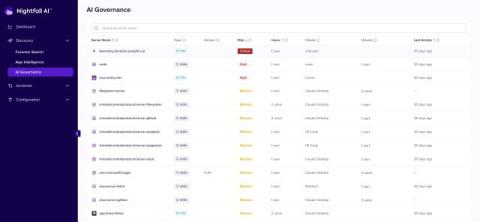
AI Is Building Your Attack Surface. Are You Testing It?

The market is flooded with claims. One vendor tops a leaderboard. Another raises nine figures on a pitch deck. Meanwhile, your developers shipped three AI-generated services before lunch. Here's the conversation the industry isn't having, and the one we've been building toward for years. There's a version of this conversation happening inside every Security team right now. Someone demos an AI coding assistant. The speed is undeniable and the team is in awe. Still cautious, sometimes skeptical.

Apono Launches Agent Privilege Guard, Bringing Runtime Privilege Guardrails to Enterprise AI Agents

NEW YORK – March 18, 2026 – Apono, the agentic-forward cloud-native Privileged Access Management platform, today announced the launch of Agent Privilege Guard, a new product that gives enterprises the ability to deploy AI agents at full velocity without creating security risks they cannot control.

Unlock AI with GPU as a Service in VCF 9

Many IT professionals struggle to integrate artificial intelligence (AI) into their existing environments. You often find expensive hardware trapped in isolated clusters or dedicated hosts. Your infrastructure team manages access through manual ticket queues, which leads to low utilization and frustrating bottlenecks for developers. When you don’t have a standardized way to share and monitor accelerator resources, every hardware change risks downtime for your critical applications.

Survive the AI Code Blizzard: Introducing Snippet Detection

In 2026, software development speed is an AI-solved problem. Yet, as AI-generated code volumes surge, organizations face a new kind of risk visibility gap. Developers are increasingly copying third-party snippets into their codebases—from both AI prompts and open-source software components—creating large security and compliance blind spots that lead to significant risks.

RMM AI tools: Choosing AI-powered RMM software for MSPs and IT teams

Modern managed service providers (MSPs) are increasingly adopting RMM AI tools — remote monitoring and management software enhanced with artificial intelligence — to keep pace with growing IT demands. Traditional RMM platforms allow MSPs to remotely monitor client endpoints, deploy patches, run scripts and troubleshoot issues from a central console. Now, AI-powered RMM software is taking this a step further.

What Is Format-Preserving Encryption (FPE)?

Your database stores a credit card number: 4532 1234 5678 9010. You encrypt it for security. Now it looks like this: %Xk92@!mQz#Lp&7. Problem. Your payment system can’t process that. It expects a 16-digit number. Your billing software breaks. Your downstream analytics fail. Your whole pipeline comes to a halt. This is the exact problem that format-preserving encryption was built to solve.