Security | Threat Detection | Cyberattacks | DevSecOps | Compliance

How Nightfall Brings AI-Native Context-Aware DLP to Microsoft 365

It's 8:47 AM. Your phone buzzes with another "urgent" DLP alert. You've already ignored three this morning. This one screams "SENSITIVE DATA DETECTED" in all caps. But it’s just a lunch menu with a credit card number for catering. You silence the notification and grab your coffee. What you don't know? While you're dismissing false alarms, your VP of Finance just dropped next quarter's earnings in a public Teams channel. Your DLP system? Completely silent.

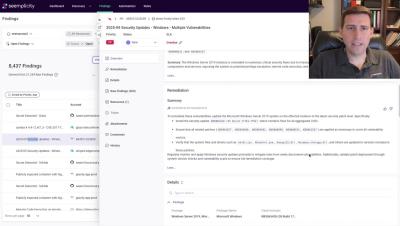
The WinINet.dll Red Flag Moment #cybersecurity #ai

Our recent webinar showed how our MCP server enables AI to apply the same technical analysis that expert threat hunters use by providing structured API access to security data and tools. In the demo, Claude identified WinINet.dll loaded in a suspicious process - a discovery that Eric Capuano, founder of Digital Defense Institute, called "a pretty smart move." This moment highlighted how AI can move beyond basic data collection to understand investigative context and connect technical findings to broader threat hypotheses.

Adversarial AI and Polymorphic Malware: A New Era of Cyber Threats

The state of cybersecurity has always been in flux, but the arrival of tools like ChatGPT heralded one of the most significant challenges for security teams in years. AI has the potential to unlock incredible potential in data processing and malware detection, but in the wrong hands, Large Language Models (LLMs) and other adversarial AI tools can be used to develop polymorphic malware that can escape detection, gain access to sensitive data, and poison data sets.

The Hidden Risk in Enterprise AI, and the Smarter Way to Safeguard Data

AI exploded into the workplace overnight, reshaping how we work. Today, nearly every employee is experimenting with tools to move faster and think bigger. However, that acceleration comes with risk. According to Cyberhaven Labs’ latest research, nearly three-quarters of AI apps in use pose high or critical risks, and only 16% of enterprise data sent to AI ends up in enterprise-ready apps. The rest flows to personal or unvetted tools.

Hospitals Need to Prepare for AI-Powered Phishing Attacks

Healthcare organizations need to be prepared for an increase in AI-assisted phishing attacks, according to Zack Martin, Senior Policy Advisor at Venable. In an article for HIT Consultant, Martin explained that AI has made phishing attacks more convincing and easier to launch, posing a heightened risk to healthcare organizations.

Report: AI Can Now Automate Entire Attack Chains

Threat actors can now use AI tools to automate entire attack operations, according to a new report from Anthropic. The company says an attacker abused its Claude AI tool to create a hacking and extortion campaign that compromised at least seventeen organizations. The attacker used Claude to conduct reconnaissance, initial access, malware development, data exfiltration, and extortion analysis.

New Invisible Attack Creates Parallel Poisoned Web Only for AI Agents

AI agents are rapidly evolving from simple text generators into powerful autonomous assistants that can browse the web, book travel, and extract complex data on our behalf. This new “agentic” AI, which operates in a “sense-plan-act” loop, promises to revolutionize how we interact with the digital world.

What an 'Aha' Moment with an Org Admin Token Taught One DevSecCon Speaker About AI Security

As the summer winds down and conversation around AI Security heats up, the Snyk team is in full swing planning mode for a double-header this October—with the return of DevSecCon’s Flagship conference, focusing this year on Securing the Shift to AI Native, and serving as the founding partner of the inaugural AI Security Summit.