Security | Threat Detection | Cyberattacks | DevSecOps | Compliance

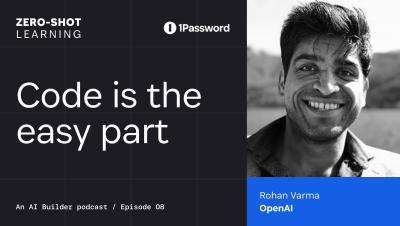
Code is the easy part with Rohan Varma from OpenAI | Zero-Shot Learning

As a product leader who went from working on Cursor to OpenAI’s Codex, Rohan Varma got a personal preview of a shift most developers are just beginning to catch up to. His conversation with 1Password CTO Nancy Wang upends the idea that AI helps developers write code faster, reimagines code reviews, and explores how developer skills expand once agents take over implementation. In this episode: Zero-Shot Learning is a builder-to-builder podcast about how AI systems are designed, deployed, and secured. Subscribe for more.

State AI Laws Change Faster Than Compliance Programs

Colorado passed the first comprehensive state AI law in May 2024, and organizations spent the following year building impact assessment processes against it. Those obligations never took effect. The statute was delayed twice, blocked by a federal court, then repealed and replaced by a narrower framework before its own effective date arrived. ‍ Anyone who built a compliance program to that specific statute prepared for a regime that never existed.

10 Shadow AI Detection Tools for Enterprise Data Security

As artificial intelligence becomes deeply woven into daily workflows, employees are adopting unapproved AI apps at an unprecedented pace. According to Teramind’s Shadow AI Behavior Report, a staggering 89% of workplace AI usage occurs outside enterprise-governed channels, leaving 86% of organizations blind as to how corporate data flows in and out of these tools.

New Bitsight Research Shows AI Abuse Is Moving Beyond the Jailbreak Prompt

Jailbreak prompts (i.e. prompts designed to remove or bypass the guardrails and rules that govern AI systems, like LLMs) prompts have been circulating for years. At first, a lot of it was pretty simple: copy a prompt, tell the model to ignore its rules, and see what happens. It was also largely noisy, unverified, and often didn’t work. But the noise was still telling us something. Threat actors were beginning to study AI systems the same way defenders were, and over time, the goal started to change.

Coding Agents Just Reopened Your Software Supply Chain Blind Spot

Most organizations spent years hardening their software supply chain. The model is familiar: dependencies flow through a controlled repository, policies determine what is allowed, scanning catches what slips through, and every action is logged for auditability. It works because human developers operate within environments that enforce these rules. AI coding agents break that assumption entirely.

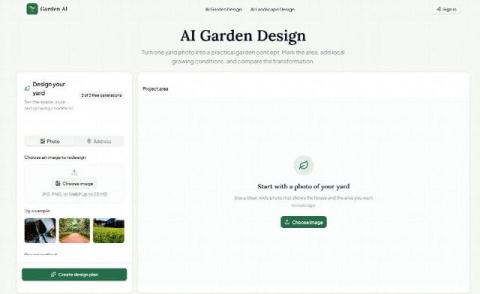
How a Solo Garden Designer Cut Concept Time in Half with AI Tools

I used to spend entire evenings sketching rough layouts for clients who just wanted "something prettier than the current yard." By the time I produced three decent options, the client had already moved on or decided the project could wait. That cycle was exhausting and expensive for both of us.

How to Use AI to Turn Images into Engaging Video Content

Video has become one of the most effective ways to communicate online. From social media posts to product promotions, businesses and creators increasingly rely on video to capture attention and reach wider audiences. However, producing video content can take significant time and resources. Writing scripts, recording footage, editing clips, and adding effects can quickly turn a simple idea into a lengthy production process.

How Aikido finds more vulnerabilities than Claude Security at half the cost

Claude Mythos is arguably the strongest cybersecurity model that Anthropic has built. But we know that model capability is only part of what determines how well an AI vulnerability product performs. To test that, we put Anthropic’s Claude Security, which runs on Mythos, and Aikido Code Security Audit head-to-head on the exact same target to see which harness can deliver the best coverage and at what cost. Code Security Audit is part of Aikido’s AI Code Analysis suite.

What OpenTelemetry Can Actually Tell You About Your AI Agents

‍ The distance between what OpenTelemetry was built for and what AI governance is asking of it shows up in a single number. Distributed tracing descends from Dapper, the 2010 Google paper that gave the industry the vocabulary of traces and spans. Dapper sampled one trace in 1,024. That is ample for finding a latency regression, because a regression recurs and the next sample catches it.