Security | Threat Detection | Cyberattacks | DevSecOps | Compliance

Whole-of-state cyber defense: How AI-driven security helps US states protect what matters most

Short answer: Because attackers exploit fragmentation faster than governments can respond This shift toward collective cyber defense is a cornerstone of the new federal vision. The March 2026 National Cyber Strategy for America explicitly calls for a "new level of relationship between the public and private sectors" and demands "unprecedented coordination across government" to protect the American people.

Datadog MCP Server, Experiments, Bits AI Security Analyst, and more | This Month in Datadog

April’s This Month in Datadog spotlights the Datadog MCP Server, which gives AI agents secure, real-time access to Datadog telemetry, and Datadog Experiments, which lets you design, launch, and analyze experiments to see the full impact of product changes on the user journey. Plus, we cover how to: Accelerate Cloud SIEM investigations with Bits AI Security Analyst Remediate vulnerabilities in your codebase with Bits AI Dev Agent for Code Security Explore Datadog with natural language using Bits Assistant.

Types of AI agents: From simple reflex to autonomous systems

AI agents fall into five foundational categories: simple reflex, model-based reflex, goal-based, utility-based, and learning agents. Each is defined by how much environmental awareness and decision-making complexity the system can handle, from fixed condition-action rules to feedback-driven self-improvement.

AI Agents are moving your sensitive data: Nightfall built a solution where DLP fails

Somewhere in your environment right now, an AI agent is reading files, querying a database, and passing output through a channel your DLP has never seen. It's running under a legitimate user credential, inside a sanctioned tool, and it will not trigger a single alert. When it's done, there will be no record of what it accessed or where that data went. This is not an edge case. It is the default state of most enterprise environments in 2026.

This Is How Red Teams Actually Use AI Security Data #aisecurity #redteam #threatintelligence

The volume of AI security research is now too high for any human to track properly by hand. The practical answer is using AI to filter AI, reducing hundreds of articles and reports into a daily shortlist so analysts spend their time on signal instead of noise.

1 in 15 MCP Servers are Lookalikes: Is Your Org at Risk?

Researchers recently analyzed 18,000 Claude Code configuration files pulled from public GitHub repositories. What they found was straightforward and alarming: developers are already installing mistyped, misconfigured, and near-identical MCP server names — often without realizing it. The human-error condition that makes typosquatting work was already present at scale before any attacker needed to exploit it.

You Can't Secure AI Agents You Haven't Found

Most organizations have a reasonable handle on their sanctioned SaaS apps. Model Context Protocol - hit 10,000 public servers within a year of launch, with 97 million monthly SDK downloads. None of those numbers capture the servers your developers configured locally. Those don't appear in any registry. They were added at the IDE level, one developer at a time, with no approval step and nothing that touches a central system. That's the inventory problem. It comes before any question of enforcement.

MCP: The AI Protocol Quietly Expanding Your Attack Surface

In February 2026, researchers uncovered something that should give every security leader pause. A malware operation called SmartLoader, previously known for targeting consumers who downloaded pirated software, had completely pivoted its infrastructure. SmartLoaders new target was developers, and its new entry point was a protocol most security teams had never heard of. The payload delivered to victims: every saved browser password, every cloud session token, every SSH key on the machine.

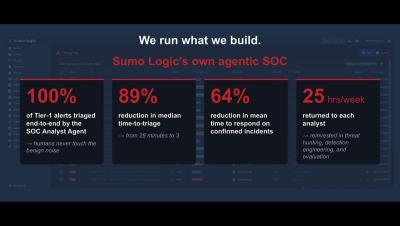
AI SOC Metrics That Actually Matter: How to Measure Whether AI Is Working in Your SOC

Every security vendor shipping an AI product in 2026 makes the same promises. Faster triage. Shorter response times. Fewer false positives. Reclaimed analyst hours. But, six months after deployment, most security leaders still cannot answer a straightforward question from the board: Is this thing actually working?