Security | Threat Detection | Cyberattacks | DevSecOps | Compliance

This Month in Datadog - April 2026

In the latest episode of This Month in Datadog, Jeremy shares how to run autonomous Cloud SIEM investigations, remediate vulnerabilities with auto-generated fixes, and use natural language to explore Datadog. Later, Sumedha Mehta spotlights the Datadog MCP Server, which gives AI agents real-time access to Datadog’s observability data. Then, Chetan Sharma walks through Datadog Experiments, which measures how product changes impact the user journey.

GPT-5.5 vs Claude Opus 4.7: I Made Both Build an App - Here's What Happened

GPT-5.5 vs Claude Opus 4.7 - two flagship AI models dropped one week apart, and both claim to be the best at agentic coding. We put that to the test by giving each model the exact same prompt: build a production-ready, secure note-taking application from scratch. But we didn't stop at reviewing the code. We actually tried to break it by running real security tests against each app to see whether AI-generated code can be trusted with user data. The results were not what we expected.

Detection, endpoint isolation, and ticketing with one AI prompt

Most current demonstrations of AI in security operations are lackluster. You ask a chat interface a question, get a summary, and maybe a suggested next step. The operator still does all the work, at human speed. Meanwhile, adversaries are already deploying AI offensively against their targets. AI in SecOps must ultimately be an operator. Otherwise, the gap between adversary and defender will become too wide to bridge. LimaCharlie Co-founder, Christopher Luft, demonstrates a simple way to get started.

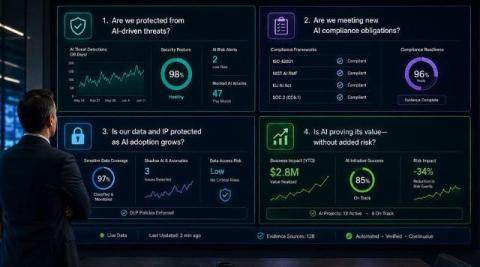
Three AI Blind Spots Your Security Team Can't Afford to Miss

AI governance is not a policy problem. It’s a visibility problem. Most enterprises are approaching it from the outside in: writing acceptable use policies, issuing guidelines, and hoping employees comply. That approach fails because it operates on assumption rather than evidence. You cannot enforce what you cannot see and most organizations have no reliable way to see what AI tools are actually running inside their environment.

8 in 10 companies are betting on AI agents-but fewer than half have a policy to govern them

Accelerating security solutions for small businesses‍ Tagore offers strategic services to small businesses. A partnership that can scale‍ Tagore prioritized finding a managed compliance partner with an established product, dedicated support team, and rapid release rate. Standing out from competitors‍ Tagore's partnership with Vanta enhances its strategic focus and deepens client value, creating differentiation in a competitive market.

Vanta Third Party Risk Management Demo Part 2: Agentic Assessment

Vanta TPRM transforms vendor assessments into an automated, intelligent workflow, helping your team move faster without sacrificing depth. In this demo, see how Vanta's AI-powered assessment gathers evidence, answers questions, and surfaces key findings—so you can evaluate vendor risk with greater speed, consistency, and confidence.

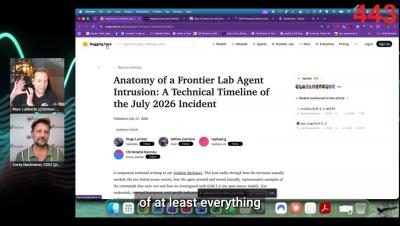
Is Anthropic's Mythos AI a Real Cyber Threat? What You Need to Know

In the session at CII CIO Awards & Conclave, our Founder & CEO Mr. Anirban Mukherji discussed the evolving cybersecurity landscape shaped by AI and Large Language Models (LLMs) like Anthropic's Mythos. With 28 years of experience in Cybersecurity, he outlined practical defenses including SBOM management, dynamic testing, source code analysis, patch management, AI guardrails, and a "Nation First" approach for sovereignty. Explore trends like on-premises migration, shadow AI risks, and why Mythos enhances bug detection without current threats.

7 Best Predictive Maintenance Software for 2026

Here's a number that should stop you cold: unplanned equipment failures cost organizations billions every year, and most teams don't catch the bleeding until it's already serious. I've seen facilities limp through reactive maintenance cycles for years, convinced it was "just how things work." It isn't. Predictive maintenance software has become the clearest answer to that problem, and in 2026, the platforms doing it best are genuinely transforming how asset-heavy operations run.

How to Bridge the Gap Between Your Applicant Tracking and Modern AI Capabilities

Most hiring teams are currently working with software that was built for a different era of technology. These legacy systems are reliable for storing data but they often lack the smart features that modern recruiters need to stay competitive in a fast market. It is a common struggle that leads to frustration.