Security | Threat Detection | Cyberattacks | DevSecOps | Compliance

AI-to-AI Communication and Secret AI Code Must Be Stopped At All Costs

As I wrote in my recent book, How AI and Quantum Impacts Cyber Threats and Defenses, as we humans use AI more and more, AI will begin to communicate with itself using new AI-only communication methods that humans cannot easily see or read. If there is no human-readable audit trail or code, this is a very, very bad thing. It must be stopped at all costs. Humans are absolutely beginning to use AI more and more to do things they used to do manually. Soon, we will all be using multiple AI agents.

Best AI Intrusion Detection for Kubernetes: Top 7 Tools in 2026

Why do traditional intrusion detection systems fail in Kubernetes? Legacy IDS tools were built for static servers with fixed IPs and clear network perimeters—Kubernetes breaks all of those assumptions. Ephemeral pods, east-west traffic, encrypted service mesh communication, and dynamic IP addresses make perimeter-focused, signature-based detection effectively blind inside clusters.

Trusted AI Adoption (Part 1): Consolidation

Imagine your lead Software Engineer walks into your office and says, “Good news! I just deployed that critical update to production. I wrote the code on my personal laptop, didn’t run it through CI/CD, skipped the security scan, and just copied the files directly to the server with a USB drive.” You would fire them. Or you would revoke their access immediately.

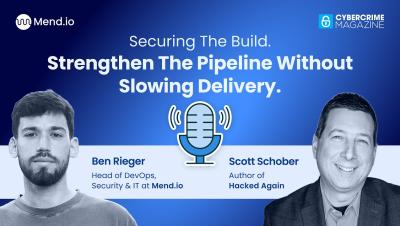
Hackerbot-Claw Crosses the Line - The 443 Podcast - Episode 361

This week on the podcast, we chat about an OpenClaw bot that moved beyond vulnerability research and into malicious activity. Before that, we cover an AI-discovered vulnerability in the pac4j-jwt authentication library before ending with a discussion on an upcoming California law designed to help make age verification in the digital age easier, but with massive consequences.

Why AI-Native Endpoint DLP Is The Foundation of Modern Data Security

For a long time, data loss prevention (DLP) lived in the margins of security programs. It was something teams deployed to satisfy a requirement or reduce obvious risk. A handful of policies, some visibility into network traffic, maybe a scan of cloud storage. That was usually enough. That model reflected how work used to happen. Data moved more slowly, lived in fewer places, and followed more predictable paths. That is no longer true.

Beyond the Hype: Navigating the Security Risks and Safeguards of Generative AI Video

The rapid evolution of generative AI video models, such as Seedance 2.0, Kling 3.0 and OpenAI's Sora, has unlocked unprecedented creative potential. However, for cybersecurity professionals, these advancements represent a significant expansion of the corporate attack surface. In an era where "seeing is no longer believing," the integration of synthetic media into the enterprise workflow demands a rigorous security framework. This article explores the dual nature of AI video: the sophisticated threats it enables and how modern, enterprise-grade platforms are architecting defenses to mitigate these risks.

Entropy vs. Polymorphic Tokenization: Which One Actually Protects Your AI Pipeline?

If you’re building AI applications that touch sensitive data, tokenization isn’t optional. It’s the layer that decides whether your pipeline leaks PHI, PII, or financial data to your LLM, or keeps it protected. But here’s where most teams stop thinking: not all tokenization is the same. Two approaches you’ll encounter most often are entropy-based tokenization and polymorphic tokenization. They sound similar. They serve completely different purposes.

What is Data Masking

AI adoption is growing fast. But so are data risks. From Samsung’s internal code leak via ChatGPT to chatbot failures at global brands, recent incidents show one thing clearly: sensitive data can escape in unexpected ways. Most breaches today are not traditional hacks. They happen through AI tools, prompts, and automation workflows. This is why understanding what data masking is is critical. It helps organizations protect sensitive information without slowing innovation or breaking AI accuracy.