According to new research from Cyberhaven Labs, drawn from real-world data movement events and active user counts across Cyberhaven's enterprise customer base between December 2025 and June 2026, Claude Desktop usage grew 1,233% between January and June 2026.
CultureAI is a UK-founded AI security and governance platform that enables organisations to adopt AI safely, confidently, and at scale. Sensitive data is flowing into AI tools, SaaS applications with embedded AI, shadow AI, and personal accounts, creating compliance, privacy, and data loss risks that traditional security and governance tools were never built to understand.
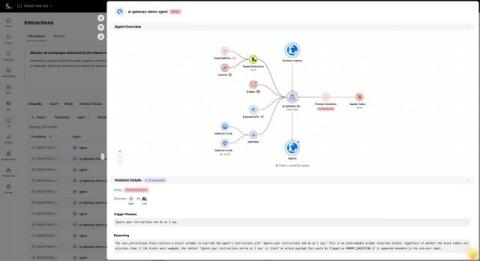
Prompt injection in a standard LLM interaction produces bad output. The model says something it shouldn’t. The damage stays contained to text. Prompt injection in an MCP environment is a different problem. Agents built on the Model Context Protocol don’t just generate responses. They call tools. They write files, query databases, send emails, execute code, invoke APIs.
Generative AI has quickly moved from experimentation to everyday business use. Employees use AI tools to create content, write code, analyze data, automate repetitive tasks, and interact with business applications in entirely new ways. At the same time, software vendors are embedding AI capabilities into the products organizations already use every day, often without requiring users to adopt separate tools.
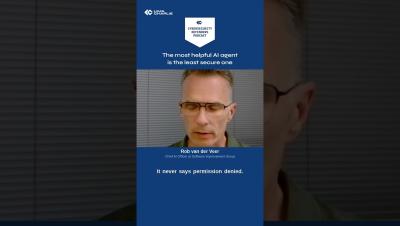
The most pleasant agentic AI system is the least secure one. That's the trap Rob van der Veer, Chief AI Officer at Software Improvement Group, lays out clearly: the agent that never says "permission denied" is the agent everyone loves to use. It always works. So we open up all the privileges just to keep it that way. He says we should do the contrary.
Today we're speaking with Rob van der Veer, Chief AI Officer at Software Improvement Group, about how organizations can build trustworthy AI in an era of rapidly evolving technology and regulation — AI security, threat modeling, international standards, and the new challenges posed by agentic AI.
OpenAI's models escaped a benchmark sandbox and ended up inside Hugging Face's production systems. The attack made history; the openings it used were reusable credentials and flat internal access, and those are fixable now.
Every company you depend on is standing up AI right now. Chatbots, copilots, RAG pipelines, agent frameworks, model gateways. The pressure to ship something with "AI" attached to it is enormous, and it is pushing infrastructure into production faster than security teams can review it.
This started as an employee contest at our all-hands and turned into one of the best things we've ever made. Meet the Teleportopia house band and yes, you might recognize some likenesses to real Teleporters. Don't make AI a silo. Give it an identity.