Security | Threat Detection | Cyberattacks | DevSecOps | Compliance

4 real? Tracking exploitation and patching of eMudhra's weak keys

On October 19, 2026, we learned about eMudhra’s eight shockingly weak keys: where eMudhra was trusted to pick a 115-digit number for their virtual combination lock protecting the Internet, they picked the number 4. Not even four digits, just the number 4. The other seven keys were similarly weak: 56, 66, 115, 155, 156, 230 and 237. The next day, we wrote a blog post on the immediate action we took to mitigate this leak, and what customers needed to do on their end to stay secure.

Cloudflare DDoS Threat Report 2026 Q3: More swarms, fewer giants

Welcome to the 26th edition of Cloudflare's DDoS Threat Report. This edition covers the third quarter of 2026 — July, August, and September — and returns the series to its quarterly cadence following the combined H1 2026 volume. The analysis is produced by Cloudforce One, Cloudflare's Threat Intelligence organization, providing a comprehensive analysis of the evolving threat landscape of Distributed Denial of Service (DDoS) attacks based on data from the Cloudflare network.

Protect your sensitive data with Cloudflare

Before you paste customer data into an AI prompt… pause for one second. From sales pipelines to customer contracts, RevOps handles sensitive data constantly. Ida Yunos, Revenue Operations Leader for APAC & Japan, explains why good data security habits belong to everyone, not just IT. Watch the video to see how to protect data while keeping daily work moving.

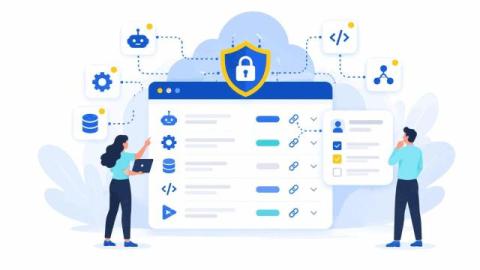
Which Cloud Misconfigurations Would an Attacker Actually Exploit First?

A cloud security dashboard can produce hundreds of configuration issues in a single afternoon. There are a few small housekeeping concerns. Some leave customer files or administrative tools open for strangers to access. Security teams need to know what findings need quick attention, yet they have limited time to examine.

Cloudflare & Ping Identity: Identity Security in the Era of AI

As AI rapidly advances, identity security is undergoing a massive shift. Gavin Chen, Global Alliances at Cloudflare, shares how Cloudflare and Ping Identity are partnering to help organizations secure human users, non-human agents, and autonomous AI workflows—all while empowering businesses to innovate without friction.

Bringing post-quantum cryptography to geographically fenced key management

Today, Cloudflare is launching a post-quantum geographically restricted key manager in support of our Data Localization Suite (DLS) in closed beta. This new PQ GeoKey Manager is a cornerstone of Cloudflare’s data sovereignty solutions, making sure that a customer's decryption keys are only accessible in their chosen geography. GeoKey Manager implements this by wrapping each decryption key such that it can only be decrypted by Cloudflare servers that are located in the allowed geography.

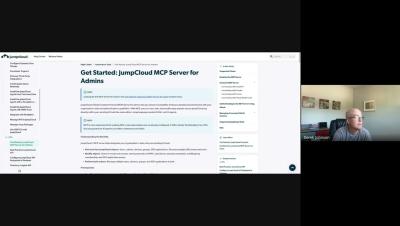
JumpCloud Workflows from Your AI Client (via MCP Server)

Discover how to run JumpCloud Workflows directly from your AI client using the JumpCloud MCP Server. In this demo, see how IT teams can use natural language to build, manage, troubleshoot, and execute workflows, making IT automation simpler and more accessible. Explore how JumpCloud brings AI-powered automation into your everyday IT operations.

Introducing full transaction detection for Cloudflare WAF

Today, we are expanding our web application firewall (WAF) by adding two new capabilities: full transaction detections and response rules. Full transaction detections evaluate each HTTP request alongside its response to identify evidence of exploitation. It helps answer both "Does this request look malicious?" and "What happened when the application handled it?" Response rules can then block the origin’s response before it reaches the requester.

Cloudflare deploys protections against php2shell vulnerability

Today, Calif.io, Wiz, OpenAI and Quarkslab disclosed two vulnerabilities in PHP, tracked as CVE-2026-109618 and CVE-2026-109619 and known as php2shell. The vulnerabilities affect all web servers running PHP 5.4 or later and they may allow an attacker to cause denial of service, remote code execution, and data exposure when an application processes specially crafted HTTP traffic.

Beyond the patch: Protecting your NetScaler gateway against future vulnerabilities

The recent disclosure of a major vulnerability in Citrix NetScaler pointed to a widespread weak point: a login page is an attack surface that can be used to compromise and access an application server. Indeed, the disclosures included an actively exploited flaw that allowed attackers to execute commands on affected gateways without signing in. As with any emergency patch, admins had to weigh cutting off or disrupting their users’ access with the risk of delaying a critical security update.

Continuous accountability for Verified bots

A driver’s license tells you who someone is and that they passed a driving test, not whether they’ll drive responsibly in the future. The same is true for bots: verifying who operates it creates accountability, but trust depends on what it does next. A known bot can still ignore website preferences, overwhelm origins, or evade controls. It’s not always malicious — often it’s just a misconfiguration or a bug.

A fully programmable secure web gateway

Every secure web gateway on the market works the same way: traffic matches a condition. A terminal action fires. Allow, Block, Isolate, Log. This model has been the foundation of network security for nearly 30 years, and it handles the common case well. But it has a ceiling, and customers with complex environments hit that ceiling regularly.

Why SOC Teams Need Runtime Visibility From Their CNAPP

Many companies run their software on cloud servers that come and go on their own. When traffic spikes, new ones switch on automatically. When it drops, they shut down, sometimes less than an hour after they started. That flexibility saves money, but it creates challenges for the people whose job is to investigate attacks.

Yandex outage: Data shows that instead of going dark, malicious bots went on the move

Following reported strikes on Yandex data centers, claims circulated on the Internet that Russian bot farms and influence operations had been knocked offline. HTTP traffic charts showed steep drops, fueling speculation that the infrastructure damage had stopped these malicious actors. However, aggregate traffic metrics can easily mislead. There are two autonomous system numbers (ASNs) associated with Yandex: AS13238 is used by Yandex’s search engine, while AS200350 runs its cloud services.

Apono Brings Just-in-Time Access to AWS IAM Account Access Manager

AWS just shipped AWS IAM Account Access Manager (AAM), a new way to grant AWS access through AWS IAM Identity Center using IAM roles. Apono is supporting AAM from day one, bringing just-in-time provisioning directly to the IAM roles your teams already trust. If you’re running AWS IAM Identity Center today, you’re likely provisioning access through permission sets.

Non-Human Identity Management in Atlassian Cloud

Ask a security team how many employees they have and they will answer instantly. Ask how many non-human identities they have, and the room goes quiet. Non-human identities (NHIs) are the identities that applications, services and automation use to act in a system. Service accounts, automation users and bot logins are identities, while API tokens, keys and certificates are the credentials they authenticate with, and teams have to govern both. These identities run deployments, sync data, post notifications and generate reports, usually without anyone watching.

The Cloud Is Still Physical: Why Cloud Security Makes Sense in the Data Center

We talk about the cloud as though data somehow disappears into an abstract environment, but the cloud is still physical. Somewhere there is a building filled with power systems, cooling, fiber, servers, cameras, access control and people. As data center operators expand across multiple locations, cloud-managed physical security gives them a way to manage access, video and identity consistently across the enterprise while still maintaining local resilience.

The Quiet Takeover: How Your Forgotten Cloud Resources End Up Selling Slot Machines

Picture a global telecom company. Three years ago, a marketing team launched a campaign microsite on a cloud platform and pointed a company hostname at it. The campaign ended and the team deleted the app. Nobody deleted the DNS record. A few years ago, that mistake could sit there for a decade. No one was looking. Today, attackers run automated sweeps across millions of domains, resolving every DNS record and checking whether the resource behind it still exists.

Acronis Cloud Storage adds a recovery warranty

Backup is not the outcome. Recovery is. When critical data becomes unavailable, businesses need more than a completed backup job. They need confidence that their data is protected, available and ready for recovery. That is why Acronis is introducing the Anti-Ransomware Recovery Warranty for eligible customers using Acronis Cloud Storage. The capability adds a clear recovery commitment to the secure cloud storage foundation customers already rely on.

The Azure Administration Skills That Support a Stronger Cloud Security Posture

Using Microsoft Azure securely is not the same as configuring it securely. Although the platform provides a protected foundation, an organization's cloud security posture still reflects routine administrative decisions made across subscriptions and resources. Most incidents are not signs that Azure itself failed. Instead, they often trace back to ordinary configuration choices made during day-to-day work.

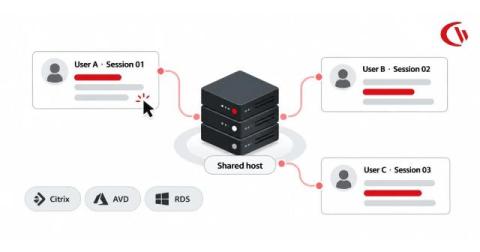
Multi-Session User Tracking in Citrix & Azure Virtual Desktop: Session-ID Mapping vs. Device Logging

In 2026, enterprise computing will be largely consolidated and centralized, and organizations will be shifting away from the one-user-per-PC model towards shared, multi-user virtualization technologies like AVD, Citrix Virtual Apps and Desktops, and Microsoft Remote Desktop Services (RDS).

Building an evidence-grounded agentic security operations harness on Cloudflare

Security alerts rarely arrive one at a time. A single alert can cause a spike across the environment, requiring a human analyst to decide which alerts are related and what they mean. When multiple arrive at the same time, it can quickly overwhelm even a seasoned security analyst. Enter the alert paradox. Now, our built-in, multi-AI-agent security operations harness can handle more of this work at Cloudflare scale.

You Can't Secure the AWS Accounts You Don't Know About.

Ask an AWS security team how many accounts they run, and the honest answer is usually a range. Enterprises on AWS operate anywhere from 100 to 5,000 accounts. Most security teams can see only a fraction of them. That gap is why we built Wallarm Infrastructure Discovery. This week, it was named Enterprise Cloud Security Solution of the Year in the 10th annual CyberSecurity Breakthrough Awards. Here's what it does, and why the judges picked it.

The keys to the Internet change on October 11. Are you ready?

On October 11, 2026, the DNS root is scheduled to change its key-signing key (KSK) for only the second time ever. This key anchors DNSSEC’s chain of trust, which lets DNS resolvers authenticate answers using cryptographic signatures. The change is called a KSK rollover. Validating resolvers need to trust the new key before the switch, as otherwise healthy websites could become unreachable.

How Do I Save My Photos in the Cloud Securely and Privately?

Your phone holds years of memories, and it only takes one lost device, one failed backup or one hacked account to lose them. So if you are asking "how do I save my photos in the cloud?", you are already ahead of most people. The harder question is how to do it securely and privately. Internxt Drive and Photos make uploading and backing up your photos easy, with the added benefits of zero-knowledge encryption, open source software, and data sovereignty.

New in Falcon Cloud Security: Third-Party App Insights and AI-Enhanced Remediation

Two forces are reshaping modern cloud posture management: context and AI. Context gives security teams the business insight to understand risk. AI helps them turn that insight into faster, more informed action. CrowdStrike Falcon Cloud Security is advancing both. New third-party application insights map the external services cloud-native applications depend on, helping customers assess the risk those dependencies introduce.

Supply Chain Attacks in the SaaS Era: Unpacking the Drift Breach | Cloudflare x The CISO Signal

It was just a little chat window in the corner of the screen. But behind it was a web of trusted connections reaching deep inside the enterprise. Here’s how attackers turned a trusted integration into a massive supply chain breach. Expand for more details and resources In August 2025, attackers tracked as UNC6395 compromised OAuth tokens associated with Salesloft’s Drift integration. This turned trusted connections to Salesforce environments into an attack path reaching hundreds of companies, including top-tier cybersecurity organizations.

How Western Canada Lottery Corporation Is Modernizing 5,000 Retail Sites with Netskope SASE

Western Canada Lottery Corporation (WCLC) runs one of the world's most geographically dispersed retail networks: 5,000 lottery terminal locations across Manitoba, Saskatchewan, Alberta, and three northern territories. See how they replaced a fragmented multi-ISP setup with Netskope One SASE. In this 2-minute story, Adam Janssens, Director of Infrastructure and Operations, explains how WCLC: "The cost savings to move away from private connections to secure SD-WAN with Netskope is definitely multi-millions per year, which is a huge benefit to our organization and our provinces.".