Security | Threat Detection | Cyberattacks | DevSecOps | Compliance

In-Depth Review: How SecurityScorecard Stacks Up Against UpGuard in 2024

In the dynamic world of cybersecurity, choosing the right platform can be pivotal for an organization’s digital safety. As we delve into 2024, two major players, SecurityScorecard and UpGuard, continue to make waves. This in-depth review compares these two companies and highlights how SecurityScorecard’s offerings often outshine those of UpGuard.
Building a Skilled Team for Effective Threat Intelligence Management

In the fast-paced world of cybersecurity, assembling a team skilled in threat intelligence is crucial. This article outlines key steps to train and develop a proficient cybersecurity team, ensuring they are equipped to handle evolving cyber threats effectively.

Evaluating Threat Intelligence Platforms: A Guide for IT Leaders

In today’s rapidly evolving cybersecurity landscape, selecting the right threat intelligence platform is crucial for IT leaders. This comprehensive guide focuses on essential factors to consider when evaluating a threat intelligence platform, ensuring it aligns perfectly with your organization’s needs.

Evaluating Cybersecurity Tools: SecurityScorecard vs UpGuard's Strengths and Weaknesses in 2024

In the rapidly evolving field of cybersecurity, choosing the right tool can be a game-changer for businesses. As we move into 2024, two major players stand out: SecurityScorecard and UpGuard. Let’s delve into a comprehensive comparison of their services, pricing, and notable features to understand their strengths and weaknesses.
2024 Cybersecurity Trends: SecurityScorecard and UpGuard's Approach to Emerging Threats

As we venture into 2024, the cybersecurity landscape continues to evolve with new and sophisticated cyber threats. In this dynamic environment, two prominent players, SecurityScorecard and UpGuard, have distinct approaches to tackling these challenges. Let’s delve into how these companies address emerging cyber threats, comparing their services, pricing, and notable features.

Cloud Risk Management: The DevOps Guide

For DevOps software developers, navigating the cloud landscape without a clear understanding of risks is equivalent to walking into a minefield blindfolded. Cloud risk management, therefore, becomes an indispensable tool for DevOps – enabling us with the ability to identify, assess, and mitigate potential threats that could jeopardize their applications, their data, and their organization’s reputation.
User Experience Face-Off: SecurityScorecard vs UpGuard - Which is More User-Friendly in 2024?

In 2024, cybersecurity remains a top priority for businesses across the globe. Two major players in this realm are SecurityScorecard and UpGuard, each offering robust cybersecurity solutions. However, the user experience they provide can be a deciding factor for many organizations. This post compares the user-friendliness of SecurityScorecard and UpGuard, examining their services, pricing, and other notable features.

Collaborative Threat Intelligence: The Power of Sharing Information in Cybersecurity

In the ever-evolving world of cybersecurity, the concept of collaborative threat intelligence has emerged as a crucial element in a comprehensive defense strategy. Cyber threats no longer exist in isolated pockets; they are a global phenomenon affecting organizations across all sectors and sizes. The need for collective vigilance and sharing of threat intelligence has never been more pressing.

Understanding the Financial Implications of Cyber Threat Intelligence

In an era where cyber threats loom large, investing in advanced threat intelligence solutions has become a critical decision for organizations. This post explores the cost-benefit analysis of such investments, unpacking the financial implications and the value derived from enhanced cyber threat intelligence.

Enhancing Cybersecurity in the Financial Industry

The importance of robust cybersecurity practices cannot be overstated, especially when it comes to critical infrastructure, such as the financial industry. Financial institutions, in particular, are entrusted with sensitive data and financial assets, making them prime targets for cyber threats. One crucial aspect of cybersecurity that often goes under the radar is third-party risk management (TPRM).

The Impact of Cloud Computing on Threat Intelligence

The advent of cloud computing has revolutionized various industries, with cybersecurity being no exception. In the realm of threat intelligence, cloud computing has emerged as a game-changing force, enhancing the way intelligence is gathered, analyzed, and applied. This post delves into the transformative impact of cloud-based solutions on threat intelligence.

Threat Intelligence and Data Privacy: Balancing Security with User Rights

In today’s digital age, cybersecurity is an ever-present concern for businesses and individuals alike. The use of threat intelligence has become a cornerstone in the fight against cyber threats, offering invaluable insights for preventing attacks. However, this comes with its own set of challenges, particularly in terms of maintaining data privacy standards. This guide explores the delicate balance between leveraging threat intelligence for security and upholding user data privacy rights.

Risk Mitigation for Organizations: The Complete Guide

Running a business involves taking calculated risks — but unexpected events can have devastating consequences. Risk mitigation is a process that helps companies identify potential risks and take proactive measures to mitigate them. In this blog, we'll explore the importance of risk mitigation and how businesses can protect their assets, reputation, and financial stability.

An Analysis of Menorah Malware

SecurityScorecard is analyzing a phishing campaign that deployed the Menorah malware, which is taking aim at users in the Middle East. This sophisticated campaign is being mounted by the threat actor group tracked as APT34, which is linked to Iran. This group is known for its focus on collecting sensitive intelligence and taking on high-profile targets across the Middle East including critical infrastructure and telecommunications entities.

Navigating the 2024 Cybersecurity Conference Maze

As the digital landscape evolves, so too must the professionals who safeguard it. Cybersecurity conferences are invaluable when it comes to networking, learning, and staying ahead of the ever-evolving threats. Whether you’re a seasoned cybersecurity professional or a newcomer to the field, attending these conferences can be a transformative experience.

Blockchain Security

The blockchain has emerged as a revolutionary technology with the potential to redefine how data is managed, stored, and shared. While initially associated with cryptocurrencies like Bitcoin, the blockchain’s applications extend far beyond finance, impacting industries ranging from healthcare to supply chain management. One of the blockchain’s key promises lies in ensuring data consistency, transparency, and privacy, critical elements in an interconnected and data-driven world.

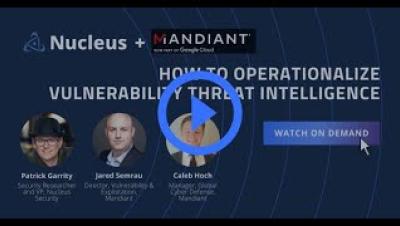
How to Operationalize Vulnerability Threat Intelligence

With so many vulnerabilities to address and potential threats looming, how can organizations prioritize and respond effectively? Enter Vulnerability Threat Intelligence (VTI). This knowledge not only aids in pinpointing vulnerabilities but also shapes strategies for risk acceptance and rapid responses to zero-day threats. Join our webinar where Patrick Garrity from Nucleus Security, Caleb Hoch from Google, and Jared Semrau from Mandiant, uncover how to effectively leverage vulnerability threat intelligence (VTI).

The New Normal For Cybersecurity Practitioners

Former UBER CSO Joe Sullivan joined SecurityScorecard CEO Aleksandr Yampolskiy to discuss pressing topics on the mind of every CISO. Are we on the verge of entering the "Golden Era" of cybersecurity? SecurityScorecard is the global leader in cybersecurity ratings and the only service with over 12 million companies continuously rated. The company is headquartered in New York and operates in 64 countries around the globe.

Applying the Churchill Knowledge Audit to Cybersecurity

When FedEx founder Fred Smith attended Yale in the mid-1960s, he wrote an economics paper describing the concept of overnight delivery of packages by air. His professor infamously gave him a “C” grade because he viewed it as implausible. But Smith knew something his professor didn’t—and it was an idea that would change the way the business world worked forever. I bring this story up for two reasons. For one thing, I worked for FedEx and learned a lot from my time there.

When Hackers Get Hacked: A Cybersecurity Triumph

In a dramatic twist befitting a digital thriller, a malware analyst at SecurityScorecard turned the tables on cybercriminals, rescuing a company from a staggering $500,000 ransomware demand. This story isn’t just about a single incident; it’s a testament to the power of cybersecurity expertise in the ongoing battle against ransomware, a menace that recorded 493 million instances in 2022 alone.

CRQ Journey Part 2: The Importance of Unbiased Data in Financial CRQ

During my first few years as a CISO at Avid Technology, I was able to install a robust cybersecurity program. (Avid is a software provider that equips digital content creators with innovative tools.) With the help of my security team, Avid had become more mature in their control measures. This maturity meant we were better armed to address cyber vulnerabilities. ‍ Unfortunately, on top of my regular duties, I also had to face an even greater challenge.

SLP Denial of Service Amplification - Attacks are ongoing and rising

The Service Location Protocol (SLP), as defined in the RFCs, is vulnerable to abuse allowing attackers to use it as a powerful reflective denial-of-service amplification vector. Earlier this year, Bitsight and Curesec published a joint research regarding this flaw tracked as CVE-2023-29552, which details the issue as well as its global impact and exposure.

The Rise of Automotive Hacking

The automotive industry stands at the crossroads of innovation and vulnerability. As cars become increasingly connected, with advanced systems and features that rely on intricate software, the rise of automotive hacking has become a pressing concern. The convergence of traditional mechanical engineering and cutting-edge software has given rise to a new breed of threats that extend beyond physical security, delving into the digital realm of vehicle control systems.

CISO Roles and Responsibilities (and Job Description Template)

It’s well known by now that cyber attacks and successful breaches have exploded in recent years. Accenture’s latest report on the state of cybersecurity notes that companies experience an average of 270 attacks per year. And Gartner warns that nearly half of organizations worldwide will experience an attack on their digital supply chains.

Securing Your Supply Chain: Risk Management vs Security Management

Supply chain management has become a top priority for businesses due to the increasing use of digital technologies and geopolitical uncertainties, making global supply chains more vulnerable than ever to disruptions. This reality highlights two critical aspects of supply chain management: Supply Chain Risk Management (SCRM) and Supply Chain Security Management (SCSM).

Understanding Software Licensing Agreements

The great Yogi Berra is often quoted as having said "in theory, there is no difference between practice and theory. In practice, there is." Perhaps the same can be said about software licensing agreements. There are often two dimensions to any software license agreement: what’s in the agreement and how the commercial relationship is implemented in practice.

Global Cyber Threats: Insights and Strategies for Defense

In an era where digital connectivity spans across borders, understanding and countering global cyber threats has become a paramount concern for businesses, governments, and individuals alike. This blog post delves into the prevailing global cyber threat trends and outlines effective strategies to defend against these evolving challenges.

Strengthening the Shield

The role of governments has evolved to include the safeguarding of not just physical borders but also virtual territories. With an increasing reliance on technology, the need for robust cybersecurity measures within government entities has never been more critical. Here we’ll explore cybersecurity best practices that can fortify government systems, ensuring the protection of sensitive information and the preservation of national security.

Security Ratings as a Vehicle for Communication

There’s never going to be a silver bullet that makes a CISO’s job easy, but I believe that with the right people, tools, metrics, and KPIs, the job can become easier. My fellow security leaders—the CISO mafia, if you will—have expressed frustration in the past when it comes to Security Ratings. Their view has been that an external rating was not done with any cooperation or internal view of their security environment.

Threat Intelligence: A Game-Changer for Small and Medium-sized Businesses

Cybersecurity is a critical concern for businesses of all sizes. For small and medium-sized businesses (SMBs), the growing complexity of cyber threats poses a unique challenge. This is where threat intelligence comes in as a game-changer, offering SMBs a way to enhance their cybersecurity measures effectively.

Optimizing Incident Response with Advanced Threat Intelligence

In today’s cyber landscape, rapid and effective incident response is crucial for organizations to mitigate the impact of cyber attacks. Advanced Threat Intelligence (ATI) is emerging as a key player in enhancing incident response strategies. This blog post aims to elucidate how modern threat intelligence tools refine and improve these strategies, equipping organizations with the necessary insights and agility to respond to cyber threats efficiently.

Real-Time Threat Intelligence: Revolutionizing Cybersecurity Responses

Cyber threats emerge and evolve at an astonishing pace, and the ability to respond quickly and efficiently is more crucial than ever. Real-Time Threat Intelligence has become a vital tool in this ongoing battle, providing organizations with the agility and insight needed to counteract these threats effectively.

Predictions for AI and Cybersecurity in 2024

As the holiday season comes into full swing, it’s estimated that cyberattacks go up by as much as 30% during this period. To help increase cyber resilience—and stay vigilant well into the new year—SecurityScorecard is sharing some of our key AI predictions for 2024 based on the trends we’ve observed this past year.

UpGuard Summit December 2023 - Panel Discussion

Join our moderator Jessica Aitkin as she sits down with three of our knowledgeable customers, who share their insights into selecting and onboarding a third-party risk management tool. Guest Speakers Colby Cousens - IT Director, Town of Danvers Ziggy Kowalski - Director of Information Security, Hendrickson Steven Lovaas - CISO, Colorado State University System.

Utilizing Threat Intelligence to Mitigate Cyber Risks

In an age where digital threats are constantly evolving, understanding and mitigating cyber risks is crucial for businesses of all sizes. Advanced threat intelligence plays a vital role in this process, providing the insights needed to identify, assess, and effectively respond to cyber risks. Let’s discuss how businesses can leverage threat intelligence to enhance their cybersecurity posture and protect against the ever-changing landscape of cyber threats.

CRQ Journey Part 1: The Problem With Standalone Cyber Frameworks

‍ As one of the youngest global industries, cybersecurity presents many challenges. It's a complex sector with many components to master. Security leaders find fortifying an organization's security measures tough. This obstacle is made even greater by the quickly evolving threat landscape. Another tricky hurdle is communicating and justifying their actions to the boardroom. ‍

Bitsight and Google collaborate to reveal global cybersecurity performance

Bitsight and Google have collaborated to study global organizational performance across cybersecurity controls in the Minimum Viable Secure Product (MVSP) framework. Amid heightened stakeholder demands, security leaders, board members, and executives are all asking how they can better inform their cybersecurity strategy through benchmarking, keep up-to-date with current cyber risks, and prioritize budgets and workforce readiness to meet the latest challenges.

Exploring the Risks of Read-Only Access in the Cloud

My career began with read-only access. In my first job, I worked night shifts in a data operations center. Our team handled incidents identified either by monitoring or from end customers. This meant I often had to perform first, second and third-line troubleshooting. If we couldn’t identify and resolve the issue, our only option was to wake up a rather exhausted escalation engineer.

The complete guide to compliance risk management

To build a successful business you’ll need to acquire new customers, save on costs, and avoid major pitfalls that could impact your bottom line. An important aspect of this is managing your organization's compliance risk. These include the risk of penalties, legal judgments, and other issues that could come as a result of not complying with legal regulations and industry standards.

Unveiling Our Redesigned Website:

We are thrilled to announce the launch of our new website, a testament to Obrela’s commitment to excellence in the ever-evolving landscape of cybersecurity. As part of this commitment, we have revamped our website to provide you with an enhanced experience, making it easier for you to explore and discover more about our cutting-edge solutions.

Have you accounted for AI risk in your risk management framework

Artificial intelligence (AI) is poised to significantly influence various facets of society, spanning healthcare, transportation, finance, and national security. Industry practitioners and citizens overall are actively considering and discussing the myriad ways AI could be employed or should be applied.

Moving Beyond the Cyber Risk Matrix With Defensible CRQ Data

‍ The use of risk matrices for decision-making purposes extends back to the 1980s when the US Department of Defense needed a quick and easy way to evaluate hazards in safety systems engineering. Since then, the matrix has been applied in multiple fields to assess potential results and their associated risks, emerging as an instrumental tool for organizations grappling with making high-level strategic investments. ‍

Software Liability Explained

Software liability is an increasingly important area for every software development company and team. At its core, software liability is about protecting users from damages caused by software issues. As more software is in use than ever before, there’s a lot of ways that software — and its manufacturers — could be held responsible for certain actions or inactions. Indeed, even the rise of cyber insecurity globally could fall into this murky area.

Exposed Server Headers and Cybersecurity Risk

Your web server conveys a variety of information to the client when a visitor opens your website. They can access specific policies you've set and sometimes identify what kind of software you use to run your system. Sometimes, that's okay. Other times, the information exposed in your server header can lead directly to a malicious cyber attack.

What are ESG Frameworks? Corporate Sustainability & ESG Risks

ESG frameworks are guidelines, metrics, and criteria that allow companies and investors to develop sustainability reporting standards and evaluate environmental, social, and governance risks. Common ESG frameworks include the Global Reporting Initiative (GRI), Carbon Disclosure Project (CDP), and Task Force on Climate-Related Financial Disclosures (TCFD). Over the last decade, ESG performance has become an important metric to evaluate an organization’s operational sustainability.

Nearly Every CIO Identifies at Least One Cyber Threat as a Risk to their Business

When 97% of CIOs all see things the same way, it’s probably a sign to take the risk of cyber threats seriously – a problem new data shows is only going to get worse in the next five years. I cover a ton of reports from cybersecurity vendors on our blog, but when you see a network infrastructure vendor put out a report with intent on just covering the challenges organizations are facing and they have some interesting data on cybersecurity, it got my attention.

A Guide to Third-Party Risk Management in the Financial Sector

In today's financial landscape, businesses are interconnected, and outsourcing and partnerships are necessary—meaning managing risks associated with third-party vendors is pivotal. Whether you're a small community bank or a multinational financial conglomerate, mastering third-party risk management is vital to safeguarding your institution against the vulnerabilities that third parties can introduce.

Scale Your Vendor Risk Management Program with Automation

As your business grows and you work with more third-party vendors, you need to ensure security and stability across your entire vendor supply chain. With hundreds, if not thousands, of external vendors, it can be daunting and time-consuming for teams to compile all the necessary data about each vendor, evaluate the vendor's impact, and take action to ensure compliance with organizational needs.

The Future of Cyber Threat Intelligence: 10 Trends and Predictions

In the ever-evolving world of cybersecurity, staying ahead of threats is not just a matter of strategy but of survival. Cyber threat intelligence (CTI) has become an invaluable tool in this ongoing battle, helping organizations predict, prepare for, and respond to cyber threats more effectively. As we look to the future, several emerging trends and technological advancements are set to redefine the landscape of CTI.

The Evolution of Artificial Intelligence in Cyber Threat Hunting

The role of artificial intelligence (AI) has become increasingly prominent, particularly in the realm of cyber threat hunting. Cyber threats continue to evolve in complexity and sophistication, posing significant challenges to traditional cybersecurity measures. As a result, organizations are turning to AI-driven solutions to enhance their threat detection and response capabilities.

Safeguarding Justice

In an era dominated by digital advancements, the legal landscape is not exempt from the pervasive threat of cyberattacks. Law firms, entrusted with sensitive and confidential client information, must prioritize cybersecurity to safeguard both their clients and their own reputation. The consequences of a security breach can be severe, ranging from financial losses to irreparable damage to the firm’s integrity.

Assessing Third-Party Vendors: A Cybersecurity Checklist

The reliance on third-party vendors for diverse services has become a norm in 2023. However, this dependence brings with it the need for a heightened focus on the cybersecurity posture of these external partners. It’s imperative for businesses to meticulously assess the cybersecurity risks and compliance levels of their vendors to safeguard against potential vulnerabilities that could impact their operations.

Welcoming Bob Lyle,Our Chief Revenue Officer

‍We are thrilled to welcome Bob Lyle to Riscosity as our Chief Revenue Officer. Bob is an accomplished executive with extensive GTM experience in scaling software and security companies. He will be responsible for the planning, development, and global execution of our revenue strategy as we continue to evolve our business.

Webinar: Is the biggest risk the one you can't see coming? With EY & Tanium

An exclusive webinar in collaboration with EY to learn how the Managed Visibility and Control joint solution addresses DORA and NIS2 regulatory compliance challenges. Organizations need to be smart about their data, network and endpoint device security while managing the associated risks as access to data becomes more fluid. Where most security breaches once came through networks, now it’s the endpoint devices becoming targets for bad actors.

The SEC, the SolarWinds Complaint, and the Lack of Transparency

‍ The US Securities and Exchange Commission's complaint against SolarWinds and its Chief Information Security Officer (CISO) Tim Brown has sent shockwaves through the cybersecurity community. Solarwinds and Brown have been accused of fraud, the details of which can be found in an extensive 68-page document. ‍ This complaint, in itself a bold move, has been particularly jolting to cyber professionals given the SEC’s July 2023 regulations.

90% of Energy Companies Experienced a Third-Party Breach

More than two years after the major U.S. pipeline ransomware incident, the SecurityScorecard Threat Research, Intelligence, Knowledge, and Engagement (STRIKE) Team has released a new report revealing that 90% of the largest global energy companies have experienced a third-party breach in the past 12 months. This research highlights the uphill battle faced by the energy industry in combating emerging threats across the supply chain.

Third-Party Data Breach Response Playbook

The risk of data breaches has become an omnipresent concern for businesses and organizations. And as technology continues to evolve, so do the tactics of cybercriminals. One critical aspect of cybersecurity strategy involves preparing for and responding to third-party data breaches. A well-constructed response playbook is indispensable in mitigating the potential damages and ensuring a swift recovery.

Integrating Threat Intelligence into Your Cybersecurity Plan

In the rapidly evolving digital landscape, the importance of a well-constructed cybersecurity plan cannot be overstated. However, the effectiveness of any cybersecurity strategy significantly depends on how well it integrates threat intelligence. Threat intelligence involves understanding, analyzing, and using knowledge about existing and potential cyber threats to make informed security decisions.

Introducing Bitsight Portfolio Risk Analytics

Do you know what percentage of your vendors are at higher risk of ransomware attack? Can you drill-in to see exactly who? Or more importantly, why? Or how effective your vendor program has been in reducing risk to the business over the last 12 months? In the ever-connected world of partners and suppliers, vendors and even more vendors, the line between ‘their risk’ and ‘your risk’ disappeared. And what security and compliance teams need more of is not more data, but insights.

Iran-Linked Attack on U.S. Water Treatment Station

On November 25, the U.S. municipal water authority in Aliquippa, Pennsylvania confirmed that one of its booster stations had suffered an attack by a threat actor group that supports Iranian geopolitical interests. The attack by a cyber group known as CyberAv3ngers compromised a programmable logic controller (PLC) for a water pressure monitoring and regulation system. Officials, however, have made it clear that the incident did not threaten local drinking water or water supplies.

Maximizing Third-Party Risk Management: A Step-by-Step Guide

In today’s interconnected business environment, third-party partnerships are essential for growth and operational efficiency. However, these collaborations bring inherent risks, especially in the realm of cybersecurity. Effective third-party risk management is crucial for safeguarding sensitive data and maintaining business continuity.

Building a Resilient Third-Party Risk Management Program

In an era where businesses are increasingly reliant on third-party vendors for essential services, the significance of a resilient third-party risk management program cannot be overstated. Third-party partnerships can expose organizations to various risks, especially in the domain of cybersecurity. This guide aims to help businesses in building a robust third-party risk management program that is adaptable to the ever-evolving landscape of cyber threats and dynamic business needs.

From Reactive to Proactive: Transforming Your Approach with Threat Intelligence

The landscape of cybersecurity is ever-evolving, and staying one step ahead of cyber threats has become imperative for organizations. Traditionally, many businesses have adopted a reactive approach to cybersecurity, responding to threats and breaches as they occur. However, this approach is no longer sufficient in today’s digital world. Shifting to a proactive stance, powered by threat intelligence, is crucial for enhancing an organization’s security posture.

The Role of Threat Intelligence in Proactive Cybersecurity

In the rapidly evolving digital landscape, the approach to cybersecurity has shifted significantly. Proactive cybersecurity has become a necessity rather than a choice, with threat intelligence playing a pivotal role in this paradigm shift. This post explores how threat intelligence forms the cornerstone of a proactive cybersecurity strategy, focusing on its role in predicting and preventing cyber attacks, thereby enhancing an organization’s security posture.

Data Breach at the Idaho National Laboratory

On November 20, the Idaho National Laboratory (INL) confirmed that it had suffered a data breach. The confirmation followed the SiegedSec threat actor group’s circulation of claims that it had “accessed hundreds of thousands of user, employee and citizen data” on social media and hacking forums.

Research Into IoCs Linked to Exploitation of CVE-2023-47246

The SecurityScorecard Threat Research, Intelligence, Knowledge, and Engagement (STRIKE) Team has conducted further research into the indicators of compromise (IoCs) that SysAid shared when disclosing a new vulnerability in its on-premise software last month.

Future-Proof Your Cyber Risk Management With 7 Top Trends in 2024

The global marketplace faces an increasingly destructive cyber risk landscape each year, and 2024 is set to confirm this trend. The cost of data breaches alone is expected to reach $5 trillion, a growth of 11 percent from 2023. As technology advances, attackers continue to develop new, more sophisticated methods for infiltrating systems and exploiting vulnerabilities. ‍ Amongst cyber experts, it is now widely acknowledged that the question of an attack is not ‘if’ but ‘when.’

Comprehensive TPRM: Your Board of Directors & Risk Oversight

Modern business is synonymous with third-party relationships. Organizations now rely on external providers for critical services and outsource essential responsibilities to improve operational efficiency and cut costs. The benefits of third-party vendors are clear, but so are the risks. The average organization has expanded and digitized its supply chain over the last few years while simultaneously increasing its risk profile and subjecting itself to new levels of risk.

Beyond phishing: The Top Employee Security Risks You're Probably Not Measuring

As companies use more tools and features, employee security risks grow too. While we all know email is a big target for attackers, it’s important to remember that email is not the only risk vector. Email is just one piece of the puzzle, which is why it is crucial to consider a wide range of employee security behaviours to get a holistic view of your risks. By doing so, you can focus resources more efficiently. Human Risk Management (HRM) is a vital part of cyber security in the workplace.

Unveiling Application Security: Threats, Tools, and Best Practices for 2024

In today's rapidly evolving digital landscape, application security has become a critical component of modern software development. As cyberattacks grow more sophisticated, ensuring the integrity of applications and protecting sensitive data that these applications store, process, or handle is of paramount importance. In this blog post, we will delve into the world of application security - exploring key components, testing techniques, essential tools, and best practices - to help you stay ahead of the curve and safeguard your applications from cyber threats.

Top 10 Features to Look For in Vendor Risk Assessment Reports

Utilizing third-party vendors can provide numerous benefits, such as cost savings, expertise, and efficiency. Still, it also introduces a range of risks that can significantly impact an organization's security, compliance, and overall operational integrity. Vendor Risk Assessments allow organizations to understand and manage these risks, making them a vital risk management tool during procurement, initial onboarding, and the vendor lifecycle.

Cybersecurity for Small and Medium-sized Enterprises (SMEs): A Comprehensive Guide

Cybersecurity is a critical concern for businesses of all sizes, but small and medium-sized enterprises (SMEs) often face unique challenges. With limited resources and expertise, SMEs can be particularly vulnerable to cyber threats. However, safeguarding digital assets and information is crucial for maintaining business integrity and customer trust. This comprehensive guide aims to provide SMEs with valuable insights into developing a cybersecurity strategy tailored to their specific needs.