Security | Threat Detection | Cyberattacks | DevSecOps | Compliance

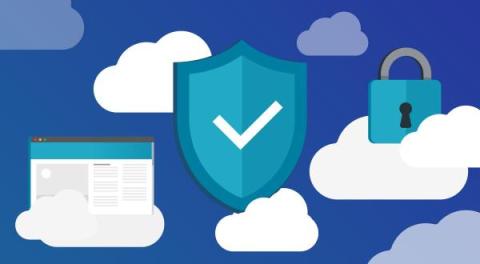
What is Cloud Security? Types, Risks & Benefits Defined

With data breaches making the headlines almost daily, it can feel like you’re stuck in a never-ending discussion about how secure data is in the cloud. On one hand, cloud naysayers may be preaching cloud repatriation in response to the high profile cloud compromises of the last few years. On the other hand, being too sure of your data security is a major recipe for trouble — hubris has no place in cybersecurity.

Upgrade Your Cloud Storage Experience With This Alternative to Filen

Filen is a cloud storage company founded in 2020 in Recklinghausen, Germany. Like many alternative cloud storage providers, Filen aims to provide users with complete privacy for their files, securing them with zero-knowledge and end-to-end encrypted technology. If you’re interested in learning more about Filen, we’ll discuss how they focus on protecting your privacy online, their pricing, and other features.

The Common Cloud Misconfigurations That Lead to Cloud Data Breaches

The cloud has become the new battleground for adversary activity: CrowdStrike observed a 95% increase in cloud exploitation from 2021 to 2022 and a 288% jump in cases involving threat actors directly targeting the cloud. Defending your cloud environment requires understanding how threat actors operate: how they’re breaking in and moving laterally, which resources they target and how they evade detection.

Automate incident response and security workflows with Blink in the Datadog Marketplace

Security and DevOps engineers often spend a lot of time and effort creating and managing complex, repetitive workflows, such as incident response, honeypotting, recovery and remediation, and more. Blink is a no-code security platform that enables users to create workflow automations, triggers, and self-service apps to streamline processes, better enforce guardrails, and eliminate operational bottlenecks.

Unveiling best practices for a resilient cloud security strategy

The transition to cloud-based environments has ushered in unparalleled efficiency, scalability, and innovation. However, it has also magnified the importance of fortifying our digital fortresses against an array of potential risks. Considering the increasing reliance on cloud computing, it’s important to find the best practices and strategies that organizations can adopt to enhance their cloud security posture and mitigate the risks associated with cloud-based environments.

From Hardware to Cloud: Modernizing IT Infrastructure for Business Success

The IT infrastructure has evolved over the years. The traditional hardware-based system is slowly giving way to cloud platforms that are more efficient, scalable, and flexible than their predecessors. Organizations are moving away from traditional models of managing IT infrastructure and embracing modern approaches such as hybrid cloud deployments, containerization, microservices architectures, and more.

New Cloud TAP Traffic Capture for Netskope Intelligent SSE

For remote work and hybrid working environments where we are now more dispersed the central collection point for traffic captures is within the cloud. Networking, infrastructure and operations, and security teams require traffic visibility for troubleshooting, performance monitoring, threat detection, discovery of assets, and to address compliance use cases.

Unlock Secure Hybrid Cloud Excellence: Building Digital Resiliency with Secure Application Delivery

Are you ready to build digital resiliency with your secure application delivery in a hybrid cloud environment? According to Gartner analysts, more than 85 percent of organizations will embrace a cloud-first principle by 2025 and will not be able to fully execute on their digital strategies without the use of cloud-native architectures and technologies.

4 Ways To Improve Your Cloud Security Posture Management

The cloud can be cost-effective, scalable, flexible and – mostly – secure. So, it’s not surprising that 94 percent of enterprises use cloud services, 67 percent of enterprise infrastructure is cloud-based, and 92 percent of businesses have a multi-cloud strategy in place (source). But that doesn’t mean that breaches can’t happen.