Security | Threat Detection | Cyberattacks | DevSecOps | Compliance

Introducing Moltworker: a self-hosted personal AI agent, minus the minis

The Internet woke up this week to a flood of people buying Mac minis to run Moltbot (formerly Clawdbot), an open-source, self-hosted AI agent designed to act as a personal assistant. Moltbot runs in the background on a user's own hardware, has a sizable and growing list of integrations for chat applications, AI models, and other popular tools, and can be controlled remotely. Moltbot can help you with your finances, social media, organize your day — all through your favorite messaging app.
AWS KMS Vs Azure Key Vault Vs GCP KMS: Choose the Best Cloud Security Storage

Data breaches aren’t costing thousands anymore. They’re costing companies their reputation, their customers, and in many cases, their future. And here’s the part nobody tells you until it’s too late. It’s not always ransomware. It’s not always a missing patch. It’s not always some genius hacker breaking in through a zero-day exploit. It’s simply because someone gained access to the encryption keys.

DSPM vs CSPM: Choose Your Cloud Security Strategy

Data security posture management (DSPM) and cloud security posture management (CSPM) both play vital roles in cloud security, but they serve distinct purposes. DSPM focuses on protecting sensitive data across SaaS, IaaS, and PaaS environments, while CSPM focuses on cloud infrastructure. For organizations managing sensitive data in multi-cloud setups, DSPM often offers superior visibility, real-time monitoring, and regulatory alignment.

Double your cloud power: Acronis True Image Premium now offers a massive 10TB!

As an Acronis user, you understand the importance of safeguarding your digital life. Whether you're a photographer with an ever-growing library of high-resolution images, a videographer churning out terabytes of footage, a content creator managing countless projects or a power user with multiple virtual machines and a home lab, the need for ample, secure cloud storage is constant. You want one reliable place for all your data, without the hassle of juggling multiple tools and accounts.

Best Cloud Compliance Tools in 2026: From Audit-Prep to Runtime Verification

What are the three types of cloud compliance tools? Audit-prep platforms (Drata, Vanta) automate evidence collection for certifications. Security posture management/CSPM (Wiz, Prisma Cloud) scan configurations at a point in time. Runtime compliance verification (ARMO, Sysdig) monitors actual workload behavior continuously. Choosing the wrong type means solving for the wrong problem. What is compliance drift and why does it matter? The gap between your last scan and your current state.

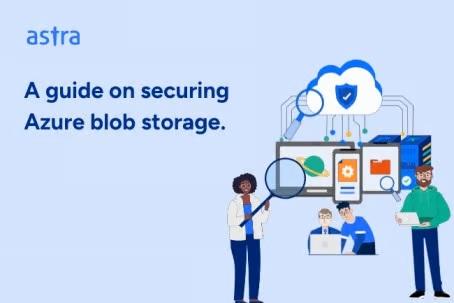
Guide on Securing Azure Blob Storage: Best Practices and Key Features

Azure Blob Storage is an object storage solution. It stores massive amounts of unstructured data, such as text files, images, videos, etc. It supports large-scale data for applications such as backup, data lakes, and media serving. Specifically, Azure Blob Storage security prevents unauthorized access, data leakage, and potential breaches.

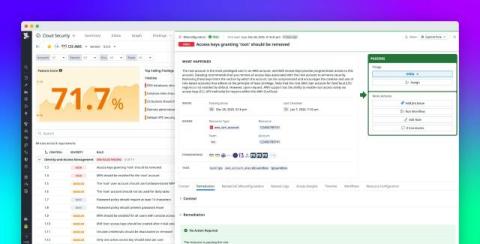
Scale compliance across global frameworks with Datadog Cloud Security

Security organizations are expected to keep pace with a growing set of regulatory and industry requirements as their cloud environments grow. Yet maintaining compliance in modern, fast-moving infrastructure is increasingly difficult. Cloud resources change by the minute, teams adopt new services without centralized oversight, and evidence needed for audits is often scattered across tools and providers.

How we mitigated a vulnerability in Cloudflare's ACME validation logic

On October 13, 2025, security researchers from FearsOff identified and reported a vulnerability in Cloudflare's ACME (Automatic Certificate Management Environment) validation logic that disabled some of the WAF features on specific ACME-related paths. The vulnerability was reported and validated through Cloudflare’s bug bounty program. The vulnerability was rooted in how our edge network processed requests destined for the ACME HTTP-01 challenge path (/.well-known/acme-challenge/*).

Astro is joining Cloudflare

The Astro Technology Company, creators of the Astro web framework, is joining Cloudflare. Astro is the web framework for building fast, content-driven websites. Over the past few years, we’ve seen an incredibly diverse range of developers and companies use Astro to build for the web. This ranges from established brands like Porsche and IKEA, to fast-growing AI companies like Opencode and OpenAI.

Configuration Drift: Why 99% of Cloud Failures Are Customer-Caused

"Gartner estimates that 99% of cloud security failures through 2025 will be the customer's fault, primarily due to misconfigurations." Don’t become part of the statistic. Take our configuration drift product tour for a spin. Consider it some light work before the weekend. Most breaches don’t stem from cloud provider failures, but from customer-side issues like misconfigurations, weak identity controls, and unmanaged change.

CodeBreach: Critical AWS CodeBuild Misconfiguration Enabling Supply Chain Repository Takeover

A critical misconfiguration in Amazon Web Services (AWS) CodeBuild could have allowed attackers to gain complete control over GitHub repositories used in AWS CI/CD pipelines, including the widely used AWS JavaScript SDK, introducing a severe software supply chain risk. This vulnerability, codenamed CodeBreach, stemmed from insufficiently restrictive CI pipeline configurations, build triggers, and webhook filters.

Best Cloud Workload Protection Solutions: A Runtime-First Evaluation Guide

What is a cloud workload protection platform (CWPP)? Security for the workloads actually running in your cloud—VMs, containers, and serverless functions doing real work. Unlike posture management (CSPM) that checks configurations, CWPPs monitor processes, network connections, and application behavior to catch threats as they happen. What’s the difference between CSPM, CWPP, CNAPP, and CADR? CSPM scans cloud settings for misconfigurations. CWPP protects running workloads.

New Cloudflare report warns of a 'Technical Glass Ceiling' stifling AI growth and weakening cybersecurity

New research shows that organisations modernising apps are 3x more likely to see AI payoffs, while those clinging to legacy systems face rising security risks and developer talent shortages.

JFrog Achieves AWS Security Competency

At JFrog, our mission has long been to power the future of software, and we believe that future is undeniably cloud-native. This is why we’ve architected our platform as a container-first, Kubernetes-native SaaS—built for performance at scale on the world’s leading cloud infrastructure. Our deep commitment to cloud excellence has reached a major milestone in our long-standing collaboration with Amazon Web Services (AWS): JFrog has achieved AWS Security Competency status.

Arctic Wolf and AWS: AI-Powered SOC and Security Incident Response

Discover how Arctic Wolf partners with Amazon Web Services (AWS) to deliver cutting-edge, AI-powered Security Operations Center (SOC) capabilities and advanced security incident response solutions. This video explores how Arctic Wolf leverages AWS cloud infrastructure and artificial intelligence to provide: Learn how this powerful combination enhances your organization's security posture, reduces response times, and protects against evolving cyber threats through intelligent automation and comprehensive managed detection and response (MDR) services.

Top 10 SIEM best practices for modern security operations

Nowadays, it’s not uncommon for enterprise IT leaders to find themselves in a situation that seems like a catch-22. On one hand, they’re expected to make data-driven decisions that improve productivity and profitability in a business. On the other, they’re preoccupied with their core responsibilities such as protecting critical systems, maintaining network security, and accelerating investigations when a security event occurs. Traditional tooling won’t keep up with modern systems.

Top 5 Enterprise Cloud Security Solutions to Consider in 2026

You’re likely dealing with a cloud footprint that grows faster than your ability to govern it. New workloads appear overnight. Developers spin up serverless services without telling security. SaaS systems store sensitive data outside your visibility. And identities connect everything together, which means one compromised token can trigger a multi-cloud incident. This constant expansion creates a monitoring gap—one that attackers understand better than anyone.

Just-in-Time Access Policy Design for Cloud Security Teams

Just-in-Time access is widely accepted as a best practice for reducing standing privilege. The challenge for most organizations is not deciding to use JIT, but designing access policies that actually reduce risk without slowing engineers down. Security teams want tighter controls, stronger auditability, and less standing access. Engineering teams need fast, predictable access to do their work. When approval policies are too rigid, teams get blocked or work around controls.

The best cloud backup for Mac: secure your data effortlessly

Cloud backup has become one of the simplest and most effective ways to protect your Mac's data, because it stores your files in secure data centers, from where you can restore your data whenever needed in just a few clicks. It literally protects you from losing all your cherished memories like photos, videos, and important documents due to a cyberattack, natural disaster, or hardware failure.

How AWS Security Hub and Tines Help Security Teams Prioritize Risk and Accelerate Response

Security teams aren’t short on alerts—they’re short on clarity and time. As cloud environments grow more complex, leaders need to understand which findings represent real exposure and how to act on them quickly. In this webinar, AWS and Tines show how AWS Security Hub prioritizes risk through correlated and exposure-based findings, and how Tines turns that signal into consistent, automated action. Through real-world examples, attendees will see how teams reduce noise, speed remediation, and improve security operations with workflows that scale.

Top 5 Mistakes New Devs Make in Healthcare App Builds and How to Avoid Them

"How to develop a healthcare app" sounds like a normal software question until you actually try it. Once you step into healthcare app development, you realize you're not just shipping features. You're building something that sits alongside doctors, nurses, and patients in real healthcare settings. If it breaks, it can delay treatment. If it leaks data, it can ruin trust and trigger legal problems. A glitch here hurts more than someone missing a DM in a chat app. That's why healthcare software in 2026 requires a mindset closer to clinical engineering than regular SaaS development.

8 Strategies to Improve Cloud Visibility for Better Monitoring in 2026

Why Cloud Visibility Has Become Such a Pain Point for Enterprises Managing cloud visibility today feels overwhelming because your environment expands in ways you cannot always track. New cloud accounts appear before onboarding is complete, SaaS applications connect to production systems without security review, and identities multiply each time a new service is deployed. You are expected to monitor and protect an environment that evolves faster than documentation or tooling.

Cloud and Platform Migration: Cost, Risks, and Best Practices for Enterprises

In today's fast-evolving digital economy, staying competitive has nothing to do with relying on legacy systems. Even if your aging solution seems to be reliable because you're so accustomed to it, you'll definitely face blockers while trying to scale or innovate. Without modernized software.

Elastic Cloud Serverless achieves major compliance certifications across AWS, Azure, and GCP

Securely scale search, security, and observability apps on any cloud provider. We are thrilled to announce a major milestone in our commitment to security, privacy, and regulatory compliance for Elastic Cloud Serverless. Elastic Cloud Serverless has now attained a comprehensive suite of key compliance certifications across all of our available cloud providers: Amazon Web Services (AWS), Microsoft Azure, and Google Cloud (GCP).

Cloud vs On-Premised SIEM: One or the Other or Both?

While Hamlet asked the existential question “to be or not to be,” most security teams ask an equally esoteric question that ultimately defines their ability to manage alerting and detection: “to deploy on-prem or in the cloud?” When adopting a security information and event management (SIEM) solution, organizations must make a foundational decision around whether to deploy the solution on-premises or in the cloud.