Security | Threat Detection | Cyberattacks | DevSecOps | Compliance

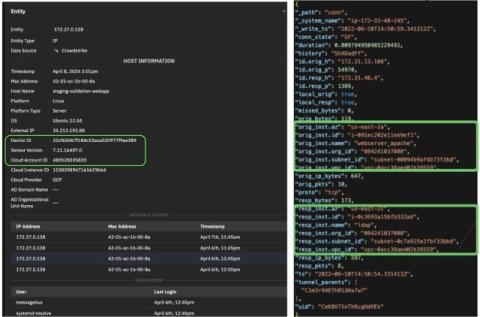
Introducing Sysdig Threat Management: Combating threats in cloud security

Cloud security teams are often faced with an onslaught of noise from their detection tooling, making it nearly impossible to distinguish truly malicious threats from benign behaviors. Many threats will go uninvestigated simply because there aren’t enough analysts for the sheer amount of alerts, leaving organizations exposed to potential breaches.

Beyond AWS Native Backup: A Simpler Path to Data Protection

We are often asked how Rubrik Security Cloud differs from AWS Backup. It's a valid question because, at first glance, the two solutions seem similar. Both have cloud-first, API-driven architectures. Both are built specifically to ensure reliable backup and recovery for data stored across AWS. Both support a wide range of the most popular AWS workloads including EC2, EBS, S3, RDS and EKS.

Building High Availability into a Large Cloud SQL Fleet, Part 2: Optimizations and Design Choices

At Rubrik, we rely on a multi-tenant architecture to store customer metadata in a large fleet of Cloud SQL database instances. With numerous production deployments globally, each supporting multiple customer accounts, maintaining high availability, performance, and robustness across this infrastructure is critical. Managing a large fleet of Cloud SQL instances and ensuring they remain resilient and performant has been a journey filled with valuable lessons.

From Zero to CTEM: An Actionable Approach to the Five Stages

Join Nucleus team members Tali Netzer, Head of Product Marketing, and Scott Koffer, COO and Co-Founder, as they navigate the intricacies of Continuous Threat Exposure Management (CTEM). In this webinar, they discuss the history of vulnerability management, the evolution to CTEM, and how it fundamentally changes the approach to cybersecurity. Learn about the five-step CTEM process, from scoping and prioritization to validation and mobilization.

CrowdStrike Falcon Cloud Security Expands Support to Oracle Cloud Infrastructure

CrowdStrike is thrilled to announce a collaboration with Oracle that will bring the unified, AI-powered protection of CrowdStrike Falcon Cloud Security support to Oracle Cloud Infrastructure (OCI). As OCI has become a strategic choice for organizations seeking enterprise-grade performance and security, this expansion improves the visibility and protection to defend against cloud-focused threats.

Keep AI interactions secure and risk-free with Guardrails in AI Gateway

The transition of AI from experimental to production is not without its challenges. Developers face the challenge of balancing rapid innovation with the need to protect users and meet strict regulatory requirements. To address this, we are introducing Guardrails in AI Gateway, designed to help you deploy AI safely and confidently.

CIEM: The Future of Cloud Infrastructure Entitlement Management

Cloud Infrastructure Entitlement Management is leading the charge in the fast-paced evolution of cloud security. The complexity of controlling user access and permissions increases as businesses grow their cloud environments. Traditional identity and access management (IAM) systems find it difficult to adapt to cloud infrastructure's constant changes. Security issues including insider attacks, misconfigurations, and over privileged accounts are brought on by this gap.

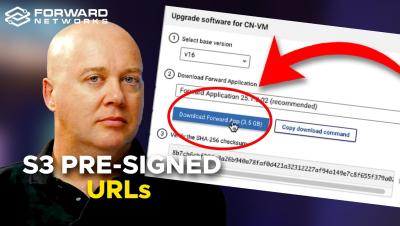
A Guide to S3 Pre-Signed URLs: What They Are and How They Work

This guide explores S3 pre-signed URLs, explaining their purpose, benefits, and how they function. It also includes a demonstration of creating and using pre-signed URLs in the AWS Management Console and highlights their integration within the Forward Networks platform for secure and efficient workflows.

Managed Public Cloud: Get the Most Out of Your Cloud Investment

Cloud adoption continues to accelerate across organizations of all sectors, sizes, and geographies. Its growth can be linked to a multitude of short- and long-term factors, from the more recent surge in generative AI (GenAI)-enabled applications at scale to the ongoing rise in data volume. At its core, however, the sustained popularity of cloud computing comes down to one thing: value.

How Secure Is Cloud Storage?

Cloud storage has become a go-to solution for individuals and businesses seeking scalable, cost-effective ways to store data, as it offers significant advantages over traditional methods of storing our files. Public cloud storage works by using remote servers operated by a service provider so you can access files from anywhere with an internet connection. While convenient, trusting your sensitive and potentially confidential files to an external provider leaves many asking, "How secure is cloud storage?".

Prevent DDoS attacks, web scraping, & credential stuffing with Super Bot Fight Mode from Cloudflare

Is your website under attack from bots? Bots are getting smarter and more sophisticated, making it harder to distinguish between legitimate users and automated threats. Malicious bot activity can include credential stuffing, web/content scraping, DoS or DDoS attacks, brute force password cracking, inventory hoarding, spam content, email address harvesting, and click fraud. Cloudflare’s Super Bot Fight Mode is available on both Pro and Business plans, featuring.

Automatically reduce image sizes and boost load speeds with Cloudflare's image optimization services

Large images could be the reason your website is loading slowly. But what can be done about this? Cloudflare Pro and Business plans include easy-to-enable image optimization products called Polish and Mirage that will optimize your images automatically, which will improve page speed and the user experience without needing to manually adjust all of your images. When your site loads faster, you can experience the following benefits.

Cloud Storage With Zero Knowledge Encryption: Which One is The Best?

If you’re considering a private storage solution for your files online, you may have heard the term zero-knowledge encryption (ZKE). ZKE stands out from other cloud providers because it emphasizes privacy. By choosing cloud storage with zero-knowledge encryption, you are given full control over the security and privacy of your files, and you will protect them from companies like Google, who use your data for profit or to train their AI models.

Introducing Cloud Compliance in ARMO Platform!

We are thrilled to announce that Cloud Compliance is now available in ARMO platform, providing security and compliance teams with a powerful way to assess and maintain compliance across their AWS environments. With this new capability, ARMO automatically scans your cloud assets against industry-leading frameworks, ensuring that your cloud security posture aligns with best practices and regulatory requirements.

Top cloud misconfigurations: A CSPM perspective

Organizations benefit from the speed of the cloud, but with great power comes great responsibility. An inadvertent cloud misconfiguration can leave the door open to bad actors. While cloud configuration issues most often stem from human error or lack of awareness, they are unfortunately a leading cause of data breaches.
Migration From Bitbucket To Azure DevOps - A Quick Guide

In most cases, migration from Bitbucket to Azure DevOps is driven by the need for better integration within the Microsoft ecosystem. This is especially true when scalability for larger projects and a unified development environment support modern software development practices. Companies undergo such a migration for strategic reasons.

Access your data with Federated Analytics for Amazon Security Lake with Splunk, AWS, and Accenture

Federated Analytics gives organizations the full power of Splunk extended to data stored in Amazon Security Lake. Trusted partners like Accenture are helping bring these new capabilities to life at organizations around the world.

Helping civil society monitor cyber attacks with the CyberPeaceTracer and Cloudflare Email Security

Civil society organizations have always been at the forefront of humanitarian relief efforts, as well as safeguarding civil and human rights. These organizations play a large role in delivering services during crises, whether it is fighting climate change, support during natural disasters, providing health services to marginalized communities and more.

Automatic Audit Logs: new updates deliver increased transparency and accountability

Audit logs are a critical tool for tracking and recording changes, actions, and resource access patterns within your Cloudflare environment. They provide visibility into who performed an action, what the action was, when it occurred, where it happened, and how it was executed. This enables security teams to identify vulnerabilities, ensure regulatory compliance, and assist in troubleshooting operational issues. Audit logs provide critical transparency and accountability.

Runtime security in cloud environments: what you need to know

Unlike static environments, cloud workloads are constantly shifting, with containers and virtual machines spinning up and down, and crucial sensitive information flowing dynamically across multiple platforms. Recent incidents, such as the increase in container-based malware infections and cloud misconfigurations resulting in major data breaches, have highlighted the need for runtime security.

Google Cloud Armor Vs Cloudflare WAF

Google Cloud Armor is a web application firewall (WAF) service from Google Cloud Platform (GCP) that safeguards web applications against DDoS attacks and security threats. It integrates seamlessly with the Google Cloud HTTP Load Balancer, providing protection for Google Cloud applications against internet-based attacks.

Cloud invaders: Spotting compromised users before it's too late

Identities have become one of the most common ways modern threat actors gain a foothold in the cloud. From stolen credentials to overly permissive roles and privilege escalation, attackers use a range of tactics to exploit identities and use them to launch devastating breaches. Once inside your environment, they can move laterally, exploit resources, or steal sensitive data, leaving security teams scrambling to contain the damage.
CIEM Podcast - What it is. How it fits. Challenges you should know. Advice for how to get started.

This podcast is a quick but informative discussion into CIEM, it's definition, its importance, and its role within a comprehensive IAM and cybersecurity program. As organizations accelerate their migration to cloud environments, managing access and entitlements within these dynamic infrastructures becomes increasingly critical. Cloud Infrastructure Entitlements Management (CIEM) has emerged as a pivotal component in the broader Identity and Access Management (IAM) and cybersecurity landscape.

Addressing Cloud Security Blind Spots for Better Protection

As businesses increasingly migrate to the cloud, securing these dynamic environments has become more challenging than ever. Traditional security measures struggle to keep pace with the evolving threat landscape, leaving organizations vulnerable to undetected cloud security risks. One of the biggest challenges in cloud security is the presence of blind spots—hidden cloud security vulnerabilities that attackers can exploit.

Leveraging CloudCasa to Simplify Upgrades and Enhance Backup for Azure Local

As the Kubernetes ecosystem grows and evolves, the need for robust data protection and streamlined management in hybrid and edge environments has never been greater. Microsoft’s Azure Local platform has become a critical solution for deploying and managing Kubernetes, and in particular Azure Kubernetes Service (AKS), in these environments.

Fidelis Network for Amazon VPC Traffic Mirroring

Over the last decade, cloud computing has become the backbone of modern business, transforming how organizations operate and scale. Companies rely heavily on cloud services, with most of their applications and workloads migrating to efficient platforms like AWS due to the increased remote working requirements and demand for scalable, flexible, and cost-effective solutions that support business continuity and growth.

The Hidden Cybersecurity Threat of Abandoned AWS S3 Buckets: A Supply Chain Nightmare Waiting to Happen

Cloud storage is the backbone of modern IT infrastructure. It offers a relatively easy way to manage data and deploy software. A recent study has revealed crucial yet oft-overlooked vulnerability-abandoned AWS S3 buckets. These unclaimed storage containers are a significant cybersecurity threat, which may result in a SolarWinds-type supply chain attack.

WatchGuard Joins AWS ISV Accelerate Program and Announces Availability in AWS Marketplace

WatchGuard Technologies, a global leader in unified cybersecurity, today announced that it has joined theAmazon Web Services (AWS) Independent Software Vendor (ISV) Accelerate Program, a co-sell program for AWS Partners that provides software solutions that run on or integrate with AWS. The program helps AWS Partners drive new business by directly connecting participating ISVs with the AWS Sales organisation.

WatchGuard Joins AWS ISV Accelerate Program and Launches on AWS Marketplace

WatchGuard Technologies, a leading provider of unified cybersecurity solutions, today revealed its participation in the Amazon Web Services (AWS) Independent Software Vendor (ISV) Accelerate Program. This co-sell initiative connects AWS Partners offering software solutions that operate on or integrate with AWS, helping them drive new business by directly linking ISVs with the AWS Sales team.

Consolidate Security Findings with Snyk and Google Security Command Center

Together, Snyk and Google Cloud enable modern security practices that unify cloud and application security efforts. This collaboration simplifies risk management for CISOs, providing a cohesive strategy to protect cloud-native environments and the applications running within them. Security leaders often struggle with fragmented tools that create silos between cloud security and application security teams.

Shared Responsibility Model in Azure DevOps

More and more organizations opt for Azure DevOps to store their source code and project data. Azure DevOps has many benefits – from rapid application deployment and problem-solving capabilities to improved collaboration and communication at the workplace. Yet, they sometimes overlook one important issue – the Shared Responsibility Model. This is a framework which outlines the responsibilities of the user and the provider in regards to security.

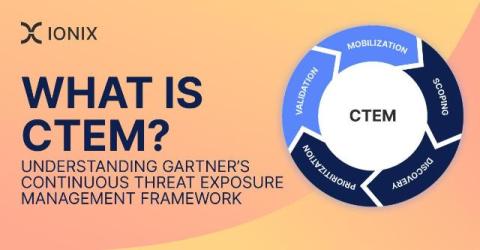
What Is CTEM? Understanding Gartner's CTEM Framework

In the world of cybersecurity, nothing stays still for long. The endless proliferation of new technologies and rapidly shifting threat landscapes forces organizations to continually reevaluate their approach to risk. Over the last two decades, security teams have leaned heavily on vulnerability management (VM) solutions to identify, classify, and patch software vulnerabilities on internal assets.

Cloudflare's commitment to advancing Public Sector security worldwide by pursuing FedRAMP High, IRAP, and ENS

Today, we announced our commitment to achieving the US Federal Risk and Authorization Management Program (FedRAMP) - High, Australian Infosec Registered Assessors Program (IRAP), and Spain’s Esquema Nacional de Seguridad (ENS) as part of Cloudflare for Government. As more and more essential services are being shifted to the Internet, ensuring that governments and regulated industries have industry standard tools is critical for ensuring their uptime, reliability and performance.

Where can you find the best software development services?

Nowadays, every company should use modern solutions to make work simpler, with orderly and compliant results. A great choice for modern business is to use custom software, apps and AI-powered solutions. Thanks to them, you can effectively and positively influence work results. What software developer solutions are worth choosing? Which company offers the most favorable options? Let's check.

No hallucinations here: track the latest AI trends with expanded insights on Cloudflare Radar

During 2024’s Birthday Week, we launched an AI bot & crawler traffic graph on Cloudflare Radar that provides visibility into which bots and crawlers are the most aggressive and have the highest volume of requests, which crawl on a regular basis, and more. Today, we are launching a new dedicated “AI Insights” page on Cloudflare Radar that incorporates this graph and builds on it with additional metrics that you can use to understand AI-related trends from multiple perspectives.
Cloud Security Automation with Torq + Sweet Security

For security teams, resolving a cloud incident takes an average of 10 days — time attackers can exploit to cause further damage. The problem? SOCs often lack the context and cloud security automation they need to respond faster. That’s where the partnership between Torq and Sweet Security changes the game.

Preserving content provenance by integrating Content Credentials into Cloudflare Images

Today, we are thrilled to announce the integration of the Coalition for Content Provenance and Authenticity (C2PA) provenance standard into Cloudflare Images. Content creators and publishers can seamlessly preserve the entire provenance chain — from how an image was created and by whom, to every subsequent edit — across the Cloudflare network.

The Future of Cloud Computing: What's Next for Businesses and Technology?

The future of cloud computing is expected to drive innovation, efficiency, and security in the future, transforming both organizations and technology. Faster processing, improved security, and more intelligent automation are becoming more and more necessary as businesses depend more and more on cloud infrastructure.

Why securing cloud-native applications goes beyond AppSec?

In today’s landscape of microservices, Kubernetes, and cloud environments, attacks can come from multiple vectors, with varying degrees of complexity. Understanding these vectors and how to detect them is crucial for securing your infrastructure and applications. This post will explore various attack scenarios including SQL Injection and Cluster Takeover, structured around the 4 Cs of cloud security: Cloud, Cluster (Kubernetes), Container (workload), and Code (application).