Security | Threat Detection | Cyberattacks | DevSecOps | Compliance

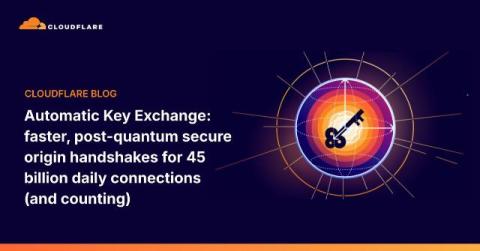
Automatic Key Exchange: faster, post-quantum secure origin handshakes for 45 billion daily connections (and counting)

Every time Cloudflare opens a new TLS 1.3 connection to an origin server, we have to make a guess: the protocol requires us to commit to a key agreement algorithm in the very first packet we send, before the origin has told us anything about itself or what it can support. If we guess right, the handshake completes in one round trip. Guess wrong, and the origin replies with a HelloRetryRequest, we start over, and the connection costs two round trips.
Introducing context-aware vulnerability discovery and remediation with Cloudflare Managed Defense and OpenAI Daybreak models

Your scanner just flagged 4,000 new vulnerabilities, 78 of them critical. Which one do you fix first? To answer that question, Cloudflare is announcing early access to Vulnerability Discovery and Remediation, now part of Cloudflare Managed Defense. Vulnerability Discovery and Remediation is a new, invitation-only Cloudflare service that helps customers detect and mitigate vulnerabilities in their codebases.

Ask SME Anything: What is Netskope One DataSec Command Center?

Why do data breaches still happen when companies are running five, 10, sometimes 15 different data security tools? In this episode of Ask SME Anything, our expert Ankur Chadda breaks down why more tools don't mean more visibility, and how Netskope One DataSec Command Center brings inline traffic, API scans, posture management, and other data security tools into a single view.

5 Tips for Scaling Cloud Security Without Adding Complexity

For years, managed service providers (MSPs) have secured customer cloud environments through periodic reviews of each tenant. That approach worked when a customer ran two or three cloud applications. As organizations adopt more SaaS applications, the number of environments, identities, and configurations to monitor also increases. The challenge is already visible.

Acronis Ranked #1 in Cloud Email Security in the G2 Fall 2026 Grid Report

Email remains the primary entry point for cyberattacks, making effective email security more critical than ever. That’s why we’re especially proud that customers ranked Acronis Cyber Protect Cloud in the G2 Fall 2026 Cloud Email Security Grid Report. Because G2 rankings are based on verified customer reviews, this recognition reflects the experience of the organizations and service providers that rely on Acronis to protect their users, data and business communications every day.

How to Reduce Your Cloud Attack Surface by Eliminating Standing Privileges

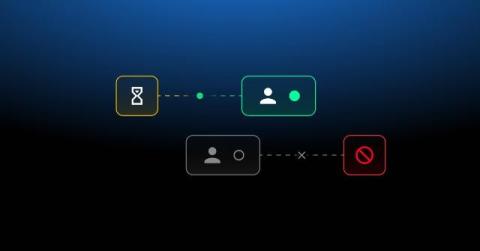
You can reduce your cloud attack surface by auditing every persistent permission across your cloud and identity platforms, stripping away unnecessary access and replacing always-on admin rights with Just-In-Time (JIT) access that’s granted on approval, time-limited and automatically revoked. Getting there starts with understanding why standing privilege makes up such a significant portion of the cloud attack surface.

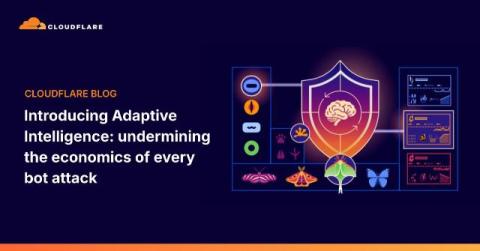
Introducing Adaptive Intelligence: Undermining the economics of every bot attack

Modern bot threats are increasingly driven by determined, sophisticated attackers. Often it is not even one person, but a group trading techniques with each other or a commercial service sold to anyone willing to pay. For many of them, getting past bot detection is a full-time job they genuinely enjoy. Block them and they get to work, finding a workaround. AI has simplified this further, making it even easier to set up complex configurations for attackers, lowering the overhead of an attack.

How to Protect Digital Ministries in the Age of Cloud Computing

Church ministry no longer stops at the sanctuary door. Livestreams, online giving, prayer forms, volunteer platforms, email systems, and social channels now carry much of the weekly work. That reach is certainly important. But still, every new account creates another place where credentials, personal records, or payment information can slip into the wrong hands. Churches often manage this digital estate with small teams, rotating volunteers, and limited technical oversight.