Security | Threat Detection | Cyberattacks | DevSecOps | Compliance

PCI DSS compliance levels: what they mean and how to qualify

PCI DSS compliance levels categorize merchants and service providers based on annual card transaction volume, determining their validation requirements. Merchants fall into four levels, with Level 1 requiring the most rigorous assessment through a Qualified Security Assessor, while Levels 2 through 4 typically complete self-assessment questionnaires. Service providers follow a separate two-tier system.
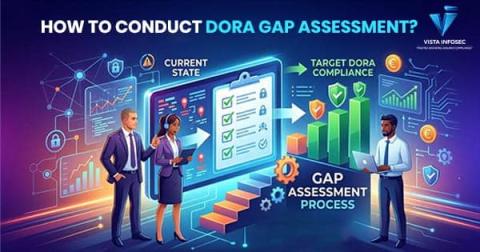
How To Conduct a DORA Gap Assessment

DORA compliance isn’t optional for financial entities in the EU. The Digital Operational Resilience Act demands a systematic approach to identifying and closing ICT risk gaps, and the data shows most institutions are struggling. If you’re responsible for DORA compliance, you need a clear roadmap. Let us walk you through exactly how to conduct a gap assessment that actually works. Failure to meet DORA compliance requirements can lead to regulatory penalties and operational disruptions.

FedRAMP Leveraged vs Agency ATO Authorization Paths

FedRAMP is the information security framework used by the United States government, and it’s required for any cloud service provider hoping to work with the government in a way that handles sensitive information. If you’re a cloud service provider and you want to become FedRAMP-authorized, how do you do it? Unfortunately, this is a more difficult question to answer than a lot of people wish.

SOC 2 Type II + HIPAA Attestation: Trust You Can Audit, Not Just Accept

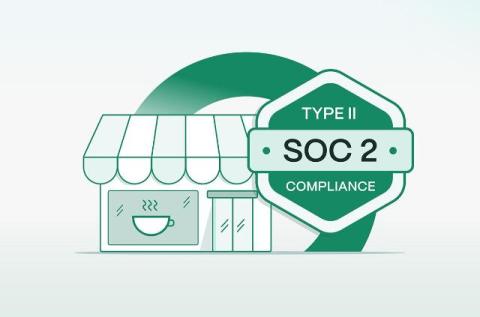
There’s a little neighborhood coffee shop I love that runs like a Swiss watch. Every night, the owner doesn’t just flip the sign to “Closed.” They run a checklist: count the till, lock the back door, log fridge temps, sanitize the espresso wand, test the alarm, and write it all down. Not because they expect trouble, but because consistency is foundational to security. The shop earns trust the boring way: by doing the right things, repeatedly, even when nobody’s watching.

Compliance with One Identity: Two birds, one stone

One Identity Global Strategists Alan Radford and Rob Kraczek dive into the common problem of an undetected breach and stress the importance of using smart identity security tools to create a strategy that not only prevents breaches, but that also solves compliance problems before an audit even starts.

Employee Monitoring and CCPA/CPRA Compliance

Employee monitoring has become a standard practice for organizations seeking visibility into productivity, security, and operational efficiency. However, monitoring employees, especially in jurisdictions like California, requires careful alignment with privacy laws such as the California Consumer Privacy Act (CCPA) and its amendment, the California Privacy Rights Act (CPRA). This article provides a high level overview of how employee monitoring intersects with CCPA/CPRA requirements.

How we built authorization as a platform: Lessons from scaling fine-grained access controls at Vanta

Accelerating security solutions for small businesses‍ Tagore offers strategic services to small businesses. A partnership that can scale‍ Tagore prioritized finding a managed compliance partner with an established product, dedicated support team, and rapid release rate. Standing out from competitors‍ Tagore's partnership with Vanta enhances its strategic focus and deepens client value, creating differentiation in a competitive market.

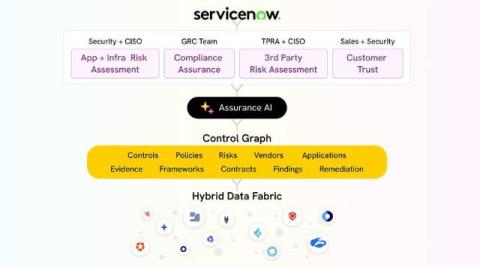
Point-in-time GRC is obsolete. What's replacing it? It isn't AI alone

The last generation of Governance, Risk and Compliance (GRC) software built a multi-billion dollar ecosystem by becoming systems of record for risk. ServiceNow became the system of IT workflows. Archer for audits. Diligent for policy management. Own the control framework, own the workflow, own the audit trail. It worked: for a world where risk moved slowly enough to be captured annually. That world is gone. Point in time attestations are obsolete. The Apple Watch didn’t replace the annual checkup.

Can AI Replace a QSA?

The question circling boardrooms and compliance departments in 2026 is no longer hypothetical: Can AI replace a QSA? After nearly two decades guiding organizations through PCI DSS audits, gap assessments, and remediation programs, the answer is clear — No, AI cannot replace a Qualified Security Assessor in 2026. But it is fundamentally reshaping what being a QSA means, and professionals who ignore that shift do so at their own peril.