Security | Threat Detection | Cyberattacks | DevSecOps | Compliance

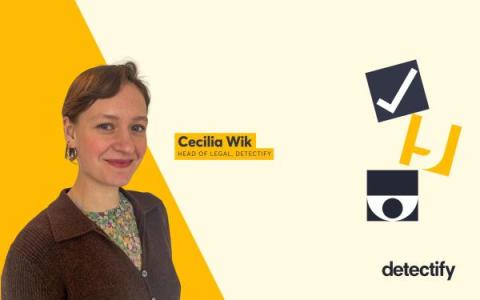
EU Regulating InfoSec: How Detectify helps achieving NIS 2 and DORA compliance

Navigating the complex and ever-changing compliance landscape is difficult for many companies and organizations. With many regulations, selecting the appropriate security tooling that aligns with the compliance needs of your business becomes a significant challenge.
SOC 2 Compliance and Vulnerability Scanning: A Complete Guide

With 5+ vulnerabilities being discovered every minute, a SOC 2 (System and Organization Controls 2) compliance certificate demonstrates to customers and partners that the organization is committed to security and adheres to industry best practices for safeguarding data. Apart from customer trust, it can help organizations find and fix security vulnerabilities before attackers can exploit them.

Automating application and security risk assessments for ServiceNow & Splunk customers

Last week, our CEO, Sravish Sridhar, announced that TrustCloud secured $15 million in new funding from ServiceNow Ventures, Cisco Investments, and others. In his words, the raise “validates the urgent need to modernize GRC for enterprise CISOs and unify CISOs and chief risk officers around a shared view of risk.” The new capital accelerates our mission to automate governance, risk, and compliance for every security team – no matter which system of record they live in.

Master CIS Benchmark compliance: Simplify network security with automation

As a network admin, balancing optimized configurations with compliance requirements often feels like managing competing priorities. With networks growing more complex every day, achieving and sustaining compliance with the Center for Internet Security (CIS) Benchmarks can feel like a constant uphill battle. However, it doesn't have to be an overwhelming burden. The CIS Benchmarks offer practical, best practice guidelines for securing devices, systems, and applications against evolving threats.

Regulations Rising, Risks Persisting: The Cybersecurity Crossroads Facing Australian Hospitality

The hospitality industry’s cybersecurity posture is approaching an inflection point. Businesses are increasingly having to balance cost pressures in a challenging economic environment, while balancing technological innovation with escalating threats. Australia’s regulatory reforms, including heightened penalties and critical infrastructure protections, provide a framework for resilience; yet enforcement gaps will remain.

DoD Cyber Clause Flowdown: What Suppliers Must Do

The Department of Defense DFARS Cybersecurity Clause, more commonly known as the DoD Cyber Clause (or just DFARS 7012), is the long-standing set of rules the DoD has put in place for all members of the DoD supply chain and defense industrial base. It has also spread beyond those boundaries through the use of DFARS 7012 clauses in contracts for other parts of the federal government.

API Compliance

Most organizations have no idea how many APIs are running in their environment – and that's a significant security problem. In this essential discussion, A10's security experts Akhilesh Dhawan and Jamison Utter tackle one of cybersecurity's biggest blind spots: API compliance and protection. Unlike traditional applications, APIs operate without standardized functionality requirements, creating a regulatory nightmare. This lack of standards renders APIs nearly impossible to govern effectively, making API discovery a mission-critical security function. If you can't see it, you can't protect it.

SOC 2 vs. HIPAA: Everything you need to know

SOC 2 and HIPAA are widely adopted security standards aimed at protecting in-scope organizations and the sensitive data they process from cybersecurity threats. While they have the same overarching security goal, HIPAA and SOC 2 differ in a few major aspects, and their implementation specifics can also vary considerably. ‍ Depending on your security posture and compliance needs, you may need to implement one or both frameworks.