Manufacturers are some of the most ambitious firms on the planet when it comes to harnessing the power of edge technology to modernize their businesses. As they make plans in 2023 to enhance business outcomes through the use of technologies such as 5G and IoT, manufacturers should also increasingly be called to innovate in the spheres of governance and cyber risk management.
COBIT, or the Control Objectives for Information and Related Technologies, describes itself as “the globally accepted framework for optimizing enterprise IT governance.” The COBIT framework was designed to help organizations develop, implement, monitor, and improve their IT enterprise governance and information security processes.
Identity governance and administration (IGA) helps organizations give each person the right access to the right IT resources, at the right time and for the right reasons. Let’s take a look at 6 core best practices for successfully implementing IGA, as well as some tips for choosing the right tool.
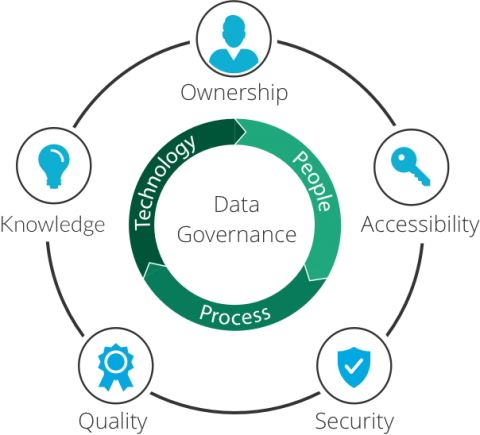
Data governance is a broad term that refers to the strategy of managing availability, usability, standard compliance, consistency, data integrity, and data security in organizations and companies. While the term is notorious for escaping definitions, data governance is often defined as the first essential branch of data management strategy.
Governance, Risk, and Compliance (GRC) is a broad organizational strategy that aims to align an entire organization’s focus on the achievement of business objectives, the management of business risks, and regulatory compliance. A solid foundational framework enables your organization to continue strengthening and refining its GRC strategy over time. It ensures each department’s objectives align with the business as a whole.
In order to maintain compliance, enforce governance, and build transparency, teams across your organization need deep insight into how their users and automation interact with Datadog. For stakeholders in leadership roles, such as CIOs and CDOs, knowing what actions users took and when is essential for spotting gaps in enablement, budgeting, and reporting, as well as building a modern compliance strategy for the organization as a whole.