Security | Threat Detection | Cyberattacks | DevSecOps | Compliance

Best Shadow AI Governance Tools for Enterprises: Buyer's Shortlist

Security teams already know employees use generative AI. The harder problem is buying the right platform before unsanctioned apps move sensitive data outside your visibility and control. UpGuard research found 81% of employees and 88% of security leaders use unapproved AI tools, and 45% of workers find a workaround when their employer blocks an app. That last number should shape your buying criteria more than the first two. Demand doesn't disappear when you block it. It moves somewhere you can't see.

AI Governance Framework: How to Build One That Works

An AI governance framework proves itself the first time somebody asks for proof. The gap that sinks most programs sits under the policy, in the layer where nobody can say which identities reach sensitive data through an AI tool. Ownership, approval paths, control mapping, and live access visibility are what separate a working framework from a well-formatted document, and right now most organizations are missing at least one of the four. AI reaches most organizations through several doors at once.

Ways We Can Keep AI Under Control Before It Becomes a Problem

It's no secret that AI has a significant presence in our daily lives these days. Many people hail it as a great way to save time and help them with basic tasks each day. The problem is, AI has become a part of nearly every single app, product, and device. AI has overreached the limits that the companies selling it promised. It's time for everyone to take action to ensure that AI products and companies are kept under control before they become problematic.

Governance Strikes Back: The Most Used, Most Abused Word in the Galaxy

Ask AI to Choose a prompt Write a TLDR of this post Explain the security risk Summarize what CISOs should know When I walked to the stage in Copenhagen, I had a lot on my mind. For 3 days I'd had countless conversations with leaders and practitioners about AI and agentic security. The one word on everyone's lips was "governance"; day 3 at the conference was "Governance Day," in fact. This is a bag one vendor was giving out: But governance of what? To what end?

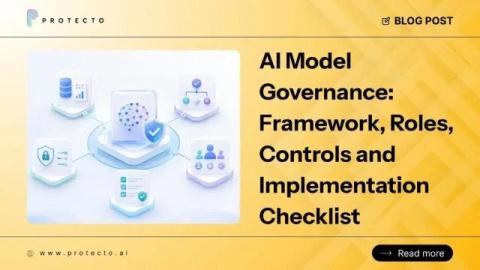
AI Model Governance: Framework, Roles, Controls and Implementation Checklist

AI models rarely become a governance problem because of the model alone. The real risk often emerges from what surrounds it: the data it receives, the decisions it influences, the systems it can access, and the people accountable for its outcomes. That makes AI model governance a lifecycle discipline, not simply a model approval process. Even NIST’s AI Risk Management Framework treats governance as a function that cuts across the entire AI lifecycle.

How to Protect Digital Ministries in the Age of Cloud Computing

Church ministry no longer stops at the sanctuary door. Livestreams, online giving, prayer forms, volunteer platforms, email systems, and social channels now carry much of the weekly work. That reach is certainly important. But still, every new account creates another place where credentials, personal records, or payment information can slip into the wrong hands. Churches often manage this digital estate with small teams, rotating volunteers, and limited technical oversight.

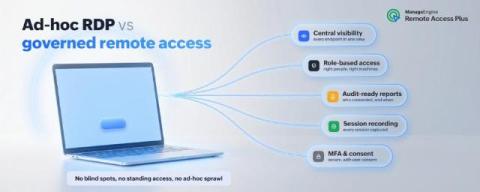
Why unmanaged RDP is risky at enterprise scale (and how to regain control)

Remote Desktop Protocol (RDP) is the path of least resistance for gaining access to another Windows machine. It is built into the OS, it is free, and almost every admin and help desk technician already knows how to fire up mstsc.exe and type in a hostname-as simple as that. That convenience is exactly why RDP is everywhere inside corporate networks.

How Businesses Can Adopt AI Tools Without Compromising Security

Someone in marketing starts using an AI writing tool. A finance team member feeds spreadsheets into an AI summariser because it saves an hour every Friday. A manager wires up a chatbot to handle basic customer questions. None of it goes anywhere near IT first, and most businesses only find out after the fact, if they find out at all.

NIST AI RMF vs ISO 42001: Choosing Your AI Governance Framework

NIST AI RMF and ISO/IEC 42001 answer different questions, so the choice is rarely about which one is better. One gives you a risk process your engineering teams can run. The other gives you a management system an auditor can certify. Organizations that treat them as rival options usually pick the wrong one for the problem in front of them. ‍