Security | Threat Detection | Cyberattacks | DevSecOps | Compliance

PCI DSS 6.4.3 Is the Canary in the Coal Mine for Client-side Security

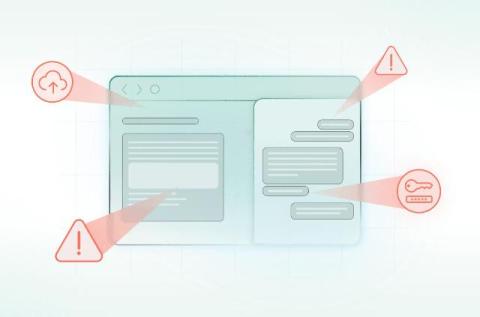
Here's the hard truth: 98% of websites load third-party scripts. Few teams know exactly what scripts are loaded. Even fewer know what those scripts do (what elements in the browser they are interacting with), and a miniscule amount of teams have any control over what those scripts do. When I say "teams" I'm referring to different stakeholders - security engineers, risk & fraud analysts, compliance managers, and even the marketing department. That's one of the challenges of client-side security. Almost every internal department touches the website. It might be the most collectively edited environment that exists in a company.
Featured Post

The Shift Left of Boom: Making Cyber Threat Prevention Practical Again

The old saying "prevention is better than cure" has lost currency in today's cybersecurity industry. Instead, security teams are advised to assume that the business has been breached and focus on threat detection, investigation, response, and recovery. Yet, during cyber incident post-mortems, it is not uncommon to find that the business owned the tool that would have protected it against the breach. The problem arose because it wasn't correctly configured before the incident happened, and no one knew this - or if they did, they didn't have the time or resources to fix it.

ManageEngine Recognized in the 2025 Gartner Magic Quadrant for Security Information and Event Management

We’re proud to announce that ManageEngine has once again been recognized in the 2025 Gartner Magic Quadrant for Security Information and Event Management (SIEM). To us, this marks another significant milestone in our journey to deliver a unified, intelligent, and accessible security analytics platform for organizations worldwide.

Purpose-Built for MSPs: Unlock New Market Opportunities with Arctic Wolf

In today’s evolving threat landscape, a stack of security tools isn’t enough. MSPs need a partner that helps them scale, differentiate, and deliver exceptional security outcomes. That’s why Arctic Wolf launched a purpose-built MSP program earlier this year, designed in close collaboration with our MSP partners to empower them to grow faster and more profitably.

Securing the AI Browser Revolution: How Cato Helps Mitigate Risks in OpenAI Atlas

The launch of OpenAI Atlas, an AI-powered browser that merges ChatGPT’s intelligence with a full web experience, marks a major leap in how people interact with the internet. Instead of typing queries or clicking through pages, users can now ask, act, and automate, delegating browsing tasks to AI agents capable of retrieving data, filling in forms, or performing actions on their behalf. For businesses, Atlas represents both opportunity and risk.


Critical Care, Critical Risk: Inside the Cyber Threats Targeting Healthcare

The healthcare sector remains one of the most targeted industries for cyber attacks due to its critical role in national infrastructure and its extensive repositories of sensitive data containing personally identifiable information (PII). It’s widely assumed that threat actors target healthcare and related organizations because they are perceived as more likely to pay a ransom to restore critical systems and protect patient safety in the event of an attack.

Falcon for XIoT Innovations Improve Speed and Visibility in OT Networks

CrowdStrike Falcon for XIoT is gaining new innovations to protect operational technology (OT) and XIoT environments as they grow larger and more interconnected. The rapid expansion of industrial systems has led to blind spots across segmented networks, unmanaged devices, and legacy infrastructure. Most OT security tools, siloed by design, fail to see which assets are connected or how they communicate.

CrowdStrike Expands Agentic Security Workforce with New Agents

CrowdStrike is accelerating our vision for the SOC with the launch of new, specialized agents built to tackle some of the toughest modern challenges in security operations: faster data pipeline creation, simpler custom app creation, and continuous, authenticated exposure scanning. Earlier this year, we charted a path toward the agentic SOC — where security teams command fleets of intelligent agents that reason, decide, and act at machine speed while under defender control.