Security | Threat Detection | Cyberattacks | DevSecOps | Compliance

Salt Agentic Security Platform

Most enterprise AI security investment is focused on the model layer—guardrails, output filtering, LLM governance. That's necessary. It's not sufficient. AI agents take actions: they call APIs, invoke MCP servers, access databases, and trigger downstream workflows. The Salt Security Agentic Security Platform was built to secure that action layer (the infrastructure your agents actually operate across).

Sophos Email: Configure Self Service Portal for end-users

A step-by-step tutorial showing you how to grant access to and configure the Sophos Central Self Service Portal (SSP) for end-users. This web interface allows end-users to perform daily tasks related to email management and more (depending on the configuration) without the need of an administrator. Ask questions and get expert answers in the Sophos Community.

OpenAI Daybreak and the Future of Secure Software Development

OpenAI recently introduced Daybreak, a cybersecurity initiative designed to apply frontier AI models to vulnerability discovery, secure code analysis, and earlier remediation across the software lifecycle. By combining advanced reasoning and planning capabilities, Daybreak aims to help organizations identify and address weaknesses before they reach production. This is a meaningful step forward, but it is also a continuation of a long-standing approach.

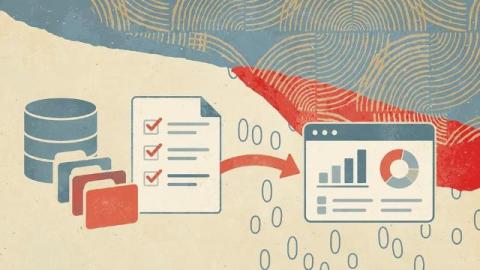
Turning Security Telemetry Into Actionable Insights

Modern security environments generate enormous volumes of telemetry. Authentication events from identity platforms, API activity from cloud services, endpoint security logs, email interactions, and network traffic can all flow into centralized systems. For most organizations, the challenge is no longer data collection. The real problem is extracting meaningful insight from that data without overwhelming analysts or introducing operational friction.

AI Agent Attack Detection: The Complete Framework for Security Teams

It usually starts the same way. The CISO comes back from a board meeting having signed off on agentic AI for production. The SOC lead is told, in roughly that many words, to build detection for the agents. And the security stack she has — CNAPP for posture, EDR on the nodes, container runtime sensors, a SIEM ingesting everything — was architected before AI agents existed as a workload class.

The AI attack surface: What MSSPs and SecOps teams need to watch

AI tools are moving faster than the security controls meant to govern them.In this episode of Defender Fridays, Cisco's Cybersecurity Technical Solutions Architect Katherine McNamara walks through changes in the threat landscape as organizations rush to integrate AI without applying basic security discipline. When Katherine meets with customers to discuss AI security, the conversation almost always starts and ends in the same place: data leakage. Someone might upload sensitive files to a public LLM.

How Hybrid Work and Cloud Adoption Are Changing Enterprise Ransomware Risk

Five years ago, enterprise ransomware risk was mostly a perimeter problem. Today it’s an identity problem, a visibility problem, and a cloud configuration problem, all at once. Hybrid work and cloud adoption didn’t just shift where people work. They fundamentally changed where ransomware attacks begin, how far they reach, and how long they go undetected.

The cybersecurity nightmare of modern healthcare IT

Healthcare organizations are a primary target for cyberattacks. Outdated legacy tech runs rampant, and ransomware attacks are shutting down hospitals, forcing them to revert to paper records and cancel non-emergency procedures. The ripple effects extend beyond the targeted facility, overwhelming neighboring hospitals, putting lives at risk.

Why privileged access is the first place attackers go - and why your PAM can't live in a silo anymore

One compromised privileged account can undo millions in security investments. Attackers know this. In fact, it's the reason privileged access has become the most sought-after prize in the modern enterprise. Gone are the days when getting past the firewall was enough to give an attacker free rein. Widespread adoption of Zero Trust principles, stronger default configurations and better security hygiene have made that approach obsolete. So, adversaries have adapted.