Security | Threat Detection | Cyberattacks | DevSecOps | Compliance

Website Vulnerability Scanners: How They Work and Boost Security

Website vulnerability scanners enable organizations to continuously identify vulnerabilities by crawling the website and its diverse parts, including web pages, third-party components, and software. It simulates attack techniques to detect weaknesses such as: These tools are essential in modern DevSecOps and continuous security testing environments, helping identify flaws early in the development or deployment lifecycle.

CMMC readiness: How AI-powered platforms accelerate DoD compliance

Defense contractors and organizations involved in Department of Defense (DoD) projects are facing growing pressure to comply with stringent cybersecurity standards. The Cybersecurity Maturity Model Certification (CMMC) represents a transformative initiative aimed at enhancing the security posture across the defense industrial base. As organizations embark on this compliance journey, AI-powered platforms are emerging as critical enablers to accelerate CMMC readiness.

What is MXDR? A Modern Approach to Cyber Threat Detection and Response

While organizations deploy various security technologies, modern cyberattacks are often intricate, involving kill chains composed of numerous low-fidelity signals. A key challenge is correlating these alerts across siloed security solutions to gain a complete, enterprise-wide view of the threat.

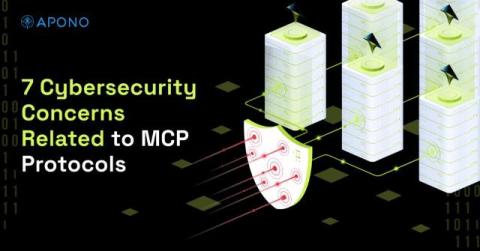
Securing the Model Context Protocol (MCP): A Deep Dive into Emerging AI Risks

In 2025, the rise of autonomous agents and developer-integrated copilots has introduced an exciting new interface paradigm: the Model Context Protocol (MCP). Originally proposed by Anthropic, MCP has quickly become the de facto open standard for allowing language models to securely interact with external tools, APIs, databases, and services. But as enterprise adoption surges, so do the risks - both novel and unanticipated.

5 Ways a Network Digital Twin Transforms SecOps

Security operations teams face a daily balancing act: rapidly reduce risk while keeping business-critical traffic flowing across sprawling hybrid networks. Yet traditional monitoring and vulnerability-scanning tools only show snapshots of device status. They rarely explain how an attacker could move laterally, why a firewall rule is ineffective, or whether a cloud control actually matches on-prem policy.

SOC 2 vs SOC 3: Which Report Builds Public Trust?

Here at Ignyte, we talk a lot about the major governmental cybersecurity frameworks like FedRAMP and CMMC or the international framework ISO 27001. What we don’t talk about as much – but which is no less important – are smaller-scale or more limited frameworks. SOC is one such framework, and it’s extremely important for those who need it. There’s also a lot of confusion surrounding it, both in business and as a layperson. What is SOC for?

Reclaiming analyst time: Smarter investigations with AI in defence

How the MOD can reduce investigation fatigue and boost operational efficiency Security analysts at the UK Ministry of Defence (MOD) — and everywhere — face an overwhelming challenge: They can receive thousands of alerts daily, and distinguishing genuine threats from false positives in a timely fashion has become nearly impossible without technological intervention.

Fireblocks unlocks liquid ETH staking for 2,000+ institutions via Liquid Collective

As Ethereum ETFs gain traction, Fireblocks offers clients direct access to LsETH—combining ETH staking rewards with liquidity and compliance. Fireblocks has joined Liquid Collective as a Platform, adding support for Liquid Collective’s Liquid Staked ETH (LsETH). This integration enables institutions to stake ETH and access Ethereum network rewards while preserving liquidity and capital efficiency.