Organizations lose billions of dollars to fraud each year. For instance, the financial services sector projects losses to reach $40 billion per year in the next 5-7 years unless financial institutions, merchants, and consumers become more diligent about fraud detection and prevention. Splunk delivers integrated enterprise fraud management software that quickly defines behavior patterns and protects enterprise information from malicious actors.
In their debut LP, Q: Are We Not Men? A: We Are Devo!, the band introduces their defining theme that mankind’s evolution has reached the point—devolved to the point, actually—that we are converging on sameness… emotionless and robotic. This notion informed everything from the way Devo dressed (awesome!), to the music they wrote, to the way they performed. What does the band Devo’s theme of devolution have to do with me joining a software company of the same name?
Network security has changed a lot over the years, it had to. From wide open infrastructures to tightly controlled environments, the standard practices of network security have grown more and more sophisticated. This post will take us back in time to look at the journey that a typical network has been on over the past 15+ years. From a wide open, “chewy” network, all the way to zero trust networking. Let’s get started.
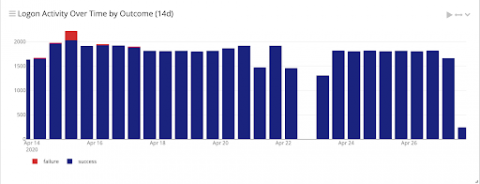
Fraud rates for Unemployment Insurance Benefits (UIB) and Pandemic Unemployment Assistance (PUA) are out of control. In May 2020, Brian Krebs of Krebsonsecurity published two articles detailing fraud that was occurring in several different state’s UIB portals. These states had been warned by the US Secret Service to be on the lookout for this. Reading the articles, the common theme is that many states are missing rudimentary controls for combating fraud.
The new Devo eBook, Building the Modern SOC, presents four evolutionary steps for creating a highly automated and efficient security operations center (SOC) that empowers analysts. This is the last in a series of posts highlighting the most important elements of the four steps. Previous posts covered Step 1, establishing a foundation of centralized, scalable visibility, Step 2, extracting intelligent insights from your data, and Step 3, supercharging your analysts with the power of automation.