One of the most common questions that businesses operating under GDPR, LGPD or other similar data regulations have is how long should you keep data? As answers to this question typically seem to vary widely to clear up confusion, we’ve gathered insights from business leaders & specialists across a variety of industries to try and answer this question and shed light on what are reasonable timeframes to keep hold of data, whether that may be financial, employee or other potentially sensitive data.
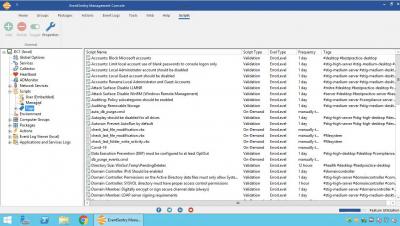
This latest update to EventSentry improves your security posture with validation scripts, simplifies IT troubleshooting for both administrators and users, gives you visibility into installed browser extensions along with many other usability improvements in the web reports.
Lateral movement is one of the most consequential types of network activity for which organizations need to be on the lookout. After arriving at the network, the attacker keeps ongoing access by essentially stirring through the compromised environment and obtaining increased privileges (known as “escalation of privileges”) using various tools and techniques. Attackers then use those privileges to move deeper into a network in search of treasured data and other value-based assets.
Auth0 provides identity as a service (IDaaS), allowing you to secure your apps and APIs without having to write your own authorization code. Auth0 can work with social identity providers (IdP) like Google and Facebook so your users can access your app by using their existing accounts for authentication. You can also use an existing enterprise identity provider (e.g., LDAP) to allow your users to leverage single sign-on (SSO) across multiple apps.
By now, we know a lot about secure configuration management (SCM). We know the way it works, the integral processes of which it consists, the areas of your IT infrastructure that it can help secure as well as the different types of best practice frameworks and regulatory compliance standards with which it can help you to maintain compliance. All we’re missing is how to procure and deploy an effective SCM solution.
Kubernetes audit logs contain detailed information about every request to the Kubernetes API server and are critical to detecting misconfigurations and vulnerabilities in your clusters. But because even a small Kubernetes environment can rapidly generate lots of audit logs, it’s very difficult to manually analyze them.