Security | Threat Detection | Cyberattacks | DevSecOps | Compliance

Malicious Use of Signed Drivers in Microsoft Windows

In a coordinated disclosure with Microsoft on December 13th, 2022, security researchers with Mandiant, SentinelOne, and Sophos published evidence of a threat actor technique where malicious crafted drivers were invoked using a valid cryptographic signature. The malicious drivers were observed attempting to terminate a list of security products and evade detection.

CVE-2022-37958 - Critical Vulnerability in SPNEGO NEGOEX Could Lead to RCE on Windows platforms

As part of Microsoft’s September 2022 Security Update, Microsoft released security updates to remediate CVE-2022-37958–an information disclosure vulnerability in SPNEGO NEGOEX that impacted all Windows versions 7 or newer. On December 13, Microsoft reclassified the vulnerability as Critical severity after security researchers discovered that the vulnerability could allow threat actors to remotely execute code pre-authentication.

Zeek on Windows

As we shared at ZeekWeek 2022 in October, we’re thrilled to announce emerging support for Zeek on Windows, thanks to an open-source contribution from Microsoft. Part of its integration of Zeek into its Defender for Endpoint security platform, this contribution provides fully-native build support for Windows platforms and opens up a range of future technical possibilities in this vast ecosystem.

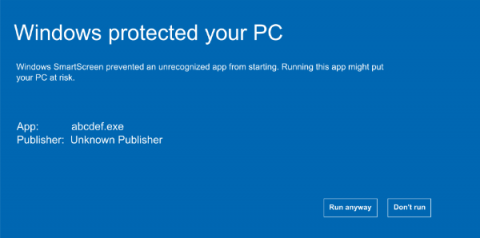
The Fundamentals of Windows Defender SmartScreen

While purchasing the Code Signing Certificate, particularly EV Code Signing Certificate, we all came across the term Windows Defender SmartScreen. But, only a few understand the term correctly and purchase the right digital solution. SmartScreen has become a prominent security Windows OS security mechanism, helping users to prevent cyber threats. It blocks installations if it doesn’t recognize the publisher.

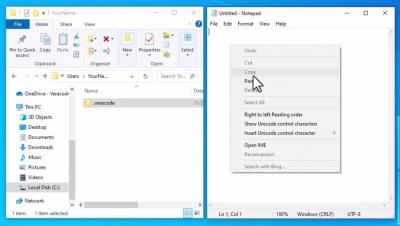
Configure the API Credentials File on Windows

In this video, you will learn how to generate Veracode API credentials in the Veracode Platform and configure an API credentials file for storing your API credentials on Windows. Veracode API credentials consist of an ID and secret key. You use these credentials to access the Veracode APIs and Veracode integrations. API ID and key authentication provides improved security and session management for accessing the APIs.

Windows 10 most critical vulnerabilities in 2022

Microsoft Windows 10 tops the list in terms of users around the world. Among those users, some belong to IT backgrounds but a majority of those users are not acquainted with IT, which means that they have limited knowledge about cybersecurity and its importance. Companies like Microsoft are prone to multiple attacks by bounty hunters or even black hat hackers intending to disturb the company’s operations.

How To Secure Default IIS Site & Enable Windows Authentication

By default, when you create a new Internet Information Services (IIS) website, it’s open to everyone with anonymous access enabled — anyone can access and view the data being hosted by that site. Obviously, this is a security concern for most organizations. Indeed, I’m often asked by clients and colleagues how to lock down an IIS site so only the desired people can access it.

Find threats: Cloud credential theft on Windows endpoints

In today’s hybrid, multi-cloud environments, users and administrators connect to various cloud services using Command Line Interface (CLI) tools and web browsers. This post highlights the risks associated with unprotected and unmonitored cloud credentials which are found on endpoints, in file shares and in browser cookies. Get actionable and direct guidance around: In order to alert on and hunt for this malicious activity. Business workloads are increasingly undergoing a migration to the cloud.