Security | Threat Detection | Cyberattacks | DevSecOps | Compliance

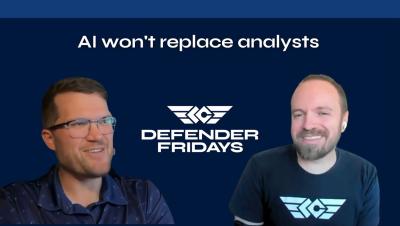
Building human-centric SOCs in the age of AI automation with Alec Fenton

Defender Fridays - Building human-centric SOCs in the age of AI automation with Alec Fenton Join us for this week's Defender Fridays as we explore the evolution of security operations and AI's role in empowering analysts with Alec Fenton, VP Security Operations at Foresite Cybersecurity. At Defender Fridays, we delve into the dynamic world of information security, exploring its defensive side with seasoned professionals from across the industry. Our aim is simple yet ambitious: to foster a collaborative space where ideas flow freely, experiences are shared, and knowledge expands.


The VPN Trap: Why Remote Access Is Failing You

VPNs were once the cornerstone of secure remote access. Today, they've become one of the easiest ways for attackers to slip inside your network. Outdated VPN tunnels facilitate credential theft, lateral movement, and data exfiltration, leaving IT teams confused and businesses vulnerable. In this session, WatchGuard experts will uncover the hidden risks of SSL VPNs and explain how a zero trust approach can eliminate those weaknesses. Learn how to deliver faster, safer, and simpler access for every user, without the overhead and risk of remote user VPNs.

It's time for the defense and intelligence community to upgrade endpoint security

For more than 20 years, the US Intelligence Community (IC) and Department of Defense (DoD) have relied on a legacy Host Based Security System (HBSS) to provide basic endpoint security on critical networks. This solution has generally served its purpose by checking the box for endpoint security. However, most agencies still lack a truly integrated cross-operating system and cross-domain solution for endpoint detection and response (EDR).

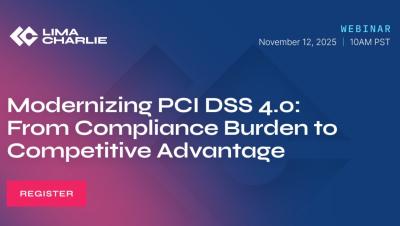
Modernizing PCI DSS 4.0: From Compliance Burden to Competitive Advantage

PCI DSS 4.0 represents a significant change in how organizations and service providers approach compliance. It is more than an update to requirements. It is a philosophical shift that emphasizes continuous, risk-based security instead of point-in-time validation. In this joint session, LimaCharlie, ControlCase, and author Branden R. Williams explore how to navigate this new era of PCI compliance. Branden explains what has changed in PCI DSS 4.0, why those changes were made, and how they reflect a new mindset toward continuous assurance and flexibility.

How Aurora Endpoint Powers Outcome-Driven Security

See how Aurora Endpoint Defense uses predictive AI and behavioral detection to deliver powerful, outcome-driven endpoint protection. This demo highlights key features like alert triage, threat prevention, and automated response—all designed to simplify and strengthen your security posture.

Adopting cold-war tactics for AI deep fakes?

The AI arms race in deepfake detection has a critical problem: the technology can't keep up. In this episode, Navroop Mitter, CEO of ArmorText, discusses why the industry is shifting away from relying on AI detection alone. A recent study from SKKU in South Korea found that zero out of sixteen top deepfake detection technologies could reliably identify deepfakes in real-world conditions. They worked fine in controlled lab settings, but failed when it mattered most.

How to Prep Out-of-Band Communication for Incident Response with Navroop Mitter from ArmorText [266]

On this episode of The Cybersecurity Defenders Podcast we speak with Navroop Mitter, CEO of ArmorText, about the role of Out-of-Band (OOB) communication in cyber incident response. Navroop Mitter is the CEO of ArmorText, a mobile security and privacy company based in the Washington, D.C. area.

The Efficiency Shift: Endpoint Efficiency Over Alert Volume

For years, the cybersecurity industry has celebrated “more detections” as proof of effectiveness. Dashboards filled with alerts were seen as signs of vigilance and control. But in practice, the opposite is true: too many alerts create noise, fatigue, and blind spots that delay real responses. When analysts are buried under a flood of low-value detections, the attacker always moves faster.