Security | Threat Detection | Cyberattacks | DevSecOps | Compliance

The Social Engineering Threats You Can't Ignore - And Why Most Are Inherently Mobile Problems

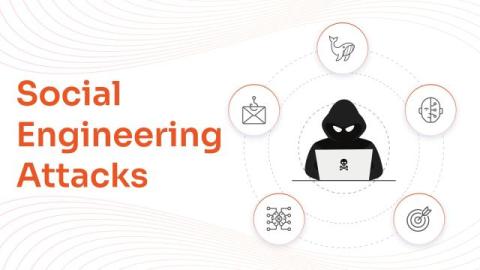
When most people think about cybersecurity, they picture firewalls, anti-virus software, and complex passwords. But the weakest link isn’t a server or a laptop—it’s a person. Social engineering attacks exploit human behavior rather than technical vulnerabilities, and four techniques dominate the landscape today: phishing, smishing, vishing, and quishing.

Warning: Social Engineering is a Growing Threat to the Industrial Sector

Social engineering attacks are a growing threat to operational technology (OT) environments, Industrial Cyber reports. Cyberattacks against these environments can be particularly damaging since they have the potential to cause physical disruptions.

When Hackers Call: Social Engineering, Abusing Brave Support, and EncryptHub's Expanding Arsenal

Trustwave SpiderLabs researchers have recently identified an EncryptHub campaign that combines social engineering with abuse of the Brave Support platform to deliver malicious payloads via the CVE-2025-26633 vulnerability. In this blog post, we will break down the techniques used in the campaign and highlight the new tools employed by the threat group.

Social Engineering Attacks Surged in the First Half of 2025

Cybersecurity incidents nearly tripled in the first half of 2025, jumping from 6% in the second half of 2024 to 17% in 2025, according to a new report from LevelBlue. Business email compromise (BEC) remains the most common method for initial access, but non-BEC tactics rose by 214%. The researchers observed a major surge in social engineering attacks, driven by the recent popularity of the ClickFix tactic.

If You Think Social Engineering Is Bad, It's Going To Get Worse

There is no other way to say it clearer, social engineering is going to be a lot, lot worse soon and far more successful than it is today. And that’s saying a lot. It’s already pretty bad. As I’ve been touting for over 20 years…in hundreds of articles…social engineering is involved in more successful data breaches than any other single hacker method.

How Hackers Exploit Microsoft Teams in Social Engineering Attacks

Attackers are using Microsoft Teams calls to trick users into installing the Matanbuchus malware loader, which frequently precedes ransomware deployment, according to researchers at Morphisec. Matanbuchus is a malware-as-a-service offering that allows threat actors to install additional payloads onto infected Windows systems. “Over the past nine months, Matanbuchus has been used in highly targeted campaigns that have potentially led to ransomware compromises,” Morphisec says.

What Is Social Engineering in Cybersecurity?

How many times have you heard the phrase “don’t trust strangers”? The key point today is that many strangers disguise themselves as someone familiar, and that misplaced trust is what leads us to be deceived. Cybercriminals widely use this tactic, and it has a very specific name. Have you ever asked yourself, 'What is social engineering in cybersecurity?' A social engineering attack leverages human psychology through manipulation.

Mapping Social Engineering Tactics to Detection Strategies in XDR

Social engineering isn’t just a trick of trade anymore, it is trade. Threat actors aren’t only targeting systems; they’re targeting people. And because humans are often the weakest link in cybersecurity, attackers use psychological manipulation to deceive users into giving up credentials, clicking malicious links, or downloading malware. The challenge? These attacks don’t always leave behind obvious traces. This is where Extended Detection and Response (XDR) becomes essential.