Security | Threat Detection | Cyberattacks | DevSecOps | Compliance

AI in the MSSP SOC: From Pilots to Production

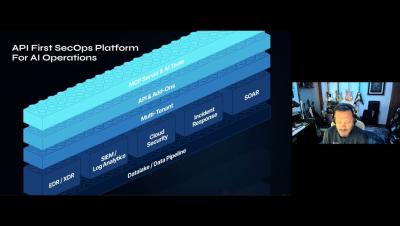
Every MSSP is under pressure to adopt AI, and most of the advice available is either vendor hype or generic guidance written for enterprise teams with one environment to manage. MSSPs face a harder problem: any AI they adopt has to work across dozens or hundreds of client stacks, respect tenant boundaries, and produce results an analyst can defend to a customer. In this session, Sr. Solutions Engineer Ken Westin lays out a practical roadmap for bringing AI into service provider security operations.

The Pentest PDF Is Dead. Here's What Replaced It.

One team. One engagement. One PDF three weeks later. Already outdated. That was the old model. This video explains the new one. Autonomous pentesting runs continuously, finds attack chains, validates every finding, and delivers fixes to your developer's IDE the same day. No backlog. No waiting. No guessing. 60 seconds. Watch it.

Agent Sprawl is the New Shadow IT

As you’re reading this, it’s possible an agent you’ve never heard of is reading your files. But where did it come from? What systems can it access? And who’s responsible for its oversight? Today, employees are using AI and agents to expand what they can accomplish and how work gets done. And the barriers to innovation have never been lower — with natural language and no-code tools, anyone in your organization can build a new agent in the span of an afternoon.

UPDATE: Active Exploitation CVE-2026-32996 of Veeam Agent

On September 14, 2026, public technical details and proof-of-concept (PoC) exploit code were released for CVE-2026-32996, increasing the likelihood of exploitation attempts against affected Veeam Agent for Microsoft Windows deployments. CVE-2026-32996 is a local privilege escalation vulnerability in Veeam Agent for Microsoft Windows version 13.0.1.2067 and affects all earlier version 13 builds.

Coinflow on programmable money and compliance at scale - S3E5

In this episode, we dive into the payments revolution with Daniel Lev, CEO and Co-Founder of Coinflow. Daniel brings a rare blend of expertise: he started in large-scale digital transformation at PwC, moved into product at Amount (the Chicago-based fintech unicorn), and previously co-founded and exited a Web3 sports gaming platform before launching Coinflow.

The Linux AI blind spot: 7 exfiltration points your DLP can't see

Shadow AI now contributes to one in five data breaches, and Linux endpoints, where most developers work, largely lack DLP enforcement. That means engineers can upload code to AI tools, copy files to USB or Bluetooth devices, sync data to personal cloud storage, and move files through network shares undetected. HIPAA, PCI DSS, GDPR, and CMMC hold organizations accountable regardless of this coverage gap. Netwrix Endpoint Protector extends content-aware inspection and device control to Linux.

Sumo Logic MCP server: bringing SIEM and log data into Claude and other AI clients

More security and operations work now happens inside an AI client instead of a dedicated console. That shift creates a gap for any platform that isn’t part of the conversation. Every time an analyst needs to triage an insight or check a log, they have to leave the AI client and go open a different tool. Sumo Logic closes that gap with a Model Context Protocol (MCP) server.

Run LimaCharlie AI Sessions on the model you choose

Co-founder and COO AI Sessions in the LimaCharlie web application now run on OpenAI, Google Gemini, and OpenRouter models in addition to Claude. Connect your own credentials, pick a provider per session profile, and the session behaves the same way regardless of which model is doing the work. Sessions run on Claude by default. Beyond that, you can connect any of the following with your own credentials.

Identity Lifecycle Management: Process, Stages, Benefits, and Best Practices

Identity lifecycle management is the process of managing a user's digital identity and access from the day they join an organization to the day they leave. It covers account creation, role changes, permission updates, and deprovisioning, and it applies to employees, contractors, service accounts, and increasingly, AI agents. Get it wrong, and you end up with two failure modes: new hires waiting days for access, and former employees who still have it. Both cost money. Only one of them makes headlines.

Just-in-Time Provisioning vs. Just-in-Time Privilege: What's the Difference?

Just-in-Time Provisioning and Just-in-Time Privilege sound almost identical, but they solve different identity management challenges. Let’s say a new software engineer joins your team. They need access to Slack, Jira, GitHub, and other essential apps. Instead of having an IT admin create their account manually, the application creates the account when the employee signs in through your Identity Provider (IdP). That is JIT provisioning.