Security | Threat Detection | Cyberattacks | DevSecOps | Compliance

The Mythos Moment: Why Architecture and Advanced Models Matter for Cyber Defense

What began as reports about Anthropic’s Mythos model has now moved into a gated research preview called Mythos Preview. For cybersecurity, that immediately raises an important question: what happens when advanced AI can accelerate offensive workflows such as vulnerability analysis, exploit development, and attack planning? In a recent Cato blog post, we addressed the broader strategic shift this represents.

Continuous compliance: How to kill the annual audit scramble for good

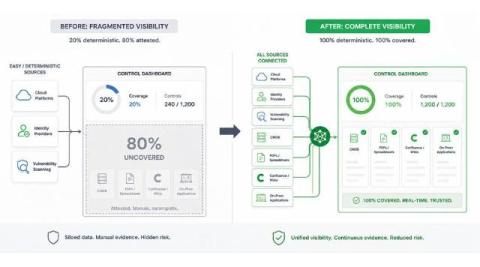
Every year, the same drama plays out in too many companies. The audit calendar starts quietly, then suddenly everyone is hunting for screenshots, policies, approvals, access reviews, and evidence that should have been simple to find months ago. By the time the audit begins, teams are exhausted, annoyed, and convinced that compliance has to be a process this arduous. It does not. Continuous compliance is the idea that audit readiness should be a normal state of the business, not a seasonal emergency.

Access control policy template that unlocks effortless compliance and security

Access control often feels like the invisible shield keeping your company’s data safe until it’s not there, and suddenly you’re scrambling over a breach or an audit surprise. I’ve seen teams waste hours untangling who had access to what, especially when growing fast or juggling contractors.

Why Your Security Tools Are Useless Against AI?#short #ai

Most companies believe their security tools—WAF, EDR, API gateways—are enough to stop cyber attacks. But AI has changed the game. AI-powered attacks: –Learn your security patterns–Adapt in real-time–Bypass traditional defenses These tools were built for a predictable world. AI attackers are non-stop, intelligent, and evolving. That’s why even the best security systems are failing against modern AI threats.

Rogue AI App Use

HungryClaw… OpenLobster… KrillBox? Shout out to @AlexisGay for shining a light on the fact that shadow IT tools are getting more (shell)fishy—and dangerous—by the minute. According to our own findings, within 90 days of connecting to Vanta, organizations discover ~140 shadow IT tools accessing their environment. That's a lot of claws grabbing at your data. More insights to come! Stay tuned for our new Trust Signals series.

Ep. 54 - EU Cyber Resilience Act (CRA) Explained: What Every Security Leader Must Do Now

The EU Cyber Resilience Act (CRA) is set to transform cybersecurity—from a best practice into a legal requirement. But what does that "actually" mean for security teams, product leaders, and CISOs? In this episode, host Tova Dvorin and cybersecurity expert Adrian Culley break down the CRA in plain terms—and explain why the shift to continuous security validation is unavoidable. You’ll learn: With enforcement deadlines approaching and significant penalties on the horizon, the message is clear: If your security testing isn’t continuous, it’s not CRA-ready.

Project Glasswing - The 443 Podcast - Episode 366

This week on the podcast, we discuss Anthropic's Project Glasswing and what the Claude Mythos announcement means to cybersecurity. After that, we cover FrostArmada, a campaign from a Russian GRU-backed threat actor that has compromised tens of thousands of home networking routers. Finally we end with a chat about Google Chrome 146's new feature to protect against session hijacking.

Five Essential Elements of Security for Modern Security Teams in 2026

Ask most security leaders what keeps them up at night, and they’ll probably mention something about alert volume, talent gaps, or the evolution and speed of attacks. What they’re less likely to say — but should — is this: the biggest security failures aren’t happening because organizations lack tools. They’re happening in the gaps between them.