Security | Threat Detection | Cyberattacks | DevSecOps | Compliance

20 Questions Every Security Leader Should Ask Before Buying an AI SOC

Most “AI SOC” demos out there can look great. The polished dashboard, the confident verdict, the slide that says “autonomous.” A demo is built to show the platform at its best, on clean data, in a controlled environment, answering a question the vendor already knew was coming. The differences only show up after you’ve signed, when the platform meets your real stack, alert volume, and compliance requirements.


Secure AI Workflows: The Identity and Access Management (IAM) Checklist

AI agents and LLMs are already building, analyzing, and deploying code across your software development lifecycle. As software supply chains become increasingly AI-driven, proactive security and access controls are your only path to success. To effectively govern authentication and permissions without sacrificing development speed, you must update your access management strategies.

Protect AWS Strands Agents with Datadog AI Guard

AI agents can reason through tasks, call tools, and adapt their next steps based on intermediate results. That flexibility is useful for building agentic applications, but it also creates security risk at runtime: A prompt injection attempt can change the agent’s instructions, a malicious request can try to exfiltrate sensitive data, and an unsafe tool call can lead to an action that the application owner did not intend.

AWS egress fees and data transfer costs explained for MSPs and cloud providers

AWS has become a default infrastructure platform for many organizations. It offers scale, flexibility and a broad service portfolio. However, for managed service providers (MSPs) and cloud providers, AWS pricing can be difficult to explain, forecast and package profitably. One of the most important cost factors is AWS data transfer cost. Internet egress, or data leaving AWS for the public internet, is the most familiar example.

Giving the Vanta Agent a computer

Accelerating security solutions for small businesses‍ Tagore offers strategic services to small businesses. A partnership that can scale‍ Tagore prioritized finding a managed compliance partner with an established product, dedicated support team, and rapid release rate. Standing out from competitors‍ Tagore's partnership with Vanta enhances its strategic focus and deepens client value, creating differentiation in a competitive market.

Token Torching: Why Attackers Care About Your Usage Limits

AI is becoming part of almost everything: customer support, security operations, software development, research, analytics, internal workflows, and, most importantly, drafting emails. AI is increasingly embedded in real business processes, and that creates new risks, not to mention the level of unprecedented access mainly of these platforms to our data. Token torching (a type of Denial-of-Wallet (DoW) attack) is one emerging AI risk.

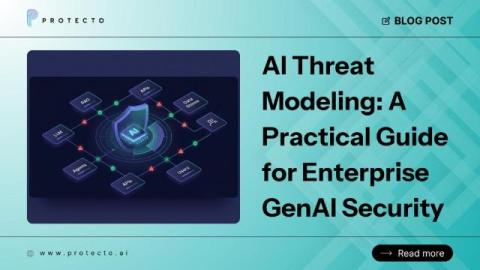
AI Threat Modeling: A Practical Guide for Enterprise GenAI Security

Here is a number that should stop every CISO cold. Gartner projects that by 2028, 25% of enterprise GenAI applications will face five or more security incidents per year, nearly triple the 9% recorded in 2025. The acceleration is not slowing. Meanwhile, research by OpenText and the Ponemon Institute finds that 79% of organizations have not yet reached full AI maturity in cybersecurity, meaning most enterprises are deploying generative AI without the foundational controls needed to govern it.

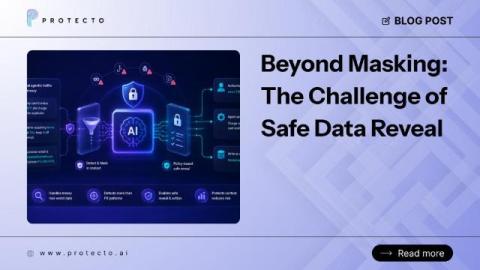
Beyond Masking: The Challenge of Safe Data Reveal

You can build a masking demo in an afternoon. Run a regex for credit card patterns, swap the match for XXXX, and ship it. The demo works, the compliance slide says “no PII sent to the LLM,” and everyone moves on. That demo is fooling you by leaving things out. It works because the input is a) clean (card 4111 1111 1111 1111), b) because the only sensitive thing in it is a textbook PII pattern, and c) because nobody downstream ever needs to use the value again.

When AI Agents Call AWS, Who Does AWS Think They Are?

In Part 1, Your AI Agent Needs to Know Who You Are, we showed how Teleport JWTs give MCP tools a verified identity for every request. This post extends that pattern to AWS, specifically to Amazon Bedrock AgentCore, where the same identity gap exists but requires a different solution stack. You ask an AI agent to list your S3 buckets. The agent calls an MCP tool. The tool reaches out to AWS. However, CloudTrail records the action under something like agentcore-bot, but not your identity.

5 Common AI Governance Mistakes Enterprises Make

Enterprise AI adoption has outpaced enterprise AI governance. Seventy-eight percent of organizations now use AI in at least one business function, up from 55% the year before, and most of that adoption happened before governance teams finished drafting their first policy. The result is a familiar pattern: leadership approves a rollout, security builds guardrails around the tools it knows about, and sensitive data keeps moving through channels nobody mapped.