Security | Threat Detection | Cyberattacks | DevSecOps | Compliance

Introducing the AI Agent action

Today, we’re announcing a way to build and deploy agents in Tines through our AI Agent action. In the AI market, AI agents suddenly seem to be everywhere – software that can autonomously think and perform tasks on behalf of the user. But we’re still very early in the adoption curve of agents. One thing we’ve noticed is that most solutions can’t handle the varying complexities of mission-critical workflows.

How AI-Powered Tools Are Revolutionizing Online Education security

Let's face it: the digital shift in education is permanent. Virtual classrooms, remote assignments, cloud-based exams-these are no longer futuristic concepts; they're the present-day norm. But while the benefits of flexibility and accessibility are undeniable, the vulnerabilities lurking beneath the surface are equally real. Imagine a scenario: a student logs into a popular education app from a public Wi-Fi network. That very act, innocent on the outside, can be a digital goldmine for cyber intruders if the platform lacks proper safeguards.

Why eSIM Is Changing the Mobile Game and What You Need to Know

The tech world's obsessed with sleek phones and smart features, but there's a quiet shift under the hood that's actually changing how we use our devices: eSIM. If you've been swapping SIM cards between phones or juggling multiple numbers for work and travel, you'll want to understand this new approach. No more fiddling with those tiny plastic cards. With eSIM, it's all digital, all instant - and honestly, it's about time.

CDNs Won't Save Your APIs: Here's Why You Need to Rethink Security

Content delivery networks (CDNs) are great for performance—but terrible for protecting APIs. Attackers can poison the cache or route around security altogether when APIs are misconfigured. In this clip, Jeremy Dodson explains why relying on CDNs can expose critical business data.

The future of identity security Is AI-driven but human-led

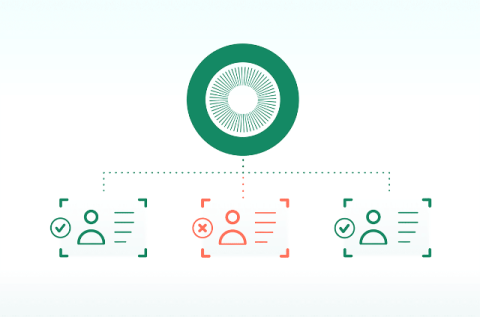
Cyber threats continue to move faster, operate smarter and hit harder than ever before. Against this backdrop, one truth has emerged: identity is the new perimeter – your people’s digital identities are the new front line of defense. And that brings identity into focus for every attacker. To truly protect your business, you need an AI-enabled, dynamic, intelligent, unified Identity Fabric to deliver next generation protection and control without impacting productivity.

First Look, Then Leap: Why Observability is the First Step in Securing your AI Agents

AI Agents aren’t coming - they’re already here! reshaping industries, enhancing productivity, and unlocking new possibilities. Embedded in tools like Microsoft 365 Copilot, Salesforce Einstein, and custom-built assistants, they’re making decisions, automating workflows, and interacting with sensitive business data in real time. This wave of innovation is moving fast, but for once, security doesn’t have to play catch-up.

CISOs Brace for a Wave of AI-Powered, Domain-Based Cyber Threats

Domain-name system (DNS)- based cyber attacks are becoming increasingly complex, and AI will only make managing them even more challenging. According to a recent report, Chief Information Security Officers (CISOs) anticipate a tumultuous season of cyber threats, with low confidence in their abilities to defend against them effectively.

How Torq and Wiz Power End-to-End Cloud Threat Detection and Response

Modern cloud threats move fast. Detection and response has to move faster. Wiz gives security teams the visibility and precision they need to detect real threats across sprawling cloud environments. Torq turns those threat detections into action — instantly. Together, they’re a cheat code for cloud security operations.

Defending at Machine Speed: Guiding LLMs with Security Context

Large Language Models (LLMs) provide strong reasoning and data summarization capabilities, making them valuable proxies for a variety of cybersecurity operations tasks. However, their performance can decline when applied to highly specific or enterprise-contextual tasks, particularly if the models rely solely on public internet data.