Security | Threat Detection | Cyberattacks | DevSecOps | Compliance

Governance in DevSecOps: Measuring and Improving Security Outcomes

After implementing a DevSecOps strategy from the ground up — including secure design, testing and monitoring, and risk-based remediation — you will need to focus on analysis and governance. After all, organizations need to regularly measure and refine their security processes to mature their DevSecOps programs.
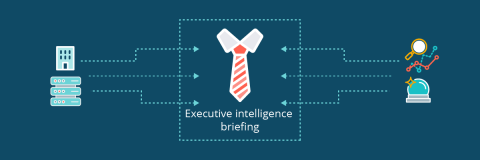
Threat Context Monthly: Green Nailao & UNC3886 - Briefing for March 2025

Welcome to the Threat Context Monthly blog series where we provide a comprehensive roundup of the most relevant cybersecurity news and threat information from KrakenLabs, Outpost24’s cyber threat intelligence team. Here’s what you need to know from March about espionage activities by threat actors Green Nailao and UNC3886.

Security Bulletin: Critical Vulnerabilities in Kubernetes Ingress NGINX Controller

CVE-2025-1974 is a critical remote code execution (RCE) vulnerability in Kubernetes’ Ingress-NGINX Controller that allows unauthenticated attackers with network access to inject arbitrary NGINX configuration directives, potentially leading to full cluster compromise. Ingress-NGINX is a software-only ingress controller provided by the Kubernetes project. Because of its versatility and ease of use, ingress-nginx is quite popular: it is deployed in over 40% of Kubernetes clusters.

How to Build a Mature Vulnerability Management Program

The terms “patch management” and “vulnerability management“ are not the same. And that difference is a big difference. They may be confused because applying patches is one of the many ways to mitigate cyber risks. However, it is one piece of the entire vulnerability management puzzle and organizations that do not realize this are burdened with a false sense of security.

Exploited! Kentico Xperience Staging Service Authentication Bypass Vulnerabilities (CVE-2025-2746 & CVE-2025-2747)

Recently, two critical security flaws were discovered in Kentico Xperience 13, a popular digital experience platform (CMS). Tracked as CVE-2025-2746 and CVE-2025-2747, these vulnerabilities allow unauthenticated attackers to bypass the Staging Sync Server’s authentication, potentially gaining administrative control over the CMS.

Exploring AI for Vulnerability Investigation and Prioritisation

The sheer volume of cybersecurity vulnerabilities is overwhelming. In 2024, there were 39,998 CVEs — an average of 109.28 per day! This constant stream of new threats makes it increasingly difficult for security teams to keep up. Large Language Models (LLMs) offer a possible solution, helping automate vulnerability investigation and prioritisation, allowing teams to more efficiently assess and respond to emerging risks. Do you even have time to skim over 109 CVEs a day?

What is a Data Poisoning Attack?

Data poisoning is a sophisticated adversarial attack designed to manipulate the information used in training artificial intelligence (AI) models. By injecting deceptive or corrupt data, attackers can hurt model performance, introduce biases, or even create security vulnerabilities. As AI models increasingly power critical applications in cybersecurity, healthcare, finance, and many other industries, maintaining the integrity of their training data is absolutely critical.