Security | Threat Detection | Cyberattacks | DevSecOps | Compliance

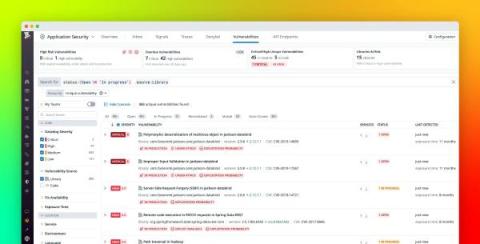
Mitigate vulnerabilities from third-party libraries with Datadog Software Composition Analysis

Mitigating application vulnerabilities throughout the software development life cycle (SDLC) is critical—and challenging, especially as applications rely more and more on third-party, open source software (OSS). With this type of architecture, teams often don’t know exactly where vulnerabilities exist in their code, which of those vulnerabilities are actively exposed in production services, and which vulnerabilities are more critical to address than others.

Snyk & ServiceNow

Did you know that up to 90 percent of modern software uses open source software? Often SecOps, AppSec and IT teams don’t have a complete view of their application security risk across the organization. The Snyk and ServiceNow integration efficiently finds, prioritizes, and tracks vulnerabilities in open source dependencies to get a complete view of your application security posture and drive smarter, faster fixes in ServiceNow workflows.

Beyond the noise: runtime-based vulnerability management for effective threat control

In an ideal world, patching every vulnerability before attackers discover them would be a breeze. The reality of the evolving cloud-native landscape, with its ever-changing mix of cloud, DevOps, mobile, and critical infrastructure, paints a different picture. New risks emerge constantly, leaving traditional vulnerability management approaches struggling to keep up. Meanwhile, Security and DevOps teams face ongoing pressure to protect their organizations from vulnerabilities.

National Cyber Security Centre (NCSC) Vulnerability Management Guidance Checklist

As of February 12, 2024, the National Cyber Security Centre (NCSC) has released Version 2.0 of its vulnerability management guidance. This update provides organizations with the latest strategies and practices to identify, assess, and manage cybersecurity vulnerabilities effectively. The NCSC’s updated guidance on vulnerability management outlines the importance of proactively managing vulnerabilities to secure technical estates.

Cryptographic failures | OWASP TOP 10

In this video, we'll delve into the world of cryptography and explore the ever-evolving landscape of cryptographic failures. We'll start by examining the shift in the OWASP Top 10 from "Sensitive Data Exposure" (A03:2017) to "Cryptographic Failures" (A02:2021), highlighting the growing importance of proper cryptographic implementation in securing sensitive data.

CrowdStrike Named the Only Customers' Choice: 2024 Gartner "Voice of the Customer" for Vulnerability Assessment

It is a common refrain in security circles that “nobody loves their vulnerability management tool.” CrowdStrike may have just proved to be the exception. We are proud to announce that CrowdStrike is the only vendor named a Customers’ Choice in the 2024 Gartner “Voice of the Customer” Report for Vulnerability Assessment. In this report, CrowdStrike is the only vendor placed in the upper right quadrant, meaning we received a Customers’ Choice Distinction.

Snyk & Atlassian: How to embed security in AI-assisted software development

Adding AI to your software development life cycle (SDLC) comes with great opportunities — and great dangers. Is the risk worth the reward? This was the topic of conversation when Sascha Wiswedel, Senior Solutions Engineer at Atlassian, and Simon Maple, Principal Developer Advocate at Snyk, teamed up to discuss security in the (AI-assisted) software development lifecycle.

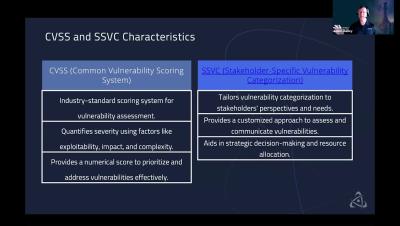
Applying Vulnerability Intelligence to CVSS and SSVC Frameworks

In this presentation, we explore the intersection of vulnerability intelligence and prioritization frameworks such as CVSS and SSVC as a means for strategically and rapidly prioritizing vulnerabilities to stay ahead of exploitation risks. We delve into the process of applying real-time threat intelligence tailored to the vulnerability landscape to enhance decision-making, optimize resource allocation, and ensure a precise and proactive defense against cyber threats.

What is XML External Entity, How to Find XXE Vulnerabilities and Patch Them

An XXE vulnerability is a security vulnerability that allows attackers to access sensitive data or execute malicious code in a web application. This happens when the application accepts XML input from an untrusted source and doesn’t properly validate it. An attacker can exploit this vulnerability by crafting a special XML input that includes a reference to an external resource (like a file or URL) that they control.

Reporting AppSec risk up to your CISO

For security leaders, building a strong working relationship with your CISO often comes down to your ability to provide clear reports and concise risk summaries. Your reports allow CISOs to perform a vital responsibility of their role: translating highly technical security jargon into actionable recommendations that will reduce risk and improve security maturity across the organization. And in the case of a breach or zero-day event, CISOs may be the bearer of bad news.