Security | Threat Detection | Cyberattacks | DevSecOps | Compliance

The Latest Cybersecurity News & Insights From Around The World

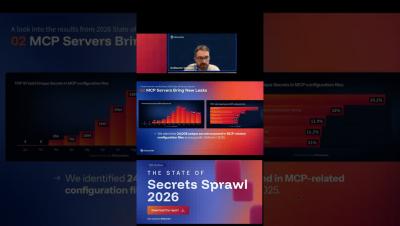
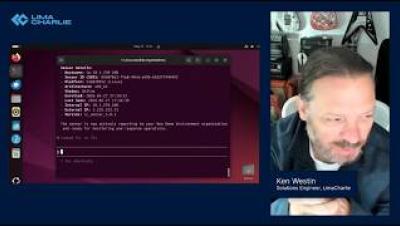
AI SecOps Worskhop Series: Building Custom Stand-Alone Dashboard Applications
This hands-on workshop is designed for security professionals, developers, and analysts who want to unlock the full potential of their security data through custom dashboards and visualizations. We will guide attendees through a practical, step-by-step process demonstrating precisely how to leverage the robust capabilities of the LimaCharlie API in conjunction with the power of Claude Code to build rich real-time dashboards.

Automation, Intent, and Ownership: What to Learn from the AI Agent Security Summit
When the AI Agent Security Summit launched in San Francisco last October, agent-based threats had already escalated from a novel consideration to a predominant blocker for enterprise adoption. The security community was laser-focused on recognizing and minimizing the blast radius posed by agentic vulnerabilities, whether that meant indirect prompt injection, MCP poisoning, or hallucinations.
Latest agentic AI developments and industry trends
A practitioner's guide to the capability shifts, framework changes, and regulatory developments reshaping how enterprise IT and cybersecurity teams govern, deploy, and defend against autonomous agents.
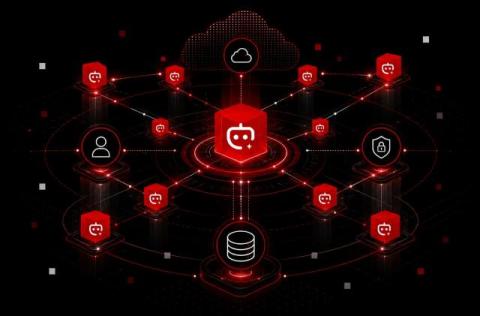
3 Principles to Safely Scale Agentic AI
AI is moving from experimentation to execution. What started as copilots is quickly evolving into autonomous AI agents that can make decisions, execute tasks, and operate across enterprise environments. As organizations accelerate adoption of agentic AI, they’re expanding their attack surface in ways traditional security models weren’t built to handle.

How AI Just Killed Expensive Enterprise Software
AI is disrupting the enterprise software market. James Rees built a fully-functional GRC tool in just two weeks using Codex. No development team needed. No million-pound licensing fee, just AI and subject matter expertise. If a CISO can build what competitors charge hundreds of thousands for in a couple of weeks, what happens to the vendor market? As large language models like Daybreak and Mythos evolve, this problem gets worse for SaaS companies.

How Modern DLP Enables AI Adoption Without Slowing Down the Business
Organizations are not choosing between AI adoption and data security. Rather, they are discovering, often after the fact, that these two priorities are pulling in opposite directions. The engineering team has been using GitHub Copilot for six months. Finance is running variance analysis through ChatGPT. Legal is pasting contract language into Gemini for redlining. According to Cyberhaven Labs research, 39.7% of the data employees share with AI tools is sensitive.
Designing Identity for the Agentic Enterprise: The Okta AI Identity Summit
Speakers made it clear that agentic AI is already operating across enterprise workflows. Learn why identity must govern ownership, permissions, actions, and accountability.
Agentic SOCs: The public sector's new AI cybersecurity defense
Adversaries are using AI to launch cyber attacks in record time, forcing security teams to measure responses in seconds instead of hours or days. Detecting these attacks is increasingly difficult. Phishing campaigns built by large language models (LLMs) achieve click-through rates 4.5x higher than traditional methods.1 Public sector organizations are at an inflection point with cybersecurity. Most security stacks in place today weren’t built for this level of speed.

Your AI bill is out of control. Cloudflare can fix it now.
There isn't a CIO on the planet not worried about AI spend right now. CFOs are increasingly nervous, too. For fear of falling behind, many companies have pushed their employees to use AI as aggressively as possible. The edict was clear: "Move fast, we'll figure out the bill later." And for the most part, it worked: AI has been genuinely transformational for the teams that leaned in. But the costs are real: we’ve heard countless horror stories of huge bills and painful overages on token spend.