
Security | Threat Detection | Cyberattacks | DevSecOps | Compliance

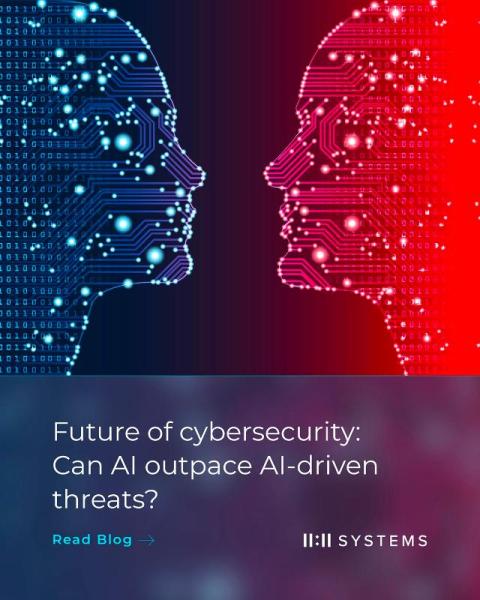
Future of cybersecurity: Can AI outpace AI-driven threats?

Defending your corporate network is much like the human immune system fighting off a novel virus. For decades, traditional IT infrastructure relied on recognizing known signatures to neutralize incoming threats. The virus has now learned to mutate faster than traditional defenses can track. This rapid mutation represents the new era of artificial intelligence in cyber warfare. You need to align your IT strategy with business goals to ensure long-term adaptability.

The April 2026 AI Security Report: 6 Incidents and Detailed Attack Paths

From AI agents leaking internal data to coordinated global malware campaigns — here is everything that happened in AI cybersecurity between April 7 and April 21, 2026, with detailed attack paths for each incident. The fifteen days following April 7, 2026 produced six distinct AI-related security incidents spanning internal data exposure, supply chain exploitation, autonomous malware generation, coordinated multi-vector attacks, model leak fallout, and documented AI agent control failures.

CISOs Missing the Real AI Threat #podcast #aisecurity

This episode looks at what happens when AI starts finding vulnerabilities at scale, restricted access creates market imbalance, and security teams struggle to keep pace. It covers fragile infrastructure, bug brokers, overloaded analysts, CISO fear, and the growing sense that cyber defence is entering a faster and harsher era.

Cloudflare Just Shipped 20+ Features for AI Agents in One Week

The conversation explores why the Internet and the cloud were not designed for an AI-agent world, and what infrastructure needs to change as software agents begin generating code, running workflows, and interacting directly with online services. Ming and Anni walk through several announcements from Cloudflare’s Agents Week, including new tools for agent infrastructure, memory, developer workflows, AI Gateway, email, artifacts, browser automation, security, and agent-ready websites.

VibeScamming: Why AI-built scams are changing phishing risk

VibeScamming refers to AI-assisted phishing operations where attackers use natural-language tools to rapidly generate and modify phishing content and web pages, lowering (but not eliminating) the technical skill required. One of the primary enterprise impacts is faster phishing iteration and reconstitution after blocks or takedowns, with identity compromise remaining a major risk alongside malware and other payload-based attacks.

Building Know Your Agent: The missing identity layer for agentic commerce

AI agents are being deployed in the real world at pace. In the enterprise realm, they’re accessing APIs, shipping code, and running decisioning workflows on behalf of the organizations and individuals who deploy them. Entirely new businesses have sprung up, leveraging AI agents to streamline customer support and sales processes.

LimaCharlie is the most secure way to run AI security agents

The idea that AI agents will run security operations is becoming reality. But most platforms ignore the most important question: how do you secure the agents themselves? In this video I walk through why LimaCharlie is the most secure platform for running agentic security operations and demonstrate the architectural controls that make it possible. We look at the core mechanisms that allow AI agents to operate safely inside a SecOps environment, including.

Agentic AI at risk after MCP design flaw discovery? #ai #cybersecurity #podcast

In this week's Intel Chat, Chris Luft and Matt Bromiley discuss a design flaw in Anthropic's Model Context Protocol (MCP) that could enable large-scale supply chain attacks on agentic AI systems. Researchers at OX Security found that MCP's command execution allows malicious commands to run silently without sanitization checks or warnings.

AI Agent Sandboxing in Financial Services: Containing Blast Radius

Your progressive enforcement rollout is working. eBPF sensors are deployed across the cluster. Behavioral baselines are converging. Enforcement policies are generating from observed behavior, just like the observe-to-enforce methodology prescribes. Then your compliance officer walks over to the platform team’s desks and asks a question nobody anticipated: “Which agents are in observation mode right now?”

How to Detect AI-Mediated Data Exfiltration in the Cloud

Your SOC gets an alert from the CNAPP: an outbound connection from a pod in the ai-prod namespace to . The destination is in the allowlist. The payload size is 28 kilobytes — well under the DLP threshold. The agent’s service account has permission to invoke the email tool. By every check your stack runs, the traffic is normal. Forty minutes later, a customer support lead notices that an email went out containing a summary of 2,400 customer records that the agent had no business querying.