
Security | Threat Detection | Cyberattacks | DevSecOps | Compliance

SafeBreach's Evolution into an AI-First Development Team: Part 2

In this second installment of a series on the transformation of SafeBreach’s development organization, VP of Development Yossi Attas details a structured operational workflow that integrates Jira, BitBucket, and Claude Code to turn AI usage from ad-hoc prompting into a rigorous engineering methodology.
Governing Agentic AI: A Practical Framework for the Enterprise

In my previous piece, "The Agentic AI Governance Blind Spot," I laid out what I believe is one of the most critical gaps in the AI governance landscape today: the three most cited frameworks in AI governance, NIST AI RMF, ISO 42001, and the EU AI Act, don’t contain a single mention of agentic AI. Not one reference to autonomous agents, multi-agent systems, or AI that takes actions with real-world consequences. The response to that piece confirmed what I suspected.

Agentic AI Security: MITRE ATT&CK Coverage Analysis in Minutes

LimaCharlie's Agentic SecOps Workspace (ASW) enables true agentic security operations. With us, AI doesn't just advise but actively operates within your security environment. We do this by integrating everything, including AI, on our cloud platform via API. Our approach delivers superior AI security automation capabilities at a fraction of the cost, allowing security teams to scale operations without growing headcount.

What are AI skill-gaps new defenders can leverage? #cybersecurity #ai #podcast

AI skill gaps are a real conversation right now, and Chris Cochran, Field CISO and VP of AI Security at SANS Institute, breaks it down into three practical buckets for defenders who want to stay ahead. Start by figuring out what you can offload to AI: summarization, enrichment, repetitive tasks. Save the deterministic decisions for humans. Then learn how to secure AI itself: Finally, understand governance. Not just the technical side, but what your company is actually trying to do with AI. Security practitioners who can enable the business, not just protect it, become irreplaceable.

VCF 9, Infrastructure, and the AI Revolution

Artificial intelligence is changing the IT landscape in radical, unprecedented ways. It’s rewriting the rules of code generation, automating complex customer service interactions, and providing data insights that used to be impossible to extract, even in recent decades. However, for IT managers and those responsible for keeping the lights on, AI represents a massive shift in infrastructure requirements.

Securing Human and Non-Human Identities from AI Security Risks

As organizations rely more on Artificial Intelligence (AI) to power critical operations, the infrastructure supporting AI development and deployment is becoming a high-value target for cybercriminals. From model training and data pipelines to cloud workloads and APIs, AI operations rely on access to privileged credentials and critical systems.

Agentic AI Security: Onboard Multi-Cloud Environments with AI

LimaCharlie's Agentic SecOps Workspace (ASW) lets agentic AI security solutions operate directly inside your environment. Everything in LimaCharlie’s SecOps Cloud Platform connects via API. For us, AI isn't a bolt-on layer. It's woven into the same fabric as your detections, sensors, and integrations. Limacharlie’s approach makes it easy for users to bring-your-own-LLM into security operations.

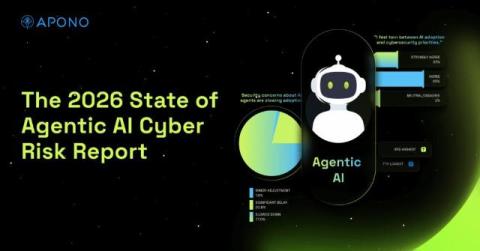
New Apono Report Reveals 98% of Cybersecurity Leaders Are Slowing Agentic AI Adoption Due to Insufficient Security Controls

Report finds growing tension between AI acceleration goals and security readiness as autonomous systems move toward production NEW YORK — February 2026 — Apono, the cloud-native Privilege Access Management platform securing human and agent identities, today released The 2026 State of Agentic AI Cyber Risk Report, a global study examining how enterprises are approaching agentic AI adoption amid rising security concerns.

How AI Agents Impact SOC 2 Trust Services Criteria

SOC 2, which stands for Systems and Organization Controls 2, is a framework developed by the American Institute of Certified Public Accountants (AICPA) to evaluate controls for security, availability, processing integrity, confidentiality, and privacy. As agentic AI systems begin acting autonomously, AI and SOC 2 compliance become closely linked. These systems drive new efficiencies, but also introduce new risks.