Security | Threat Detection | Cyberattacks | DevSecOps | Compliance

Offense Is Running on AI. Is Your Defense? | AI, Configuration Drift & Prevention

Offense is running on AI. Defense has to as well. That's the throughline of Garrett Hamilton's conversation with Jay Wilson, CIO and CISO at Insurity, on The Security Strategist, hosted by Shubhangi Dua at EM360Tech. What they get into.

Gartner Names Torq as Company to Beat in AI SOC Agents for Threat Investigation in May 2026

See how Torq harnesses AI in your SOC to detect, prioritize, and respond to threats faster. Request a Demo The AI SOC category just got its definitive race assessment, and Torq is at the front. In the May 2026 Gartner report AI Vendor Race: Torq Is the Company to Beat in AI SOC Agents for Threat Investigation (Document ID: G00855833), Gartner names Torq the Company to Beat.

'Recall' Was Enough for Firewalls. AI Needs a Stricter Scorecard

For much of security history, one metric dominated: recall. Recall means: of all the sensitive data that exists, how much did you catch? If there are 100 pieces of PII in a document and your system finds 95, your recall is 95 percent. This made sense in the old security world. If a firewall missed a real threat, the company had a serious problem. If it blocked something safe, someone could investigate and fix it.

How to Stop AI-Driven Data Loss

AI is reshaping the modern workplace. From automating tasks to generating in-depth research in seconds, AI tools are enhancing productivity at a lightning pace. GenAI assistants, agentic browsers, and automation platforms are everyday tools that employees are interweaving into their daily workflows. However, with this powerful new capability comes the serious risk of data loss.

AI Guardrails in 2026: Types, Challenges, and Impact of Agentic AI

AI guardrails are safety, security, and governance frameworks designed to ensure Large Language Models (LLMs) and generative AI applications produce trustworthy, accurate, and appropriate content. They function as filters for inputs and outputs to prevent harmful or biased outputs and proprietary data leakage, enforcing compliance with safety policies and regulatory standards.

What Every CISO Needs to Know About AI-Assisted Development

There’s a conversation happening in boardrooms, security operations centers, and developer standups that I find both thrilling and concerning: the conversation about AI-assisted development. Engineering teams are shipping features in hours that once took months. Products that would have required six-month roadmaps are being prototyped in a weekend.

Why backup and recovery must be part of your AI agent security strategy

The terminal output was still scrolling when Jer Crane, the founder of PocketOS, realized what had happened. Nine seconds. That is how long it took a coding AI agent to delete his production database, his backups, and three months of operational records. PocketOS was using Cursor for what should have been a routine task in a test environment.

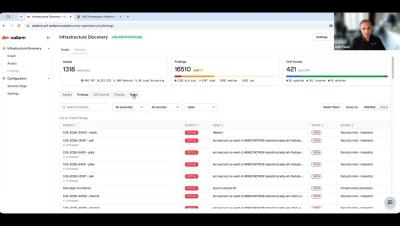
Introducing the Wallarm AI Control Platform: One closed loop for AI security and API security.

Every week, someone in your organization stands up an AI service. Maybe they told security about it, but probably not. By the time it shows up in your inventory, it has been running for weeks, processing data, calling external APIs, and doing things nobody formally reviewed.

9 AI Usage Control Tools for Monitoring AI in the Workplace

AI adoption in business has moved at a staggering pace. According to a major survey from The Conversation, 58% of global employees are intentionally using AI at work. That same study revealed an alarming trend: 66% of global employees have used unapproved AI tools, while only 34% say their company has put in place rules to govern AI usage. This use — and potential misuse — of AI systems is the latest and most complex threat facing businesses today.