Security | Threat Detection | Cyberattacks | DevSecOps | Compliance

Legitimate-Looking Codex Remote UI Secretly Steals Your AI Tokens

There's a new playbook in the supply chain threat landscape, where an someone builds something genuinely useful, growing a real user base. But all while stealing credentials. codexui-android is a remote web UI for OpenAI Codex. Real GitHub repo. Active development. Polished enough to get 27.000 weekly downloads. And for the past month, every single invocation has been quietly exfiltrating your Codex authentication tokens to an attacker-controlled server.

Three ways intelligent workflows enhance network security

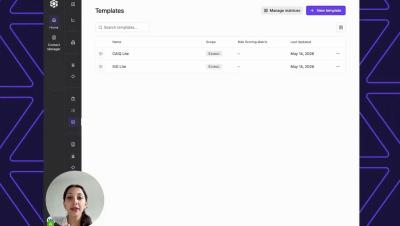
Network security is operationally complex. It involves constant triage, approvals, and monitoring, spread across a range of tools, teams, and environments. Traditionally, this requires teams to do a significant amount of time-consuming, repetitive, and draining manual work, resulting in a longer MTTR and leaving many practitioners overwhelmed and burnt out. The problem isn’t in the tools they use – it’s in the work that happens between tools.

OpenAI Privacy Filter Isn't Enough: The Truth About AI Tokenization

While the new OpenAI privacy filter detects basic PII, true data protection requires a much deeper system. In this video, we expose the hidden security vulnerabilities inside modern AI workflows and explain why aggressive data redaction actually destroys your model's utility. What you will discover in this breakdown: The Redaction Trap: Why simply deleting sensitive data breaks your AI's contextual understanding.

AI Risk Is Not Uniform: The Case for Archetype-Aware Enterprise Security

Every conversation I have with security leaders about enterprise AI security eventually arrives at the same place: a description of what they've extended. Their data loss prevention tool now flags sensitive data going into prompts. Their SIEM is ingesting AI platform logs. Their cloud security team has added model endpoints to their coverage scope. For many teams, this represents real effort and real progress.

Cato CTRL Threat Brief: AI, Zero-Days, and the US-China Cyber Arms Race

Underlying the US–China AI race, there’s arguably a more sinister arms race—the race to identify zero-day threats. Frontier AI algorithms, such as Anthropic Mythos (here) and China’s Qihoo 360 (here), are compressing the zero-day discovery cycle. But how those discoveries are gathered and shared among cooperating entities is giving China significant defensive and offensive advantages.

Your AI Agent Inventory Is Incomplete. Here's What That Means for Risk.

Download Beyond Identity: The CISO's Guide to Securing Agentic AI for a 12-month roadmap to comprehensive agent governance, starting with visibility. Some organizations still treat agentic AI as a future problem. Something to plan for. Something on the horizon. That framing is wrong, and the inaction it entails will put you behind.

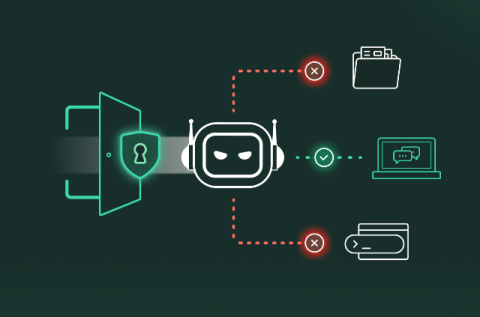
Why MCP Breaks the Financial Services Security Stack

A relationship manager asks the firm's AI assistant to "summarize my top wealth clients by AUM and flag anyone with a pending transfer over $500K." The agent calls a CRM MCP server, then a core banking MCP server, then a market data MCP server, and returns a clean answer in twelve seconds. Names, balances, account numbers, pending wire details, all rendered in plain text inside the chat window. No file moved. No email left the network. No DLP channel triggered.

Tanium AI Enrichment and Analysis: Tanium Tech Talks #162

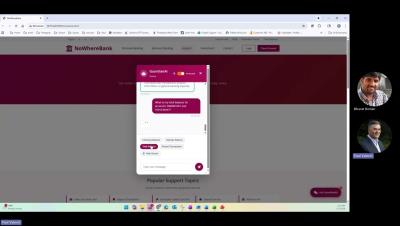
Tired of decoding commands, searching unfamiliar processes, and guessing alert context? See how Tanium AI Enrichment& Analysis breaks down alert activity, explains risk, and guides response - without leaving your workflow. Join us as we explore how Tanium Threat Response uses AI to: Provide detailed context and security implications Decode complex or encoded command lines Summarize alerts with key findings and context Recommend next steps to accelerate investigation and response.

Practical MCP Security: A Playbook for Mid-Market Teams

Most guidance published on AI agent security is written for enterprise organizations. It assumes dedicated AI security functions, red teams, platform engineering groups, and the budget to commission purpose-built tooling. If your security team is three people covering five hundred employees and a cloud environment that grows faster than you can document it, that guidance was not written for you. The five posts in this series have established the threat landscape.