Security | Threat Detection | Cyberattacks | DevSecOps | Compliance

From Fragments to Full Picture: Turning Threat News into Actionable Campaign Intelligence

Consider this scenario: a critical zero-day vulnerability is announced for a popular enterprise software and you, as a threat analyst, are tasked with briefing leadership on which threat actors are exploiting it and how. You start to research and are immediately overwhelmed. One news site reports on a Chinese APT using the exploit, another blog details an Iranian group, and a third report lists CVEs without context.

Critical Vulnerability Alert: CVE-2025-10035 in GoAnywhere MFT

A critical security vulnerability (CVE-2025-10035) has been identified in GoAnywhere MFT, a widely used file transfer solution developed by Fortra. This software is commonly deployed to securely transfer sensitive data such as financial records, HR files, legal documents, and personally identifiable information (PII). Currently, CVE-2025-10035 is rated at a 10.0 (critical) on the CVSS scale and a 9.23 out of 10 on Bitsight’s Dynamic Vulnerability Exploit (DVE) scale.

Top 5 Cybersecurity Risks in ERP Systems and How to Prevent Them

Modern businesses are built on Enterprise Resource Planning (ERP) systems. From finance to supply chain, they run everything in one place. Many of them can even connect to cloud systems, mobile apps, and IoT devices. But where they are most powerful, they are also most vulnerable. Cybercriminals know that ERP systems are treasure troves of data. So if an attack happens, it can lead to significant data theft. Not only that, it can also delay payroll, damage production lines, and stop operations.

Supercharge Your AI Data Governance with Riscosity's F5 BIG-IP SSL Orchestrator Integration

Artificial intelligence has stormed the enterprise world, and it's not slowing down anytime soon. With thousands of AI-powered applications, from large language models (LLMs) to productivity-boosting copilots, employees are tapping into AI to work smarter and faster. But here’s the rub: while AI can supercharge productivity, it also brings along a Pandora’s box of risks.

UpGuard's Future: The Strategic Edge Your Security Team Needs

Security teams have struggled for far too long with a patchwork of siloed security tools, static compliance checks, and an increasingly adversarial threat landscape to continue down that path, especially when each of these challenges is making their organizations more vulnerable by the minute. Previously in this CRPM series, we’ve established that traditional security approaches are no longer adequate to keep pace against AI-driven attacks and the multi-pronged missions of cybercriminals today.

Living Security Unveils HRMCon 2025 Speakers as Report Finds Firms Detect Just 19% of Human Risk

Living Security, a global leader in Human Risk Management (HRM), today announced the full speaker lineup for the Human Risk Management Conference (HRMCon 2025), taking place October 20, 2025, at Austin's Q2 Stadium and virtually worldwide.

180,000 ICS/OT Devices and Counting: The Unforgivable Exposure

Remember when ICS malware was “rare”? Last year we got two new families built for one thing: disruption. FrostyGoop and Fuxnet are not Mirai with a wrench taped on or your typical DDoS botnet. They were built to target and disable devices that use Meter-bus and Modbus protocols, inflicting maximum damage. If you still believe that “our PLCs aren’t on the Internet,” then this is your nudge to actually go and check.

CISA Advisory: CVE-2025-20333 for Cisco Firewall Devices

CVE-2025-20333 is a critical, actively exploited zero-day vulnerability impacting Cisco firewall devices, specifically those running unpatched versions of Cisco Adaptive Security Appliance (ASA) and Firewall Threat Defense (FTD) software. It is one of two zero-days currently being weaponized by cyber threat actors, posing a significant and immediate threat to enterprise network perimeters. The vulnerability has a CVSS score of base 9.9. At this time, NVD has not released a formal entry for CVE-2025-20333.

Master quantitative risk analysis: A step-by-step guide for better business decisions

Risk is an ever-present factor in business, influencing almost every decision that organizations make. From investments and operations to market expansion and product development, every decision carries with it inherent risks that could either be mitigated or amplified based on how well they are understood and managed. Quantitative risk analysis offers a structured, data-driven approach to assess these risks, paving the way toward more informed and resilient business decisions.

The hidden security risks of slow mobile WordPress sites

Mobile lag masks threats. When pages stall, admins postpone updates, logs grow noisy, and attackers get more tries. Treat WordPress security as a performance problem too, because mobile site speed directly shapes your risk. Harden your stack and cut the mobile attack surface, start with mobile optimization for WordPress websites.

Grounded: The ARINC vMUSE Attack Disrupting Multiple Airports

The line between the digital and physical worlds blurs completely when a cyber attack results in widespread, tangible disruption. For thousands of travelers, this became a harsh reality when major European airports were forced to delay flights due to a ransomware attack targeting a vendor in the supply chain.

Cyber Risk Monitoring for ISACs: An Innovative, Collaborative Approach to Third-Party Management

BlueVoyant recently announced its strategic partnership with the Automotive Information Sharing and Analysis Center (Auto-ISAC), the central organization for cybersecurity collaboration in the automotive industry. Information Sharing and Analysis Centers (ISACs) are important organizations that provide a central resource within a given sector for gathering, analyzing, and sharing information on cyber threats and vulnerabilities.

When Attackers Weaponize AI and Defenders Fight Back with Smarter Remediation

Artificial intelligence is transforming cybersecurity, and not always for the better. Attackers are now weaponizing AI to speed up reconnaissance, create exploit code, and bypass traditional defenses. Security teams can’t afford to rely on outdated vulnerability management practices. In this webinar, Scott Kuffer (COO, Nucleus Security) and Corey Brunkow (Director of Federal Operations, Horizon3.ai) break down how AI is changing the threat landscape and what defenders can do to stay ahead.

AI, Risk, and Enterprise Security: Highlights from a Discussion with Enrique Salem

Key insights from a fireside chat between Nightfall CEO Rohan Sathe and cybersecurity veteran Enrique Salem, Partner at BCV and Nightfall investor Twenty years ago, enterprise security teams scrambled to address shadow IT as employees brought consumer applications into the workplace. Today, we're witnessing the same phenomenon with AI tools—what we now call shadow AI. The fundamental question remains unchanged: What happens to our data?

From Ransomware to Exposed ATMs: How Adversaries Target Financial Institutions

The financial sector remains one of the most targeted industries for cybercriminals and nation-state actors due to the sensitivity of customer data, the high value of financial transactions, and the critical role these institutions play in global stability. Bitsight’s 2025 State of the Underground report found that underground markets listed nearly 14.5 million compromised credit cards in 2024, representing a 20% increase over 2023. This growth was driven entirely by a surge in US-issued cards.

From Lure to Breach: 3 Phishing Tactics to Watch

In our previous post, The ABC’s of Ishing, we broke down the foundational tactics used by cybercriminals to deceive users and gain unauthorized access. This follow-up report expands on that foundation by exploring three evolving phishing threats that go beyond traditional email lures. Angler Phishing, Calendar Phishing, and Captcha Phishing each exploit trust in everyday digital tools—social media platforms, calendar invites, and CAPTCHA challenges.

Exploitability as the Countdown Clock: Prioritizing Vulnerabilities Before Time Runs Out

In vulnerability management, every scan tells a story. The truth is that only some of those stories matter right now and that the challenge isn’t finding vulnerabilities. It’s knowing which ones are about to cost you. If you’re dealing with hundreds of vulnerabilities per asset, especially if you’ve adopted cloud solutions, you’re not alone. That’s become the norm. But you can’t patch everything, and you shouldn’t even try.

Say hello to your newest security team member. (and the multiplier you've been waiting for)

Security teams don’t need more fragmented tools. They need clear visibility, smarter AI-driven insights, and integrated workflows. Breach Risk unifies external threat management to help you act faster, report with confidence, and prove your security posture.

Advance AI and Cyber Oversight With Kovrr's Control Assessment

‍Conducting a risk assessment has become a baseline requirement, not merely an internal best practice, for building effective GRC programs. Whether their focus is on cybersecurity or the newer frontier of AI, assessments offer a systematic means of illuminating an organization’s current exposure and providing visibility into how safeguards are working across both domains. For many teams, however, beginning the assessment remains a challenge.

Shai-Hulud's True Lesson for CISOs: A Crisis of Communication

The Shai-Hulud worm wasn't just a sophisticated supply chain attack; its most important lesson was about a crisis of communication. The attack thrived in the organizational gap between security policy and the daily realities of software development, a gap that exists in most companies. Defending against the next software supply chain attack requires more than a new tool; it demands a strategic shift from imposing controls to forging a genuine partnership with engineering.

Operationalizing Exposure Remediation Across Teams

Exposure management doesn’t end when you discover and prioritize vulnerabilities. The real measure of success is whether you’ve effectively remediated those exposures. Too often, security teams identify risks but struggle to see them resolved because remediation processes aren’t aligned across people, tools, and workflows. Exposure remediation best practices address this gap, ensuring that insights lead to action and that action drives measurable risk reduction.

What's In an Identity? The Executive Attack Surface and Rising Threat of VIP Impersonation

With time, effort, and a blessing from the LinkedIn networking Gods, a high-level executive's identity can be transformative for a company. More than just a name and title, these executives become symbols of authority and trust, someone employees, customers, and partners instinctively follow. Personas like Elon Musk and Tim Cook instill confidence and belief in their employees and consumers by championing their products and their ethos.

Beware the Sandworm: The Shai-Hulud Attack Explained

A new and dangerous self-replicating worm has been identified targeting the JavaScript repository NPM, infecting at least 187 code packages. The novel malware strain is engineered to steal credentials from developers and publish them to a new public GitHub repository. The worm automatically propagates itself by copying its code into the top 20 most popular packages maintained by the compromised user and publishing them as new versions.

AI Risk Management: Defining, Measuring, & Mitigating the Risks of AI

‍ Artificial intelligence (AI) used to be something that only existed in science fiction novels and dystopian movies. Then, technology advanced, and it became a reality, being slowly implemented into experimental projects and niche use cases. Now, however, it is shaping real business outcomes, accelerating decisions and automating processes in ways that are becoming commonplace in daily market operations. ‍

Collision Course: The Inevitable Convergence of Third Party Risk and Exposure Management

In February 2024, a ransomware attack on a critical player in the US healthcare infrastructure sent shockwaves through the US and globally. Pharmacies were unable to process prescriptions using patients' insurance, leading to delays in medication dispensing and highlighting the fragility of the healthcare supply chain. Hospitals and medical offices faced severe operational disruptions, struggling to provide patient care, submit insurance claims, and receive payments.

From Shadow IT to Shadow AI: The Evolution of Unseen Risk

Security leaders are well acquainted with Shadow IT; the unsanctioned apps, services, and even devices employees adopt to bypass bureaucracy and accelerate productivity. Think rogue cloud storage, messaging platforms, or unapproved SaaS tools. These all often slip past governance until they trigger a breach, compliance issue, or operational failure. Now, a more complex threat is emerging - Shadow AI.

The Evolution of AI: From Symbolic Reasoning to GPTs and Agentic Systems

It seems like Artificial Intelligence (AI) has suddenly appeared in everything, everywhere, all at once. What feels like “five minutes ago”, there was “pre-AI life”, and now we have AI assistants that speak like real people, apps that create images, music, and video from nothing, and AI agents that do work for us.

Meeting Security Standards Through Effective Penetration Testing Practices

These days, cyberattacks aren't just more common; they're smarter and far more costly. That's why companies can't afford to gamble with their security. Enter penetration testing (or pentesting). Done right, it's a crucial tool that helps organizations find weak spots before attackers do and proves they're meeting key security standards.

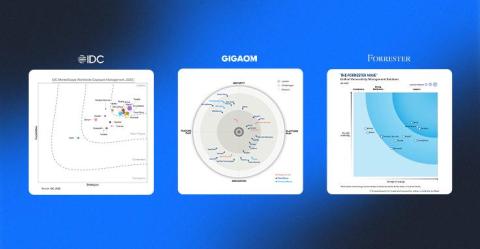
Nucleus Momentum Validated Across Three Industry Analyst Reports

It’s one thing for us to say Nucleus is changing how enterprises address vulnerability and exposure management. It’s another when three different analyst firms all say it, and at the same time. In recent weeks, Forrester, IDC, and GigaOm each published their latest market evaluations, recognizing Nucleus in all three. That’s rare validation in a market where many vendors don’t even make the cut for inclusion.

Hack to School: Top 10 Cyber Threats Facing the Education Sector in 2025

As students return to classrooms, a different kind of "back-to-school" activity is ramping up: Hack-to-School. Cybercriminals and nation-state actors are intensifying their focus on educational institutions. According to Bitsight Threat Intelligence, the education sector is now the third-most targeted industry by cyber threat actors, facing a wide range of persistent and emerging risks.

What is an Enterprise Risk Retainer?

Organizations today are under pressure to effectively respond to acute risk events that can threaten financial stability, regulatory compliance, executive safety and stakeholder trust. Hear from Managing Director Nickolas Savage on the importance of getting the right support quickly, while maintaining cost efficiency and operational resilience.

Report: Shadow AI Poses an Increasing Risk to Organizations

The use of “shadow AI” is an increasing security risk within organizations, according to a new report from Netskope. Shadow AI is a newer variant of shadow IT, in which employees use unauthorized technology without the knowledge of the IT department. This is generally driven by a desire for increased productivity rather than malicious motives, but employees are often unaware of the risks introduced by unauthorized tools.

Introducing proactive, AI-powered risk management that breaks the cycle of reactive risk

Risk doesn’t live in just one place—it comes from vendors, suppliers, partners, and from inside your business through processes, people, and systems. ‍ Managing that risk is often fragmented, too. Vendor reviews live in one system, internal issues in another, and leadership reports take hours to compile. And every new vendor, tool, or requirement contributes to another layer of risk.

Bitsight GIA Update: How Gen-AI and LLMs Get You Faster (and Better) Entity Mapping

Bitsight’s mission to keep evolving the capability of our data engine through AI enhancements hit a new milestone today. The latest addition is a new entity mapping capability added to Bitsight AI and the data engine, which uses GenAI agents to create more complete and consistent sets of identifiers for organizations scanned and added to Bitsight’s entity inventory.

Why Growing Tech Startups Keep Running Into Unexpected Expenses

You're probably across your burn rate, runway, and core operational costs. You've got projections, maybe even a part-time CFO. But if you're in the middle of growing a tech startup, there's a good chance you'll still run into expenses that weren't on your radar. It's not that you missed something obvious. It's just that building and scaling a tech business creates financial friction in places you don't expect until you're right in the middle of it.

Vanta Delivers: New AI-powered Capabilities to Help Security Teams Move Beyond Reactive Risk

AI-powered workflows and Vanta AI Agent extend to policy management, enterprise risk oversight, vendor monitoring, and Slack collaboration. Product announcements and demos debut at Vanta Delivers: AI-Powered Risk Management virtual event September 10.
Featured Post

Machines, the Silent Threat Lurking Inside the Enterprise

The digital enterprise is no longer primarily made up of individuals' identities. According to Gartner, over 60% of all identities in a typical organization are non-human. These Non-Human Identities (NHIs) are digital identities assigned to software, services, applications, containers, or devices that require access to systems and data. Unlike human identities, NHIs operate autonomously, at scale, and often with high privilege. This makes them essential for modern automation and uniquely vulnerable to misuse.

Patch vs. Workaround: How CVEs Actually Get Fixed

In order to collect various security-related metrics, Bitsight scans the entire internet, collecting a unique set of data that enables us to carry out a variety of studies that would be extremely difficult for any other company to conduct. One of the metrics that we collect is related to the presence of certain vulnerabilities. For this, we need to take into consideration all possible mitigation strategies that are available and that allow us to reduce the risk.

Introducing UpGuard's Unified CRPM Platform

Cybersecurity isn’t a one-off battle. It’s a daily war fought on multiple fronts. Despite this, many security teams have been defending their organizations without cohesive visibility. Isolated security tools present a disjointed defense, one that is still fighting yesterday’s battles, but not today’s cyber threats.

AI Regulations and Frameworks: Preparing for Compliance and Resilience

‍Artificial intelligence (AI) has departed from the realm of science fiction and emerged as a very real, regular part of life, increasing efficiency across a number of everyday activities. Particularly in the marketplace, where process optimization directly equates to time and money, general-purpose AI (GenAI) and other AI systems have rapidly taken on a central role.

Less ransomware, same risk. How can it be prevented?

Just because ransomware attacks have decreased doesn’t mean that the risk has disappeared. Indeed, it remains one of the most disruptive threats to any organisation. Headlines can convey a false sense of relief: Ransomware attacks are down 15%, according to Verizon's latest DBIR report. But for those of us who work in cybersecurity, we know that this doesn't tell the whole story, especially when the real issue isn't how often an attack occurs, but what happens when it does.

This is how you stop drowning in noise and start preventing breaches.

Security teams are drowning in a sea of noise. The good news? The solution isn't to work harder, but to work smarter. Breach Risk's threat monitoring capabilities use source-aware Transforms to automatically fan out and detect exposures across the open, deep, and dark web, including platforms notoriously difficult to monitor, such as GitHub and Telegram, and ransomware blogs, forums, and illicit marketplaces.

Visual Investing: How Stock Market Maps Can Shape Your Financial Future

Successful investing requires much more than following stock tips or reading earnings reports. Visual investing through stock market maps can be a powerful tool for helping investors understand and navigate market opportunities.

Salesloft Drift Breach: What Happened and How Does It Affect Me?

A widespread supply chain attack has impacted hundreds of organizations through the marketing software-as-a-service (SaaS) product, Drift, owned by Salesloft. The campaign, attributed to a threat group tracked by Google as UNC6395, is believed to have occurred between August 8 and August 18, 2025. The attackers used stolen OAuth and refresh tokens associated with Drift's AI chat agent to access the systems of impacted companies.

The Hidden Costs of Your Fragmented Defenses

You’ve built an arsenal of security tools, but they aren’t even fighting the same war. Today, the average company balances 83 different security systems from 29 vendors. This massive tool sprawl has created a costly problem: fragmented defenses. Although each of your legacy endpoint solutions once served a specific purpose, their lack of integration and communication makes them insufficient today.

The Hidden Risks in Your Software Supply Chain: What You Need to Know in 2025 and Beyond

Modern software development thrives on speed and innovation, fueled by open-source libraries and third-party components. These resources are essential; they accelerate development cycles, reduce costs, and enable teams to bring complex projects to life. But with great reliance comes great risk. The software supply chain is under attack, and vulnerabilities hidden within can create massive security, operational, and compliance challenges.

Why We Built Nucleus Insights

Today we’re announcing the beginning of the next phase of our journey. We’re launching our Vulnerability Intelligence feed, Nucleus Insights. As we’ve worked with many companies, partners, and clients over the years, this became an obvious next step for Nucleus, and I want to share with you why. Fixing vulnerabilities is expensive. Not just in terms of patching costs or system downtime, but in people, time, and lost focus.

Three ways to mature your legacy GRC program in a highly regulated environment

What does a modern, well-functioning GRC program look like today? Join us for an on-demand webinar with Dragos and Regscale, where we’ll explore exactly that. Learn the biggest sources of friction to maturing a GRC program, how to evaluate what’s worth automating or standardizing in your GRC workflows, and what the path forward looks like for proactively managing risk and compliance in high-regulation environments.

Breach Risk Threat Monitoring: A Path to Clarity in Cyber Noise

The digital landscape is expanding at an unprecedented rate, driven by the mass migration to the cloud, the proliferation of IoT devices, and the rapid growth of AI. While this growth presents limitless opportunities, it also creates a daunting new reality for cybersecurity teams. As a company's digital footprint and attack surface expand, it becomes increasingly vulnerable to the growing number of threats, particularly those originating from the open, deep, and dark web.

Unmanaged IoT Device Security: The Hidden Cybersecurity Risk Enterprises Can't Ignore

The rapid expansion of the Internet of Things (IoT) has fundamentally changed how organizations operate, enabling smarter, more connected enterprise networks. IoT devices—ranging from security cameras and smart TVs to advanced medical devices—are now embedded in nearly every aspect of business operations. These devices help organizations streamline processes, enhance productivity, and improve the management of critical systems.

Illuminate AI Adoption with AIBOMS

An AI Bill of Materials (AIBOM) addresses this gap. It is a concise, living profile for every AI capability an organization can invoke—models, agents, SaaS features, plug‑ins, and APIs. Kept in a machine‑readable format, it serves as a practical record that can inform runtime decisions in a control plane. An AIBOM summarizes five things about each AI capability: who provides it, what it can do, what data it sees, where it runs, and how it should be treated.

The Unfair Fight: Why Traditional Security Is Failing Your Team

For years, cybersecurity meant defending a clear, defined perimeter. That era is over. Modern organizations are sprawling, borderless, and interconnected in ways security teams were never designed to protect. Employees log in from around the globe, business units spin up SaaS without approval, and third-party vendors extend risk far beyond your control. Attackers no longer need to hammer at a single gateway.

Risk Assessments Automation & Integration for Cybersecurity

The problem with cybersecurity risk today? It won’t sit still. Modern risk is messy. It spreads across cloud workloads, third-party services, shadow assets, and developer pipelines. It evolves faster than most teams can keep up. And it rarely announces itself with a neat dashboard alert. Yet many organizations still rely on the old playbook: manual risk assessments, stitched together from siloed tools, delivered days or weeks after they’re already outdated.

From Idea to Evidence: Designing MVPs That Prove Demand

Budgets are tight, attention is tighter, and "great ideas" are everywhere. What separates the concepts that earn a second meeting from the ones that stall in a backlog? Evidence. In today's market, the MVP is less a tiny version of a product and more a machine for producing credible proof that customers actually care-and will act.

Shadow AI could be your organization's biggest threat.

What starts as innovation (an employee testing a new AI tool) can quickly become exposure. Unsanctioned apps create data leaks, compliance issues, and an expanded attack surface. With UpGuard User Risk, security teams gain visibility into shadow AI activity, so they can detect and neutralize risks before they escalate into breaches. activity before attackers can act. Ready to see what User Risk can do for you?

Why Law Firms in Sydney Can't Afford to Ignore Cybersecurity

Client confidentiality sits at the heart of every legal matter. One breach can leak privileged emails, expose case strategy, and damage trust that took years to earn. For Sydney firms, the stakes are even higher because most client engagement, filing, and collaboration now happens online. Cybersecurity is not a nice to have, it is risk management for reputation, revenue, and regulatory obligations.