Security | Threat Detection | Cyberattacks | DevSecOps | Compliance

Announcing Netskope's Upcoming Integration for Splunk Mission Control

Today’s security operations require coordinated efforts from multiple team members, many of whom are in different roles and technology specializations. Complexity inhibits the ability to conduct time-sensitive operations such as incident response. Security engineers and the threat hunters have to be on the same page when it comes to establishing priorities and conducting investigation, across the entire detection & response lifecycle.

Session Control for SSH and Kubernetes in Teleport 4.4

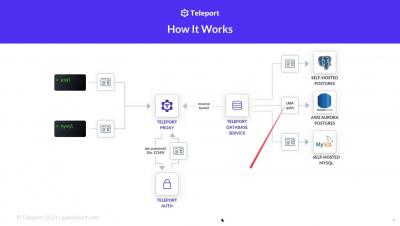
Teleport 4.4 is here! The major innovation we’re introducing in this version is much improved control over interactive sessions for SSH and Kubernetes protocols. We’ll do a deeper dive into session control later, but for those who aren’t familiar with it, Teleport is an open source project. It provides access to SSH servers and Kubernetes clusters on any infrastructure, on any cloud, or any IoT device, anywhere, even behind NAT.

Teleport 4.4: Concurrent Session Control & Session Streaming

A SSH session can be interactive or non-interactive. The session starts when a computer or human connects to a node using SSH. SSH sessions can be established using public/private key cryptography or can use short lived SSH Certificates, similar to how Teleport works. Organizations often want to know who is accessing the systems and provide a greater level of control over who and when people are accessing them, which is where Teleport 4.4 comes into play.

3 Ways to Ensure Your Security Policies Survive the Transition to the Cloud

By 2025 the amount of data stored in the cloud by both governments, organizations, and individuals will exceed 75 Zettabytes – an estimated 49% of the world’s 175 zettabytes of data at that time. This trend has no doubt been accelerated by COVID, as organizations have been forced to shorten cloud migration timeframes to ensure business continuity during the pandemic.

Strategically Managing Cloud Resources for Security, Fun, and Profit

The first time I created a cloud compute instance, then still called a “Cloud VM”, was an almost transcendent moment. It was like magic. I was at my first organization which had adopted the cloud, in my first DevOps position, and I immediately knew that the world had changed.

The Cloud Network Security Gap

Before we dive into the gap in cloud network security, let’s take a step back. If you’ve been in Operations for a while, you might remember how it used to be. “Network” was a team. When you needed to open a port on the network, you had to provide an exhaustive definition of the change, explaining what port you needed, what external addresses should be able to reach it, and where it should be routed to internally.

A Few Minutes More: Add Xray DevSecOps to Artifactory Enterprise on Azure

In a prior blog post, we explained how to install or update Artifactory through the Azure Marketplace in the amount of time it takes for your coffee order to arrive on the counter. Now you can add to your self-managed (BYOL) Artifactory deployment Xray, the cream of software component analysis (SCA) tools, through the Azure Marketplace as well.

Shared Responsibility and Configuration Management in the Cloud: SecTor 2020

A number of high-profile data breaches have resulted directly from misconfigured permissions or unpatched vulnerabilities. For instance, the 2017 Equifax breach was the result of exploiting an unpatched flaw in Apache Struts allowing remote code execution. More recently, the Capital One breach last year stemmed from a misconfigured web application firewall. Verizon’s 2020 DBIR reported that only hacking was more prevalent than misconfiguration errors as the culprit of data breaches.

Featured Post

Container Inspection: Walking The Security Tightrope For Cloud DevOps

Containers are at the forefront of software development creating a revolution in cloud computing. Developers are opting for containerization at an impressive rate due to its efficiency, flexibility and portability. However, as the usage of containers increases, so should the security surrounding it. With containers comprising of many valuable components it is of the utmost importance that there are no vulnerabilities exposed when developing applications, and risks are mitigated before containers, and their contents, reach the end-user.