
Security | Threat Detection | Cyberattacks | DevSecOps | Compliance

CrowdStrike Named a Leader in Identity Threat Detection and Response

Two recent industry reports validate CrowdStrike’s leadership in the identity threat detection and response (ITDR) market: Identity is the front line of modern cyberattacks. Today’s adversaries log in and use legitimate identities to move laterally, escalate privileges, and operate inside legitimate sessions as trusted users.

Acronis recognized in Info-Tech report: Why unified, AI-powered platforms are the future

The cybersecurity landscape is changing quickly, and independent research confirms what many organizations are already experiencing: Fragmented tools are no longer enough. A new Info‑Tech report, “Prioritize unified, AI-powered platforms for cybersecurity, data protection, endpoint management and compliance,” explores why leading organizations are rapidly shifting to unified platforms.

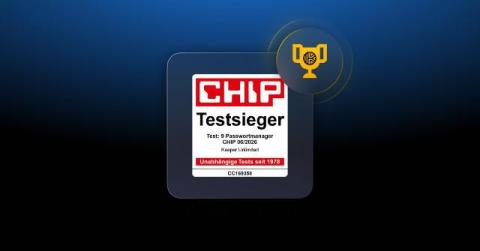
Keeper Wins CHIP Password Manager Test for the Fourth Year in a Row

Keeper Security has been named the best password manager in CHIP Magazine’s 2026 Password Manager Test, earning the publication’s “Test Winner” award for the fourth consecutive year. In the latest independent comparison, CHIP evaluated nine leading password managers across Android, iOS and Windows. Keeper ranked overall with a score of 1.3 (“very good”) and was recognized as the “best overall package” in the test.

GitProtect 2.3.0: Enterprise Backup for Confluence, SharePoint, and Shared Mailboxes

With version 2.3.0, GitProtect brings the long-awaited support for Confluence, SharePoint, and shared mailbox backup. Speaking of DevOps stack protection, your repo copies now feature enhanced granularity and accelerated recovery with automated mapping. Release 2.3.0 also includes a number of stability and performance improvements. Below, you can find a detailed overview of the new features.

Native SOAR in Log360 Cloud: Closing the gap between detection and response

Security teams today don’t struggle because they lack visibility. They struggle because every meaningful investigation still depends on too much manual work. An alert fires. Analysts pivot between dashboards. They pull identity context from one tool, endpoint telemetry from another, and threat intelligence from somewhere else entirely. Then comes the response; disabling users, isolating endpoints, resetting passwords, notifying stakeholders, documenting incidents.

SMBs Hit a Cybersecurity Breaking Point as 91% Fear AI-Driven Attacks, Driving Shift to MSP-Led Security Models, WatchGuard Finds

LONDON, May 20 2026 -New research from WatchGuard Technologies, a global leader in unified cybersecurity for MSPs, reveals that while most businesses believe they are adequately staffed, the complexity, speed, and scale of modern threats - especially those powered by artificial intelligence - have outpaced what internal teams can realistically manage. The result is a fundamental shift away from do-it-yourself security toward externally delivered, always-on protection models.

Torq Acquires Jit: The Grounding Layer the AI SOC Has Been Missing

See how Torq harnesses AI in your SOC to detect, prioritize, and respond to threats faster. Request a Demo AI in security operations is moving fast. Agent capabilities are compounding, and the conversation has shifted from whether AI belongs in the SOC to how much it can take on alongside human analysts. But every serious conversation with a CISO eventually lands on the same question: can I trust it? Trust isn’t a model problem. It’s a grounding problem.

Introducing Bitsight Beacon: Supply Chain Exposure Management for the SOC

The ripple effects of a cyberattack rarely stay contained. Modern organizations rely on vast ecosystems of vendors, suppliers, SaaS providers, and partners. As those connections deepen, so does the potential blast radius of a third-party compromise. What begins as an exposed system or stolen credential inside a vendor environment can quickly cascade across the supply chain. Attackers understand this. Increasingly, they target trusted third parties as an indirect path into larger organizations.