Security | Threat Detection | Cyberattacks | DevSecOps | Compliance

What is RAR / FedRAMP Ready and is It Worth It?

FedRAMP has long been one of the more complex certifications you can achieve, but the rewards are well worth the effort. Validating your company's information security is a huge benefit, and on top of that, working with the government on sensitive contracts is a lucrative business venture. We do our best to explain various aspects of FedRAMP in plain English, to make it easier to figure out what your goals should be and where you should place your efforts.

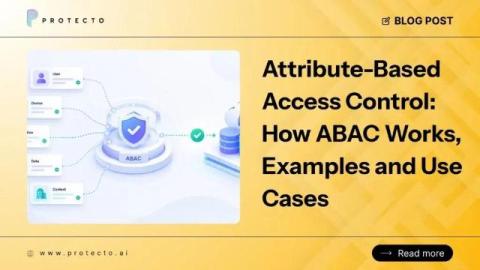
Attribute-Based Access Control: How ABAC Works, Examples and Use Cases

Access control has become significantly more complex as enterprises adopt cloud platforms, AI applications, and distributed workforces. A user’s identity alone is no longer enough to determine whether they should access sensitive data. Factors such as device posture, data sensitivity, location, and business context all influence the right decision. This shift is driving widespread adoption of attribute-based access control, a model that evaluates multiple attributes before granting access.

Report: Americans Lose an Estimated $148 Billion to Scams Each Year

Americans are now losing an estimated $148 billion each year to online scams, a 22% increase compared to 2024, according to a new report from the Consumer Federation of America (CFA). The FBI’s Internet Crime Complaint Center (IC3) tracked $20.8 billion in losses last year, but the CFA notes that the actual losses are much higher.

Report: Vishing and Device Code Phishing Are Surging

Social engineering remains a central part of modern cyberattacks, according to a new report from CrowdStrike. Attackers are increasingly turning to voice phishing because it bypasses traditional security controls and leaves little forensic evidence, since the social engineering takes place over the phone.

Securing the Tip of the Spear: Guam's Path to Human and AI Resilience

As the Asia-Pacific and Japan (APJ) region continues its rapid digital acceleration, Guam stands at a unique strategic intersection. Serving as a critical hub for telecommunications, government services and regional defense, the island’s cybersecurity posture is no longer just a local concern, it is a cornerstone of regional stability. I have observed a proactive shift toward onboarding various agencies to a unified security framework.

GitProtect vs. Native Microsoft 365 Backup

Summary Organizations often assume their Microsoft 365 assets are fully protected by native backup tools. However, while Microsoft does offer advanced built-in backup and recovery features, relying solely on a native approach is not a substitute for an independent, enterprise-grade backup strategy. The risks of relying on a single ecosystem for backups are escalating.

AI Isn't Creating New Cyberattacks. It's Changing How They Operate

Artificial Intelligence has quickly become one of the most important conversations in cybersecurity. Much of that conversation focuses on what attackers might create next: AI-generated malware, deepfakes, autonomous attacks, or entirely new categories of threats. Those risks matter, but focusing only on new attack techniques misses a much larger transformation already taking place. The real impact of AI is not only what attackers can create. It is how efficiently they can operate.

Propagating User Identity From AI Agents to Your Tools: Amazon Bedrock AgentCore Gateway and JFrog Artifactory

Join us at swampUP New York, September 1-3, for our joint session Trusted AI Delivery at Scale: Securing Every Artifact from Curation to Cloud, where we walk the full chain of custody from the moment a package enters your organization to the moment your agent runs on Amazon Bedrock AgentCore. Register here. AI agents are becoming real users of internal systems. They open pull requests, run queries, and pull and publish artifacts in repositories like JFrog Artifactory.

AI Prompt Data Leakage: How to Secure Sensitive Data in LLMs

As generative AI adoption surges, so does a dangerous new enterprise risk: AI prompt data leakage — the unintentional exposure of confidential corporate data to third-party Large Language Models via user prompts. Why does it happen? Driven by productivity pressure and the need to speed up their work, employees routinely bypass traditional DLP controls.