Security | Threat Detection | Cyberattacks | DevSecOps | Compliance

How to Reduce Alert Fatigue Without Missing Real Incidents

Alert fatigue in DLP and insider risk management (IRM) programs doesn't get solved by adding more analysts or writing more rules. It gets solved when the system generating the alerts can already tell the difference between routine activity and genuine risk, so the queue analysts see is short because it's accurate, not because thresholds were loosened. That distinction matters because the two failure modes look identical from the outside.


Top Atlassian Cloud Apps to Get the Most Out of Your Setup

Atlassian has ended new Data Center (DC) license sales and continues to prioritize Cloud for new customers. If you’re already using a data center, you have to plan your migration to the Cloud. And if you’re buying your first license, Atlassian Cloud is the only option. That shift comes with multiple benefits, like agility, scalability, and lower cost overhead. However, your DC environment, being on-premise, gave you more direct control over security.

Managing LLM Code Security at Scale with Hybrid SAST

The amount of code being generated in the era of AI is staggering, and some non-trivial percentage of that code is insecure. According to the 2026 GenAI Code Security Report, roughly 44% of AI generated code test produced a known vulnerability. Organizations are more reliant than ever on cybersecurity programs that can scale at the velocity of AI while still managing risk with guardrails, governance, and compliance standards.

Features Don't Win Budget Conversations. Operational Evidence Does.

CISOs can strengthen security budget conversations by replacing feature comparisons with measurable operational evidence. Establish the current burden, show how an investment changes security operations, and connect those improvements to financial impact. Metrics such as alert volume, analyst investigation time, manual effort, and capacity gained help CFOs evaluate security investments in terms of cost, benefit, predictability, and measurable business value. Every CISO has been there.

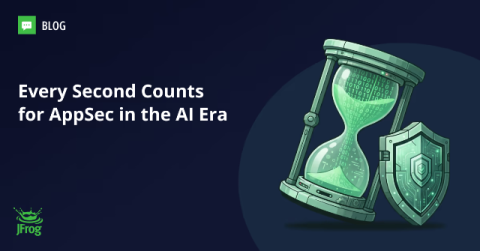
Frontier AI Application Security: Every Second Counts

Somewhere in the last few months, the math of application security quietly broke. Anthropic’s Claude Mythos Preview didn’t just analyze code, it found a 27-year-old vulnerability in OpenBSD, a 16-year-old bug in FFmpeg, and a 17-year-old remote code execution flaw in FreeBSD, entirely on its own. Then it went further: it built working exploits for them. No human guidance. No months of manual research. And by Anthropic’s own account, this is only a preview of what’s coming.

Intune still can't bare-metal image a device, and other things nobody told IT

Organizations pushed toward Intune are hitting the same wall regardless of industry or size. Intune doesn't manage servers, can't do bare metal imaging, still lacks the OU-style hierarchy and delegation Group Policy admins are used to, and covers a fraction of the settings Group Policy has supported for 20 years, though that gap has narrowed. That's why so many IT teams are stuck running Group Policy and Intune side by side years past their planned cutover.

A Guide to Cybersecurity Laws and Regulations in the UK

The UK's compliance environment is shifting fast as organisations move to the cloud and accelerate digital transformation. This guide breaks down the core cybersecurity laws and regulations UK organisations need to know, from data protection statutes to sector-specific frameworks, and what recent government data reveals about the threat landscape driving them.

Are zero-touch assessments the future of security reviews?

Accelerating security solutions for small businesses‍ Tagore offers strategic services to small businesses. A partnership that can scale‍ Tagore prioritized finding a managed compliance partner with an established product, dedicated support team, and rapid release rate. Standing out from competitors‍ Tagore's partnership with Vanta enhances its strategic focus and deepens client value, creating differentiation in a competitive market.

The Tiered SOC Is Breaking: Why the Agentic SOC Is the Only Model Built for Machine-Speed Attacks

Twenty-two seconds. That’s the median time it now takes for one attacker to hand freshly compromised access to the next team in the chain, the group that drives toward ransomware. In 2022, that hand-off took more than eight hours. In 2025, it took twenty-two seconds. Now consider how the average security operations center (SOC) is structured to respond. An alert fires, lands in a queue, and waits for a Tier 1 analyst to triage it. It escalates to Tier 2 for investigation.