Security | Threat Detection | Cyberattacks | DevSecOps | Compliance

How To Share A Private Video [Step-by-Step Guide]

When you share a video online, sometimes you only want a few people to view it. Whether it's for a client, work, or personal reasons, to share private videos, you need to be aware of privacy settings, encryption, access controls, and what are the best ways to share a large video file securely and privately. Throughout this article, we will offer you tips and step-by-step guidelines on how to share private videos online.
How to Prevent AI Data Leakage

Artificial intelligence tools have completely revolutionized the way we work, boosting productivity to heights we couldn’t have imagined just a few years ago. But the upside comes with a high-stakes catch: every time an employee pastes proprietary code, financial records, or sensitive customer data into a public AI prompt, your company is at risk. As Shadow AI adoption skyrockets, implementing robust data leakage prevention is no longer an IT checklist item — it’s a business imperative.

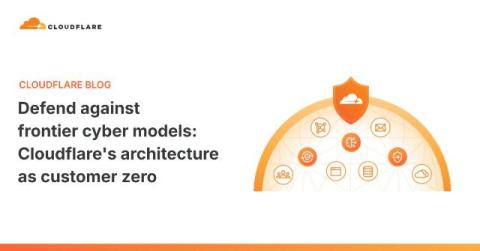
Defend against frontier cyber models: Cloudflare's architecture as customer zero

A few weeks ago, we wrote about Project Glasswing and what we observed when we pointed cyber frontier models at our own code. Since then, we’ve seen that the part of the post that has resonated most deeply is the argument that the architecture around the vulnerability matters more than the speed of the patch.

Before You Rethink Everything for Frontier AI, Measure What's Already Working

The recent wave of announcements surrounding Claude Mythos and Project Glasswing has certainly filled our feeds. While these developments are technically interesting, the real story for me lately has been what they reveal about where the cybersecurity market is heading and how quickly that evolution is reshaping the risk conversation.

Compliance mapping, automated audit evidence, and gap analysis in one toolkit

Co-founder and COO If you're running an MSSP or preparing for an audit, lc-compliance automatically documents relevant compliance evidence directly into your case records as they're created. Service providers work in a regulated environment, and already know compliance is a grind. Audits produce a pile of evidence requests. Your team pulls logs, traces detections back to controls, and writes documentation that no one reads until the QSA asks for it. Then you do it again next year.

The New Frontier: Securing Japan's Hybrid Digital Workforce (2026 & Beyond)

As Japan navigates the mid-point of the decade, its cybersecurity landscape is undergoing a fundamental transformation. Driven by escalating geopolitical tensions and the rapid proliferation of agentic AI, the nation is shifting its focus from purely technical defenses to a broader strategy of "Cognitive Security" and national resilience. The emergence of a hybrid workforce - where human employees work alongside autonomous AI agents - has redefined the traditional enterprise perimeter.

Why CISOs are right to be skeptical of AI - and what actually solves it

AI demos are easy. AI you’d actually trust near your control environment is not. If you’ve sat through a few of these pitches lately, you’ve probably landed on the same four questions every CISO we talk to is asking. And you’re right to ask them.

What Infosecurity Europe 2026 Told Us About the State of AI and Cyber Defence

ThreatSpike exhibited at Infosecurity Europe 2026 at ExCeL London from 2–4 June this year. Three days, ten expert sessions presented on our stand and more conversations about AI than we’ve had at any event in recent memory. This is our round-up: what we saw on the floor, what we presented, and what the industry is clearly wrestling with right now.

Three processes slowing down network security in 2026

Network security stacks are stronger than ever: visibility is high, threat detection is improving, and AI adoption is widespread, with 99% of SOCs using it in some capacity. But despite these advances, network security teams face many of the same operational challenges as before. Incidents still escalate. Responses are slow. Analysts remain overwhelmed and burnt out. The issue isn’t detection – it’s what happens next.