Digital and cloud transformation has unlocked new business opportunities and operational efficiencies for organisations. But migration to the cloud also means our approach to deploying applications and services has radically changed, as enterprises move away from traditional data centres. Likewise, flexible working means users have also moved away from traditional offices and branches.
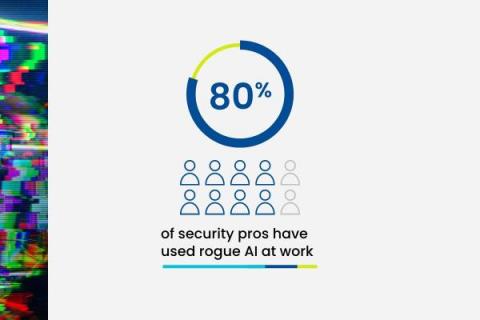
When ChatGPT debuted in November 2022, it ushered in new points of view and sentiments around AI adoption. Workers from nearly every industry started to reimagine how they could accomplish daily tasks and execute their work — and the cybersecurity industry was no exception. Like shadow IT, new rogue AI tools — meaning AI tools that employees are adopting unbeknownst to the organization they work for — can pose security risks to your organization.
Almost eight years ago, Christof Jungo, who was at the time head of security architecture and engineering at Swisscom, proposed the idea of cybersecurity middleware. Christof’s idea was that although it is easy to collect all security telemetry in one place, it is difficult to operationalize it for fast and efficient incident response. He proposed a concept of interchangeable and interoperable parts that can act as a middleware, a higher-level abstraction layer for security.
Organisations across the UK and Ireland must take precautions to protect their systems to reduce their risk of cyberattack.