SURGe 60 Second Charity Challenge: Network Surveillance
In this 60 second charity challenge benefitting RED by the ONE Campaign, Mick and Ryan shared their takes on network surveillance and national security concerns.


The rise of cloud, containers, and microservices has shifted the way software developers work for good. Whereas traditionally, software developers would release a new version of an application every few months, today’s platforms allow teams to work faster and more streamlined. These advancements have led to the rise of “software, safer, sooner” — also known as DevSecOps.
The npm CLI has a very convenient and well-known security feature – when installing an npm package, the CLI checks the package and all of its dependencies for well-known vulnerabilities – The check is triggered on package installation (when running npm install) but can also be triggered manually by running npm audit. This is an important security measure that warns developers against using packages with known vulnerabilities.
The future is arriving faster than you think. By 2030, fully automated vehicles are expected to account for 12% of global vehicle sales—a number that hikes to 20% for new vehicle sales in China. Tomorrow, 1st December, the first electric, semi-autonomous lorries with a range of 500 miles roll off the Tesla production line – headed to Pepsi.
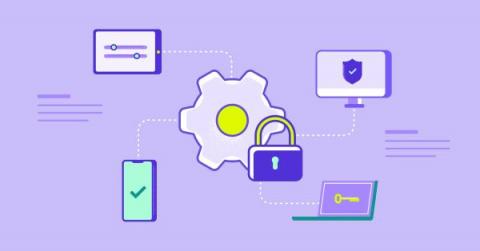
Data encryption is one of the many ways organizations can protect their data. Encryption turns plaintext (readable data) into ciphertext (randomized data), which requires the use of a unique cryptographic key for interpretation. In other words, encryption is a security measure used to scramble data so that it can only be read by authorized personnel.
To build a strong security and compliance foundation, organizations need to be able to view, manage, and secure devices, such as laptops and desktops. If you’re new to security and compliance, you may be wondering how to tackle this problem—especially at scale. With effective mobile device management (MDM) software, your company can manage and secure employee devices used to access company systems and applications.
As organizations are rapidly moving to the cloud to leverage the cloud advantage, services are also moving to the cloud, including cybersecurity solutions such as SIEM. In fact, SIEM as a Service is rapidly gaining momentum as an alternative to traditional, on-premises SIEM solutions. In its 10 Questions to Answer Before Adopting a SaaS SIEM report, Gartner had predicted that by 2023, 80% of SIEM solutions will have capabilities that are delivered via the cloud.