Security | Threat Detection | Cyberattacks | DevSecOps | Compliance

Agentic AI Governance Requires a New Enforcement Model

AI has swiftly shifted from a browser-based chat interface to an autonomous actor operating within enterprise environments. Agents run locally on endpoints, inherit employee permissions, access sensitive data in bulk, and execute multi-step workflows with no human approving each step. That shift fundamentally changes the enforcement surface. The governance programs most organizations have built were designed for a different model: one user, one prompt, one decision.
Two Months After PocketOS: What a 9-Second Database Deletion Taught Us About Agentic AI Security

Nine seconds. One API call. A car rental software company’s production data was gone. That’s the headline from the PocketOS incident, and it’s the reason this story spread across engineering and security circles the way it did in late April. Two months later, the incident is no longer breaking news. But it hasn’t aged out of relevance; it has aged into a pattern.

Secure Enterprise AI Innovation with Cato AI Security

Enterprise AI is spreading fast across employees, applications, and agents. Security teams need a way to enable AI adoption without losing visibility, control, or governance. In this demo, see how Cato helps organizations secure AI across three fronts: · AI employees use, including sanctioned and unsanctioned AI tools· AI applications teams build, including LLM apps connected to enterprise data· Agentic AI, where agents can access tools, data, and workflows.

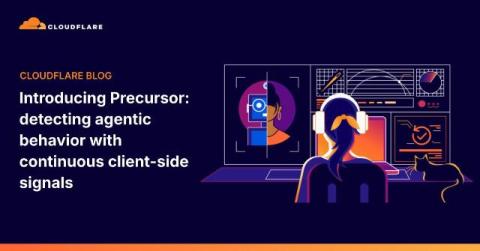
Introducing Precursor: detecting agentic behavior with continuous client-side signals

Bot mitigation is an adversarial game: attackers adapt, defenders respond, and the cycle continues. At Cloudflare, we stay ahead by combining visibility across our global network with signals from the client-side environment. At the network level, we analyze over 1 trillion requests per day to understand reputation, patterns, and anomalies across more than 20% of the web.

JADEPUFFER: How an Agentic Ransomware Attack Unfolded

In early July 2026, researchers at Sysdig published an analysis of what they assess to be the first documented case of agentic ransomware. The threat actor, which Sysdig calls JADEPUFFER, launched an extortion attack driven end to end by a large language model (LLM) rather than a conventional human-operated toolkit.

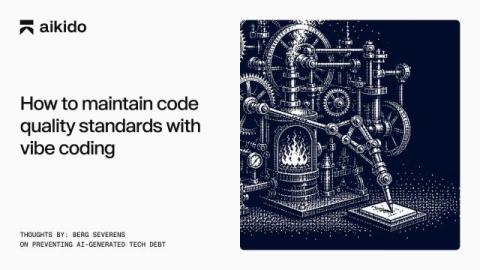
How to maintain code quality standards with AI code and vibe coding

It’s amazing how non-developers have recently been empowered to create their own apps that can even generate revenue. We’ve recently seen progress across the AI development field, from AI being successful in “greenfield code” (apps built from scratch) towards “brownfield code” (larger scale existing applications).

7 AI Governance Tools for Shadow AI Detection

AI adoption has accelerated faster than most organizations’ ability to manage it. Security and compliance teams are now responsible for overseeing machine learning models, large language models (LLMs), agentic AI systems, and shadow AI — often with frameworks and processes that weren’t built for any of it. The gap between deploying AI and governing it responsibly is where risk lives. AI governance tools exist to close that gap.

Exploring the Advancement of Wireless Mouse Technology

In today's digital era, efficient computer interaction has become an essential part of daily life. Among the devices that support this seamless experience, the wireless mouse stands out as a significant innovation. By removing the limitations of traditional cables, it provides users with greater flexibility, improved mobility, and a more organised workspace.

Building Secure Server Rooms: Why Physical Infrastructure Matters as Much as Cybersecurity

What do most IT managers worry about? Ransomware attacks, zero-day exploits, phishing scams. What don't they talk about? Shelves creaking under a rackload of servers, UPS batteries left on the floor out of sight until they're needed. Yet such oversights are just as dangerous as cyberattacks, and easier to solve. While cybersecurity takes all the glory, the physical infrastructure of your server room is often as crucial for its protection and operation.

Top IT Outsourcing Companies in the USA

Finding an IT outsourcing vendor takes an afternoon, but choosing the right one takes longer. The US market is crowded with companies that offer custom software development, dedicated teams, and endtoend delivery. Many look interchangeable. But in practice, the differences are significant: a vendor strong in healthcare SaaS may have little experience with enterprise legacy systems, and a team built for startup MVPs may struggle as scope, integrations, and compliance demands grow.