Security | Threat Detection | Cyberattacks | DevSecOps | Compliance

Proof-of-Concept Exploit Released for Critical Vulnerability in Microsoft Word (CVE-2023-21716)

On February 14, 2023, Microsoft released a security advisory for CVE-2023-21716, a critical remote code execution vulnerability in Microsoft Word. While CVE-2023-21716 was deemed to be of critical severity, Microsoft assessed at the time of publication that the vulnerability was “less likely” to be exploited, and no proof-of-concept exploit was available. Microsoft also noted that the vulnerability may be exploited through the Preview Pane in Microsoft Outlook.


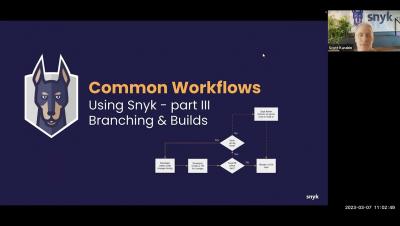
Snyk Workflows - Builds & Branching

Snyk integrates with your IDEs, repos, workflows, and automation pipelines to add security expertise to your toolkit. The “menu” of options available to you is extensive, so we created this three-part series to get you started and running. What about when you need to compare different versions of code? This third session of the series covers the more advanced topic of builds and branching and more.

Mitigating path traversal vulns in Java with Snyk Code

Path traversal is a type of security vulnerability that can occur when a web application or service allows an attacker to access server files or directories that are outside the intended directory structure. This can lead to the unauthorized reading or modification of sensitive data.

Wallarm Platform Demo: API Discovery & API Posture Management

Learn how to discover all the APIs in your portfolio, based on actual traffic instead relying on schemas, including internal and external-facing endpoints, so you can protect them against OWASP Top-10 threats like Injections and BOLA, ensure sensitive data are protected against unintentional or malicious disclosure, and much more.

Resolving CVE-2022-1471 with the SnakeYAML 2.0 Release

In October of 2022, a critical flaw was found in the SnakeYAML package, which allowed an attacker to benefit from remote code execution by sending malicious YAML content and this content being deserialized by the constructor. Finally, in February 2023, the SnakeYAML 2.0 release was pushed that resolves this flaw, also referred to as CVE-2022-1471. Let’s break down how this version can help you resolve this critical flaw.