
Security | Threat Detection | Cyberattacks | DevSecOps | Compliance

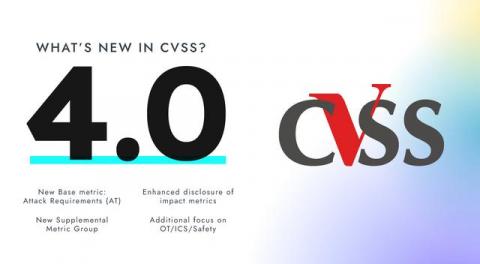
CVSS Version 4.0: What's New

Over the last decade, many vulnerabilities were initially perceived as critical or high but later deemed less important due to different factors. One of the famous examples was the “Bash Shellshock” vulnerability discovered in 2014. Initially, it was considered a critical vulnerability due to its widespread impact and the potential for remote code execution.


Red team exercises against social engineering attacks

How can you take a proactive approach to your organization’s cybersecurity strategy? Scoping the threat landscape and having a solid incident response plan is a good start. But you also need to continuously seek out vulnerabilities and weaknesses to remediate or mitigate. These vulnerabilities and weaknesses aren’t just limited to systems and processes – the human factor plays a prominent part in many cybersecurity breaches.

CVE-2023-35081: New Remote Arbitrary File Write Vulnerability in Ivanti Endpoint Manager Mobile

On July 28th, 2023, Ivanti released a security advisory detailing a new vulnerability affecting Ivanti Endpoint Manager Mobile which allows an authenticated administrator to perform arbitrary file writes (CVE-2023-35081).

Implementing TLS in Kubernetes

As cloud technology continues to evolve, the demand for Kubernetes is skyrocketing. As a result, security has become a top priority for developers looking to protect their application data. That's where Transport Layer Security (TLS) comes into play. TLS is essential for ensuring a secure connection between your applications and the internet. TLS leverages asymmetric and symmetric cryptographies to keep your data secure in transit and at rest.

RCE vulnerability CVE-2023-36884

A phishing campaign carried out by the threat actor known as Storm-0978 has been detected by Microsoft. The campaign specifically targeted defense and government entities in Europe and North America. It exploited the CVE-2023-36884 vulnerability through Word documents, enabling a remote code execution vulnerability. Notably, the attackers used lures associated with the Ukrainian World Congress before the vulnerability was disclosed to Microsoft.

How secure is WebAssembly? 5 security concerns unique to WebAssembly

WebAssembly, sometimes called Wasm, is a portable, low-level binary code instruction format executed in a web browser’s virtual machine (VM). It enables developers to write high-performance code in various languages and runs alongside JavaScript. Developers are embracing WebAssembly for its ability to accelerate complex algorithms, enable gaming and multimedia applications, and provide a secure sandbox environment for running untrusted code.

NIS2 Directive and cyber risk management

The NIS2 Directive, published in December 2022, sets out a series of measures for improving cyber risk management throughout the European Union. All EU member states must apply the Directive as part of national law by October 2024. By the same date, all applicable organizations must comply with the measures set out in NIS2.

Using Mitre Att&CK with threat intelligence to improve Vulnerability Management

MITRE ATT&CK® is a globally accessible knowledge base of 14 adversary tactics and over 500 techniques based on real-world observations. The first model was proposed in 2013 and publicly released in 2015 which has been gathering momentum over the last couple of years.

Control your role! Kubernetes RBAC explored

Role-based access control (RBAC) is an approach for controlling which actions and resources in a system are available to different users. Users are assigned roles that grant them permission to use particular system features. Kubernetes has a robust built-in RBAC implementation for authorizing user interactions with your cluster. Setting up RBAC allows you to define the specific actions that users can perform on each Kubernetes object type.