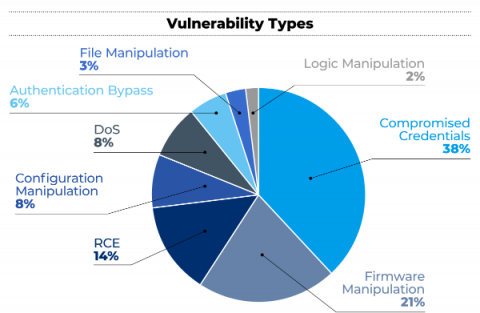
It has been 10 years since Project Basecamp, a research project conducted by Digital Bond that investigated how critical operational technology (OT) devices and protocols were, to use the term they coined, “insecure by design.” Since then, we have seen hugely impactful real-world OT malware such as Industroyer, TRITON, Industroyer2 and INCONTROLLER abusing insecure-by-design functionality.
While studying for my master's degree in cyber security, I co-authored a paper regarding the rollout of IoT devices and the security considerations that businesses need to address to ensure these devices are secure. The paper underscored how a large majority of IoT devices used vulnerable components and did not follow basic secure programming principles.
Open source software is a key component in modern applications. It has created a new era in software development, promoting a free exchange of ideas within the developer community and enabling developers to build more functional software, faster than ever. Based on most estimates, 70-90% of any piece of modern software includes open source code.
I want to take some time to explain the importance of using a white-box approach when testing applications for vulnerabilities. To help in this endeavor, I will use a real-world example to demonstrate how researchers (in this case Karim El Ouerghemmi and Simon Scannell) *may* have found a vulnerability in WordPress (CVE-2022-21662 a 2nd order stored XSS) and how you, as a security researcher, can also use a white-box approach to find an exotic XSS vulnerability.