
Security | Threat Detection | Cyberattacks | DevSecOps | Compliance

The State of Ransomware in 2022

Ransomware continues to be a prevalent threat to almost every modern industry after a sudden renaissance at the beginning of the COVID-19 pandemic as threat actors sought to capitalize on overwhelmed organizations and their suddenly vulnerable employees. It poses a particular danger to companies that hold sensitive data and house valuable assets, or those that could impact countless other industries and organizations should their critical operations be taken offline.

Vulnerability Remediation: A Practical Guide

To stay ahead of malicious attacks, developers and security teams must have a way to identify, prioritize, fix, and monitor vulnerabilities, a process known as vulnerability remediation. When it comes to detection, organizations can use a variety of application security testing (AST) tools to identify vulnerabilities in software applications and other systems.

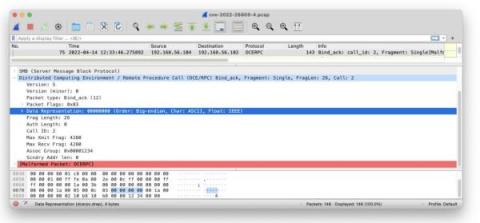
Another day, another DCE/RPC RCE

CVE-2022-26809 was patched in Microsoft’s previous Patch Tuesday (April 12) and it’s a doozy: remote code execution on affected versions of DCE/RPC hosts. The vulnerability attracted a lot of attention in the security community, both because of its severity but also because it appears to be really hard to trigger.

Critical Unauthenticated RCE Vulnerability in Zyxel Firewalls - CVE-2022-30525

On Thursday, May 12, 2022, Zyxel released a patch advisory for an unauthenticated remote code execution (RCE) vulnerability in their line of Firewall products tracked as CVE-2022-30525. The exploitation of this vulnerability can allow a threat actor to modify specific files and execute code remotely on a vulnerable appliance. Proof of Concept (PoC) exploit code for this vulnerability has been made publicly available via multiple sources.

How to Prevent the Next Log4j Style Zero-Day Vulnerability

Software testing is notoriously hard. Search Google for CVEs caused by basic CRLF (newline character) issues and you’ll see thousands of entries. Humanity has been able to put a man on the moon, but it hasn’t yet found a proper way to handle line endings in text files. It’s those subtle corner cases that have a strong tendency of being overlooked by programmers.

PoC Exploit for Active Directory Certificate Services Vulnerability (CVE-2022-26923) Creates Path to Domain Admin

On Tuesday, May 10, 2022, security researcher Oliver Lyak published a PoC exploit for CVE- 2022-26923, a privilege escalation vulnerability impacting Active Directory Domain Services with a CVSS score of 8.8 and high severity. The vulnerability allows a threat actor who has already compromised a user account to elevate privileges to Domain Admin, if Active Directory Certificates Services is running on the domain. Microsoft patched the vulnerability in May’s Patch Tuesday release.

The importance of security automation

Security is a critical, if somewhat overwhelming, task for any organization. As products grow and teams expand, the challenge of maintaining a security posture at scale increases as well. This is where automation comes in. The ability to automate security tasks offers obvious benefits such as increased speed, while also driving deeper shifts in a company’s culture and processes.

Springing 4 Shells: The Tale of Two Spring CVEs

The Splunk Threat Research Team (STRT) has been heads-down attempting to understand, simulate, and detect the Spring4Shell attack vector. This post shares detection opportunities STRT found in different stages of successful Spring4Shell exploitation. At the time of writing, there are two publicly known CVEs: CVE-2022-22963, and CVE-2022-22965. The Splunk Security Content below is designed to cover exploitation attempts across both CVEs.

Impact Analysis: CVE-2022-29218, Allows Unauthorized Takeover of New Gem Versions via Cache Poisoning

It’s been a bad month for RubyGems vulnerabilities. Critical CVE-2022-29176 was issued May 8, 2022, and another critical CVE-2022-29218 was discovered less than a week later, on May 11. This new vulnerability would allow for a takeover of new versions of some platform-specific gems under certain circumstances.

Trustwave's Action Response: F5 BIG-IP Vulnerability (CVE-2022-1388)

Trustwave SpiderLabs is tracking a new critical-rated vulnerability (CVE-2022-1388) affecting F5 BIG-IP network devices. Threat actors are reported to be actively exploiting this vulnerability in the wild. F5 disclosed and issued a patch for CVE-2022-1388 on May 4. We are diligently watching over our clients for exposure and associated attacks and working closely with our clients to ensure that mitigations are in place.