Security | Threat Detection | Cyberattacks | DevSecOps | Compliance

Apple's Vulnerability

Apple has issued an emergency software update after a cyber-surveillance company created invasive spyware that could infect any iPhone, iPad, Apple Watch, or Mac Computer. Toronto-based internet watchdog security group Citizen Lab said that NSO, the surveillance company which is an Israeli spyware company, developed the tool with a technique that could easily exploit Apple software.

Missing Critical Vulnerabilities Through Narrow Scoping

The typical process when scoping a penetration test is to get a list of targets from the client, which are typically a list of IP addresses and/or hostnames. But where does this information come from, and how accurate is it? Chances are the client has documentation that lists the devices they think they have, and what addresses or names they have been assigned. This documentation will form the basis of the scope when conducting testing or scanning against a target environment.

Supply Chain Security Update: How Secure is Composer?

When it comes to PHP, composer is without discussion, THE package manager. It’s fast, easy to use, actively maintained and very secure — or so most thought. On April 21, 2021, a command injection vulnerability was reported, which shook the PHP community. Fortunately it didn’t have a very big impact, but it could have. The problem with the vulnerability is that it affected the very heart of the Composer supply chain: Packagist servers.

A guide to OWASP's secure coding

Modern organizations rely heavily on software and systems. Secure coding standards are significant, as they give some assurance that software installed on the organization’s system is protected from security flaws. These security standards, when used correctly, can avoid, identify, and remove loopholes that might jeopardize software integrity. Furthermore, whether developing software for portable gadgets, desktop systems, or servers, secure coding is critical for modern software development.

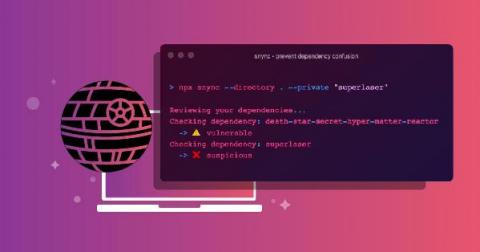
Detect and prevent dependency confusion attacks on npm to maintain supply chain security

On February 9, 2021, Alex Birsan disclosed his aptly named security research, dependency confusion. In his disclosure, he describes how a novel supply chain attack that exploits misconfiguration by developers, as well as design flaws of numerous package managers in the open source language-based software ecosystems, allowed him to gain access and exfiltrate data from companies such as Yelp, Tesla, Apple, Microsoft, and others.

Critical Vulnerability in HAProxy (CVE-2021-40346): Integer Overflow Enables HTTP Smuggling

JFrog Security research teams are constantly looking for new and previously unknown vulnerabilities in popular open-source projects to help improve their security posture. As part of this effort, we recently discovered a potentially critical vulnerability in HAProxy, a widely used open-source load balancer proxy server that is particularly suited for very high traffic web sites and used by many leading companies.

Risk Mitigation Strategies for Tcp/IP Vulnerabilities in OT

JFrog in collaboration with Forescout Research Labs recently released the fourth study from Project Memoria - the industry’s most comprehensive study of TCP/IP vulnerabilities. INFRA:HALT covers 14 vulnerabilities affecting the popular closed source TCP/IP stack NicheStack. These vulnerabilities can cause Denial of Service or Remote Code Execution, allowing attackers to take targeted OT and ICS devices offline or take control of them.

Why is AT&T adding Web Application Shielding to its Managed Vulnerability Program?

Cybercriminals never sleep. Why? They're too busy looking for application vulnerabilities. In the world of cybercrime, a flawed application is a potential goldmine for them, but an onramp to disaster for most organizations.